Latest insights
SB 784 Just Took Effect: What California's New Solar Cancellation Law Means for Homeowners in 2026

SB 784 Just Took Effect: What California's New Solar Cancellation Law Means for Homeowners in 2026
⚠️ Editorial Note: Senate Bill 784 was signed into law during the 2025–26 California legislative session and took effect January 1, 2026. Some third-party websites may still describe SB 784 as "pending" — those pages were written before the bill was chaptered and have not been updated. The information on this page reflects the law as enacted. This article is for general informational purposes only and does not constitute legal advice. For questions about your specific contract, [request a free review →].
If you signed a solar contract in California on or after January 1, 2026, the rules that govern your deal are no longer the ones you've read about online. Senate Bill 784 — signed into law in the 2025–26 legislative session and now in force statewide — quietly rewrote some of the most important consumer protections attached to residential solar agreements, home improvement loans, and door-to-door sales in this state.
For homeowners in Riverside, San Bernardino, Los Angeles, San Diego, Orange County, Fresno, Sacramento, and every California market in between, this matters. The solar industry in California is the largest in the country, and it's also the one that generates the most complaints to the Federal Trade Commission, the Better Business Bureau, and the Contractors State License Board. SB 784 was written specifically because state lawmakers believed existing protections weren't enough — and because thousands of Californians, particularly seniors, were getting locked into 20- and 25-year contracts they didn't fully understand.
If you're asking whether you can still get out of a solar contract, the answer is yes — and in some cases, SB 784 makes it easier than it was last year. Free contract review: (213) 579-5156.
What SB 784 Actually Does
Senate Bill 784 is not a single change — it's a package of new requirements that hit three different parts of the solar sales process.
1. Longer cancellation windows. Under the old rules, California homeowners had three business days to cancel a home solicitation contract (five for seniors over 65). SB 784 extends the cancellation period to five days and seven days, respectively, for contracts entered into on or after January 1, 2026. That means if a solar rep showed up at your door in Rancho Cucamonga, Elk Grove, or Chula Vista last month and you signed that night, you had more time to back out than homeowners did in 2025.
2. Lender confirmation calls and permission-to-operate requirements. Before a lender can fund a solar loan, they now have to take specific steps — including confirming key contract terms with the homeowner directly. More importantly, repayment obligations on a solar loan don't begin until the lender confirms the utility has connected the system and granted permission to operate. In plain terms: you shouldn't be making payments on a system that isn't turned on. This was one of the most common complaints under the old system — homeowners in places like Bakersfield and Stockton were being billed for months while waiting for PG&E or SCE interconnection.
3. Claims and defenses against loan holders. This is the quiet giant in SB 784. Consumers can now assert claims or defenses against loan holders that they could have asserted against the contractor or salesperson — especially in cases involving misrepresentations about the contract or solar system performance. Translation: if the salesperson lied to you about your bill savings, your tax credit eligibility, or how the system would perform, the company that bought your loan can no longer hide behind the fact that they didn't make the promises. That's a major shift in leverage for homeowners fighting fraudulent solar agreements.
Why This Law Exists
SB 784 didn't appear out of nowhere. It was a direct response to years of mounting complaints, enforcement actions, and civil lawsuits targeting California solar operators. The bill came in response to documented predatory lending schemes that had misled thousands of homeowners across the state.
The California Attorney General, the FTC, and the Consumer Financial Protection Bureau have all taken action against solar companies in recent years for misrepresenting savings, forging documents, and pressuring elderly homeowners into contracts they couldn't afford. The BBB's solar category is one of the most complaint-heavy sectors in the country — and California accounts for an outsized share of those complaints.
The senators who introduced the bill focused specifically on seniors, who have been targeted aggressively by in-home solar sales teams in communities across the state, from retirement-heavy areas like Palm Desert and Laguna Woods to quieter pockets of the Central Valley. The extended cancellation window — seven days for seniors — is meant to give older homeowners time to show the contract to family members, financial advisors, or attorneys before the deal becomes binding.
What SB 784 Doesn't Do
This is the part most articles skip. SB 784 strengthens the front end of the sales process, but it doesn't retroactively cancel existing solar contracts. If you signed a 25-year PPA with Sunrun in 2022, a loan with GoodLeap in 2023, or a lease with SunPower before their 2024 bankruptcy, SB 784 doesn't automatically give you a way out.
What it does do is reinforce the broader consumer protection framework that governs those older contracts. California already has some of the strongest consumer protection laws in the country — the Unfair Competition Law (Business & Professions Code §17200), the Consumers Legal Remedies Act, and the False Advertising Law all apply to solar contracts. SB 784 adds to that framework rather than replacing it.
For homeowners who signed before 2026, the path to cancellation still runs through those existing laws — and through documented evidence of misrepresentation, contract alterations, license violations, or disclosure failures. That's where a contract review comes in.
How SB 784 Changes the Cancellation Conversation
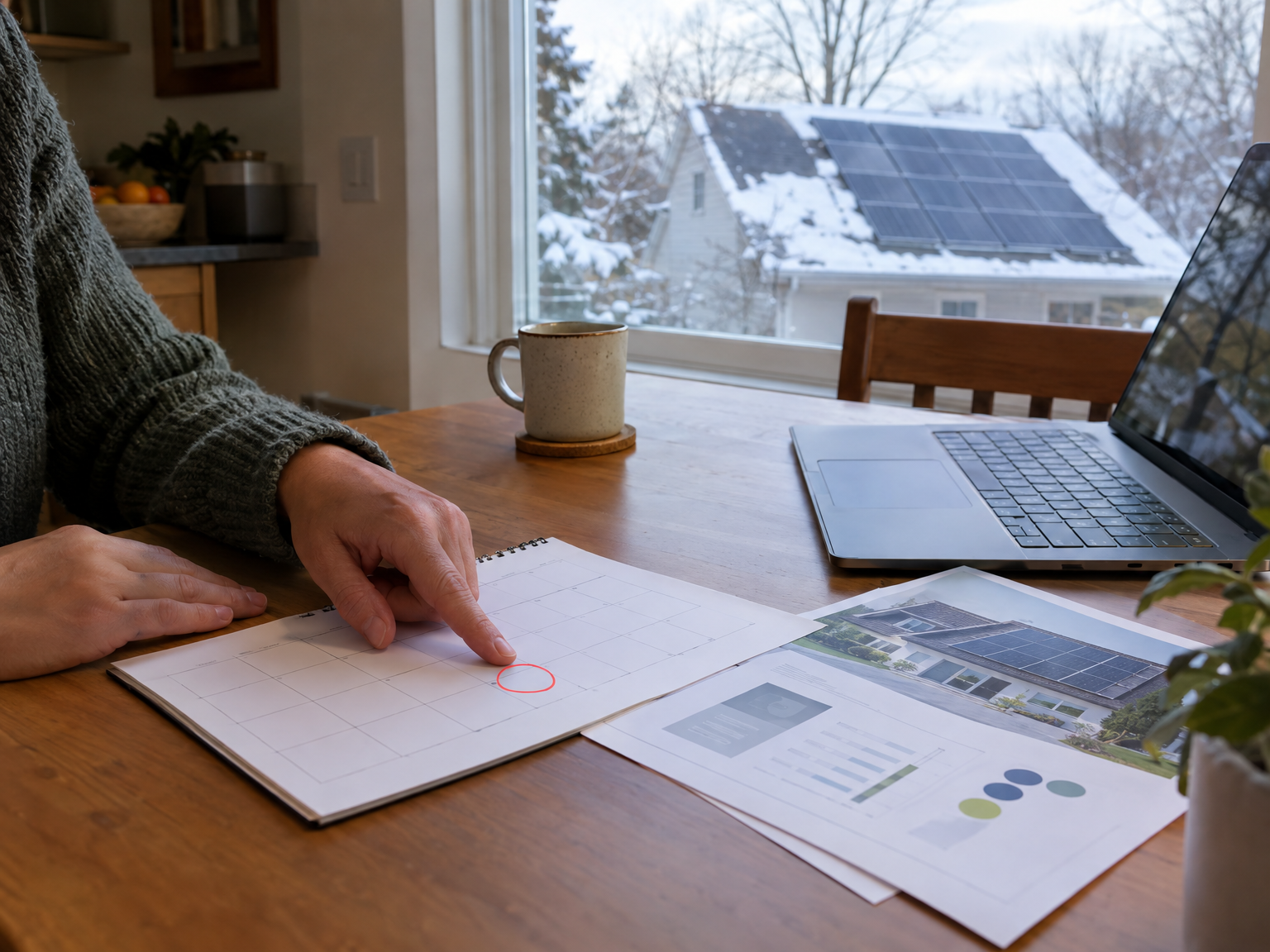
If you signed a solar contract in the last few weeks and you're having second thoughts, the math is straightforward:
- Signed on or after January 1, 2026 at your home: You have five business days to cancel (seven if you're 65+), measured from midnight of the day you received a signed, dated copy.
- Cancellation must be in writing: You can email, mail, fax, or hand-deliver a notice to the solar provider.
- Keep proof: Certified mail with return receipt, or email with a read receipt, is the safest route.
- If you were never given the required disclosure documents: The cancellation clock may not have started at all.
That last point is the one solar companies don't advertise. California requires installers to give you a specific Solar Energy System Disclosure Document — a CSLB-created cover page showing total costs, financial obligations, and a standardized bill savings estimate. If you didn't receive it, or if it was filled out incorrectly, your cancellation rights may extend well beyond the five- or seven-day window.
For Homeowners Outside the Cancellation Window
Most homeowners who contact us aren't within a five-day window. They signed six months ago, two years ago, sometimes longer. They're calling because the savings never showed up, the panels never got turned on, the salesperson disappeared, or their utility bill under NEM 3.0 turned out nothing like what they were promised.
SB 784 doesn't help those homeowners directly — but it signals something important. The California legislature has officially recognized that the residential solar market has a fraud problem. That recognition strengthens every existing claim under consumer protection law, and it gives judges, arbitrators, and regulators additional context when evaluating older contracts.
If any of the following apply to your contract, your situation may still qualify for cancellation under existing California law:
- The salesperson made specific promises about bill savings that didn't materialize.
- Pages were added to your contract after you signed.
- You were told the 30% federal tax credit would cover a portion of your cost and you didn't qualify.
- Your system was never properly interconnected and you're being billed anyway.
- The installer wasn't properly licensed under the CSLB C-46 or C-10 classifications.
- You were pressured into signing the same day, without time to review.
- Your contract was financed through a lender you never spoke to directly.
- You're a senior who was solicited at home and didn't receive disclosures in your primary language.
None of these situations resolve themselves. Solar companies and the finance firms that buy their loans aren't going to volunteer the fact that your contract may be unenforceable — that determination has to come from a proper review.
What to Do Right Now
If you're in the five- or seven-day window, don't wait. Send your cancellation notice today. Use certified mail, keep copies of everything, and don't let the salesperson talk you into "giving it another week to think about it." Every day past the window makes cancellation harder.
If you're outside the window and something about your contract feels wrong, the next step is a contract review. That means sitting down with someone who can read your agreement, your financing documents, and your utility bills side by side and identify whether you have a viable cancellation path under California law.
California Solar Exit offers free contract reviews for homeowners anywhere in the state — Los Angeles, San Diego, the Inland Empire, the Bay Area, the Central Valley, and every market in between. We're a consumer advocacy firm, not a law firm, and we work with general counsel and a specialized team focused specifically on solar contract cancellation under consumer protection law.
Call (213) 579-5156 for a free review. Or book a remote consultation at californiasolarexit.com. Most calls take 15 minutes. You'll know whether you have options before you hang up.
Frequently Asked Questions
When did SB 784 take effect? SB 784 took effect January 1, 2026. Its provisions apply to contracts entered into, or offers to purchase conveyed, on or after that date.
How many days do I have to cancel a solar contract in California now? Under SB 784, you have five business days to cancel a home solicitation solar contract signed on or after January 1, 2026. If you're 65 or older, you have seven business days.
Does SB 784 apply to contracts I signed in 2024 or 2025? No. SB 784's extended cancellation windows apply only to contracts signed on or after January 1, 2026. However, older contracts may still be cancellable under other California consumer protection laws.
Does SB 784 cover PACE financing? No. PACE (Property Assessed Clean Energy) financing is regulated separately under California law and is excluded from SB 784's home improvement loan provisions.
What if my solar company never gave me the required disclosure documents? California requires installers to provide a Solar Energy System Disclosure Document at the time of contract. If you didn't receive it, your cancellation rights may extend beyond the standard five- or seven-day window. A contract review can determine whether this applies to your situation.
Can I still be held to my solar loan if the salesperson lied to me? Under SB 784, consumers can now assert claims and defenses against loan holders that they could have raised against the original contractor or salesperson. This is a significant shift from prior law and may provide relief even when the loan has been sold to a third party.
California Solar Exit is a consumer advocacy firm serving homeowners throughout California. We offer free contract reviews and work with general counsel focused on solar contract cancellation under California consumer protection law. This article is for general informational purposes and does not constitute legal advice.
Other insights
More from California Solar Exit