Latest insights
Tesla / SolarCity Solar Contract in California: How to Get Out in 2026
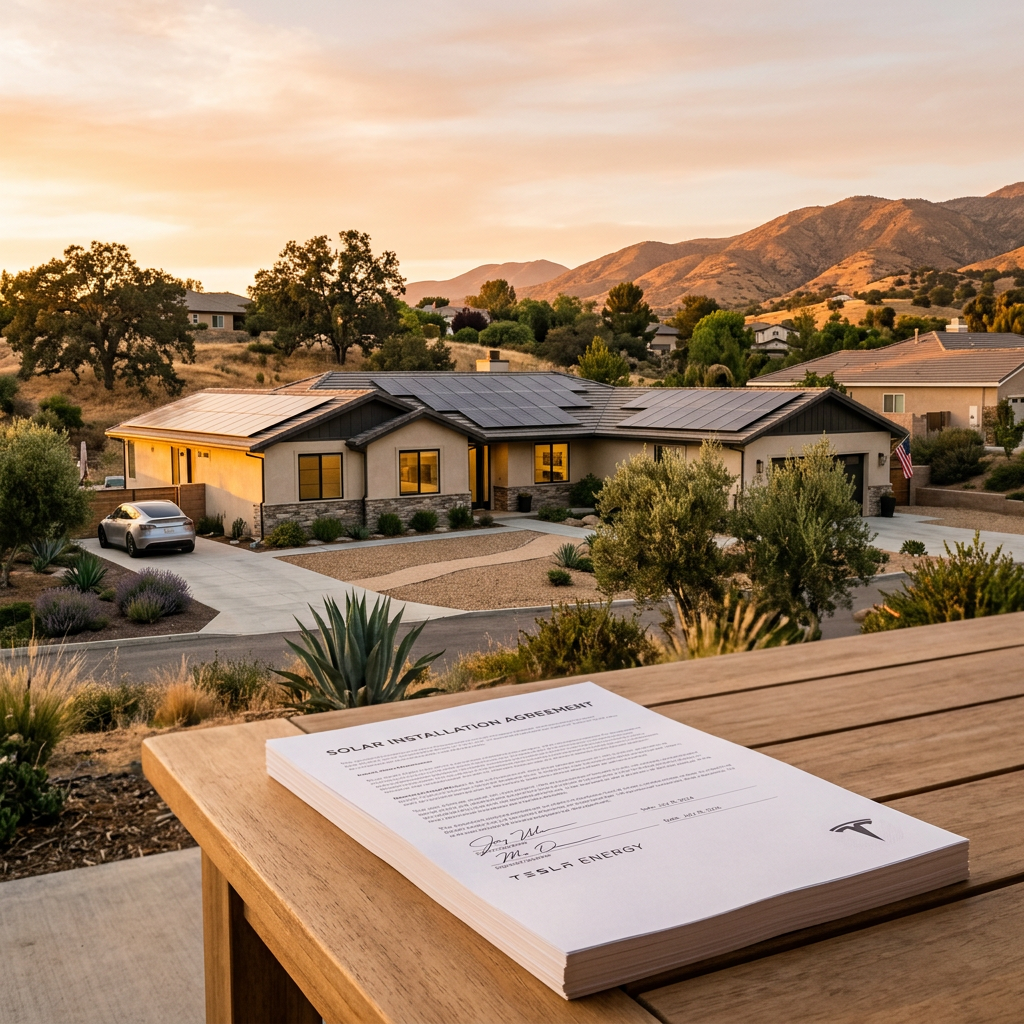
Tesla / SolarCity Solar Contract in California: How to Get Out in 2026
If you signed a SolarCity lease in San Bernardino back in 2015 — or a Tesla Solar Roof contract in Irvine in 2021 — you're now dealing with the same company. Tesla absorbed SolarCity in 2016, and roughly a decade later, California homeowners from Riverside to Sacramento are calling our office asking the same question: how do I get out of this thing?
The answer in 2026 is more complicated than it was three years ago. Tesla quietly wound down most of its in-house residential installation business, relaunched a new solar panel in January 2026, settled a $6 million class action over Solar Roof pricing, and is still servicing tens of thousands of legacy SolarCity leases and PPAs across California — most of them with twenty-year terms that won't expire until the 2030s.
Here's what you actually need to know if you're stuck in a Tesla or SolarCity contract in California.
Quick answer: Yes, you can get out — but the path depends on your contract type
Tesla currently services three different kinds of residential solar agreements in California:
- Legacy SolarCity leases and PPAs signed between 2008 and 2016 (before the Tesla acquisition)
- Tesla Solar leases and PPAs signed between 2016 and roughly 2021
- Tesla Solar Roof and panel purchase contracts (cash or financed through GoodLeap, Mosaic, or third-party lenders)
Each path out is different. A 2014 SolarCity lease on a single-story home in Rancho Cucamonga has different cancellation leverage than a 2022 Solar Roof financed through GoodLeap in San Diego County. If a "solar exit" company tells you it's all the same process, walk away.
Why Tesla / SolarCity contracts are uniquely difficult in California
SolarCity built the largest residential solar portfolio in the country before Tesla bought it. At its peak, the company held a 34% share of all U.S. residential solar installations, more than double its closest competitor at the time. Most of those contracts were 20-year leases or PPAs, and most of them are still active.
What makes them harder than a standard Sunrun or Vivint exit:
- Two distinct sales eras. Pre-2016 SolarCity sales reps used aggressive door-to-door tactics across the Inland Empire, Central Valley, and South Bay. Verbal promises about "free solar," lock-in utility rates, and lifetime savings were common — and rarely matched the actual contract. Post-2016 Tesla pitches shifted to online quotes and were tied heavily to the Powerwall battery and Solar Roof products, which had their own pricing disputes.
- The Solar Roof bait-and-switch settlement. A $6 million class action settlement covered roughly 6,300 Solar Roof customers who saw their quoted prices jump after signing — in one named plaintiff's case, from around $72,000 to nearly $146,000. The settlement is closed, but it set a paper trail that's useful in individual cases.
- NEM 1.0 grandfathering complications. Many SolarCity systems installed before 2016 in PG&E, SCE, and SDG&E territory are on NEM 1.0, which is dramatically more valuable than NEM 3.0. Cancelling or transferring the contract can put that grandfathered status at risk — something most exit firms don't understand.
- Tesla's customer service collapse. Tesla shut down most of its dedicated residential solar phone support and routed customers to app-based ticketing. Homeowners from Bakersfield to Chico routinely report unanswered tickets, no monitoring data, and no path to a human when the system underproduces.
- Third-party servicing. Tesla wound down most in-house installations and now relies on roughly 2,000 certified installers across 14 countries. If your panels fail, the company that originally installed them may no longer be in business, and Tesla may not honor the production guarantee without a fight.
6 ways out of a Tesla or SolarCity contract in California
1. The buyout (and why most quotes are too high)
Tesla and SolarCity contracts include a buyout schedule, usually starting at year six or seven. The number Tesla quotes is rarely the lowest number they'll take.
For a typical SolarCity lease on a 6kW system in San Bernardino County, buyout quotes in 2026 are running $18,000 to $35,000 depending on contract year and system size. That's almost never fair market value. Independent appraisals on 8-to-12-year-old systems typically come in 40% to 60% lower than Tesla's first quoted figure.
Always get a written buyout quote in your hands before negotiating. Always.
2. Transfer to the new homeowner (the path most agents botch)
If you're selling your home in Orange County, the Bay Area, or anywhere with a buyer pool, transferring the lease is the cleanest exit — if the buyer qualifies.
Tesla requires the new buyer to meet a minimum FICO score (currently around 680) and submit a service transfer application. In a hot Riverside or San Diego market, this works. In a slower market, it kills deals — buyers don't want a 20-year lease on a system they didn't choose, especially with a 2.9% annual escalator buried in the PPA pricing.
The trap: real estate agents who don't understand solar transfers will often tell sellers "just pay it off at closing." That's usually the most expensive option and almost never necessary.
3. Cancellation for misrepresentation (the most overlooked option)
California's consumer protection statutes — particularly the Consumers Legal Remedies Act, the Home Solicitation Sales Act, and the Unfair Competition Law — give homeowners real leverage when a contract was sold on misrepresented numbers.
For SolarCity and Tesla specifically, the most common misrepresentation patterns we see are:
- Production estimates that ignored shading from neighboring properties in hillside communities like Chino Hills or Diamond Bar
- "Lock in your rate" promises that didn't disclose the 2.9% or 3.5% annual escalator
- Verbal claims of utility-rate guarantees that conflict with the written contract
- Sales materials promising NEM 1.0 savings projections that were already obsolete when signed in 2017-2018
- Solar Roof quotes that doubled after the contract was signed (the basis for the Amans class action)
If you have your original sales materials, email threads, or even text messages from your SolarCity or Tesla rep, that's the foundation of a misrepresentation case.
4. Removal and decommissioning (the nuclear option)
In a small number of cases — usually involving roof damage, failed equipment, or a system that's underperformed for years — full removal is on the table. This typically requires either a negotiated settlement with Tesla or, in harder cases, formal legal action.
Removal isn't cheap, and it's not a DIY project. Anyone in California touching a grid-tied solar system needs a C-46 (solar) or C-10 (electrical) license. But for homeowners in Fresno, Modesto, and Stockton with non-functioning SolarCity systems still drawing monthly payments, it's often the only real path forward.
5. Roof replacement leverage
If your roof needs to be replaced — and many SolarCity-era roofs in San Diego, Long Beach, and the South Bay are hitting that window now — Tesla is required to coordinate panel removal and reinstallation. The cost they quote (typically $3,500 to $7,500) and the timeline they offer (often 6 to 12 months) become real negotiation leverage. Homeowners have used roof replacement as the trigger to renegotiate buyout terms or, in some cases, exit the contract entirely.
6. Payment hardship programs
If you're genuinely unable to make payments, Tesla does have an internal hardship review process. It's not advertised, it's not easy to access, and we don't recommend stopping payments to force the issue — that creates credit damage that's much harder to undo than the contract itself. But for homeowners in genuine financial distress in places like Riverside, Apple Valley, and Victorville where wage stagnation has been heaviest, hardship review is a starting point worth knowing exists.
What to do this week if you're stuck
- Pull your original contract. All of it — the lease/PPA agreement, the production guarantee, the disclosure forms, the truth-in-lending statement if it was a loan. If you can't find them, request them in writing from Tesla.
- Check your NEM status. Call your utility (PG&E, SCE, SDG&E, or your municipal utility) and confirm whether you're on NEM 1.0, NEM 2.0, or NEM 3.0. This affects every exit calculation.
- Pull your production data. Tesla's app shows recent production. Compare it against the production estimate in your contract. A 15%+ shortfall over the last 12-24 months is often actionable.
- Document everything verbal you remember. What the rep promised about savings, escalators, lock-ins, and utility rates. Even informal notes are admissible.
- Don't sign anything Tesla sends you in response. Especially not a release or amendment. Get a contract review first.
Why California Solar Exit handles Tesla / SolarCity cases differently
Most consumer advocacy in solar contract cancellation came into the space after 2022, when complaints started spiking. Daniel Merritt spent eight years inside California's residential solar industry — including the SolarCity / Tesla transition era — before moving to the homeowner side. He's reviewed more than 600 California solar contracts, including legacy SolarCity leases, post-acquisition Tesla agreements, and Solar Roof purchase contracts.
That industry knowledge changes the case review. Knowing what a 2015 SolarCity sales rep in Ontario was trained to say, what numbers they were given to present, and what the company's internal pitch deck looked like is the difference between a generic intake and a case that can actually move.
If you signed a Tesla or SolarCity contract in California — whether it's a 2012 lease, a 2018 Solar Roof, or a 2022 financed purchase — we'll review your contract for free, identify whether you have grounds for cancellation, and walk you through your real options under California law.
Call (213) 579-5156 for a free Tesla / SolarCity contract review. Serving all of California. Remote consultations available.
Frequently asked questions
Is SolarCity still in business? No. SolarCity was acquired by Tesla in 2016 and no longer operates as a separate company. All SolarCity contracts are now serviced by Tesla.
Can I cancel a Tesla solar contract after the 3-day window? Yes, in many cases. California's consumer protection statutes — including the Consumers Legal Remedies Act and the Home Solicitation Sales Act — allow cancellation well beyond three days when the contract was sold on misrepresented numbers or in violation of disclosure requirements.
What happens to my SolarCity warranty if I cancel? Production guarantees and equipment warranties are tied to the contract. If the contract is cancelled, the warranty typically ends with it — which is why understanding system age and condition matters before cancellation.
Will cancelling affect my NEM 1.0 status? It can. NEM 1.0 grandfathering is tied to the system, not always the contract holder. Cancellation pathways need to account for this, especially in PG&E and SCE territory where NEM 1.0 is dramatically more valuable than NEM 3.0.
Does Tesla still install residential solar in California? Tesla relaunched its own solar panel in January 2026 but does most installations through its certified installer network rather than in-house crews. Most legacy SolarCity systems are now serviced by third parties under Tesla's oversight.
Other insights
More from California Solar Exit