Latest insights
Harness Power Shut Down. If You're Still Paying for a System That Never Worked, Here's What to Do
Harness Power Shut Down. If You're Still Paying for a System That Never Worked, Here's What to Do
Quick Answer: Harness Power, a Pasadena-based residential solar installer, closed abruptly in spring 2023, leaving California homeowners with unfinished or non-functioning systems — while their financing companies kept billing them. If this happened to you, you likely still have legal options: a Contractors State License Board complaint, a misrepresentation claim against the financing company, or grounds to dispute payment on a system that was never completed. Here's how to sort out which path applies to you.
What Happened to Harness Power
Harness Power operated out of Pasadena, California, selling residential solar systems from brands like Tesla, LG, and Sunrun. In spring 2023, the company shut its doors without warning. In its own statement, the company said it was closing after six years in business due to "insurmountable financial challenges," acknowledging the distress its closure caused its customer base, and pointing customers toward their finance companies and local contractors for support. CBS NewsCBS News
For homeowners mid-installation, that statement didn't fix anything. CBS Los Angeles told the story of Compton homeowner Theresa Dorsey, whose contract promised solar power running by September 2022. Ten months later, the panels still weren't producing any power, Harness Power was out of business, and she was expected to start making payments on the $32,000 system anyway. CBS News
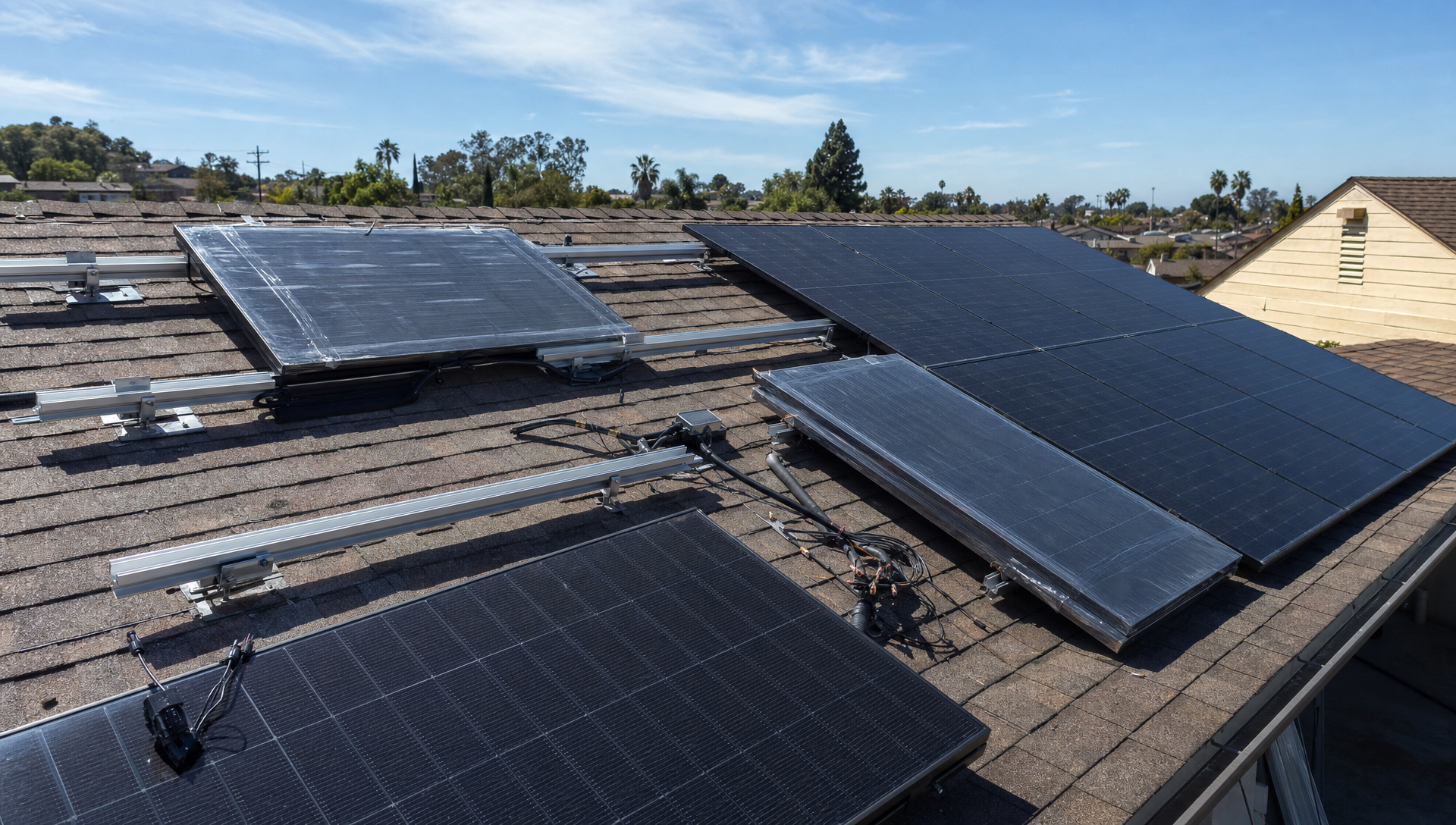
She wasn't alone. Customer reviews describe a consistent pattern: panels installed but never connected to the grid, then a closure notice, followed by bills from the financing partner for a system that was never finished. Some customers reported the company lacked proper insurance for the work performed on their homes. SolarReviewsSolarReviews
If any of this sounds familiar, the good news is that "the installer is gone" doesn't mean you're out of options. It means your remaining leverage points shift — from the installer to the financing company, the California Contractors State License Board, and in some cases, small claims or consumer protection court.
Why This Keeps Happening
Harness Power wasn't an isolated case. California's residential solar market has been through a wave of installer closures since 2023, driven by rising interest rates, tighter financing, and — for installers who signed customers under the older billing structure — the shift in project economics after NEM 3.0 took effect. We've covered that policy shift in detail elsewhere; the short version here is that thinly capitalized installers with aggressive sales operations and thin margins were the first to fold when financing tightened.
The pattern with Harness Power — and with installers like it — usually looks the same: a fast sales cycle, a contract sold immediately to a financing company for cash, and a project that stalls once the installer's own cash flow dries up. The financing company already has your signed contract and is entitled to payment under its terms, regardless of whether the installer that sold it to them is still in business.
Your Options If Your Installer Went Out of Business
What applies to you depends heavily on where your project stood when the company closed. Broadly, you're in one of three situations:
System never started or barely started. If little or no work was performed, you may have strong grounds to dispute the financing agreement entirely, particularly if the installer violated California's home solicitation contract requirements or failed to meet contractual completion deadlines.
System installed but never connected (no Permission to Operate). This is the most common Harness Power scenario. Panels are physically on the roof, but there's no interconnection with your utility, meaning the system produces nothing. You're paying for equipment that isn't providing any of the promised benefit.
System completed and interconnected, but with unresolved workmanship or warranty issues. Roof damage, faulty installation, or missing manufacturer registrations that the now-defunct installer was supposed to handle.
For any of these, here's where to start:
- Pull your full paper trail. Contract, financing agreement, any permits filed with your city or county, and all communication with Harness Power and the financing company.
- Check whether a Permission to Operate was ever issued. Your utility (SCE, PG&E, or SDG&E) can confirm this. No PTO means the system was never legally allowed to produce power — a strong fact in your favor.
- File a complaint with the CSLB. If Harness Power held a California contractor's license, the Contractors State License Board tracks unresolved consumer complaints and unsatisfied judgments against licensees, which can affect the license even after a business closes.
- Contact the financing company directly, in writing. Dispute payment on the grounds that the underlying work was never completed, and request a formal account hold while the dispute is reviewed. Do this before payments are due — not after you've already fallen behind.
- File a complaint with the California Attorney General's Office and your local district attorney's consumer protection unit. These offices track patterns of complaints against a single business, which matters for enforcement action even if it doesn't resolve your individual case quickly.
- Consult a consumer protection attorney about a Consumer Legal Remedies Act claim. If the system was sold with promises that were never delivered, this is often the strongest legal path, and many attorneys offer free consultations for solar cases.
If your situation involves a lien on your property from the financing arrangement, our breakdown of how solar liens work in California covers what that means for a home sale or refinance, and how to address it directly.
What Not to Do
- Don't keep making payments hoping the system will eventually get finished. Once an installer has closed, nobody is coming back to finish the job unless you push for it.
- Don't assume the financing company will "figure it out" on its own. They are owed payment under a signed contract; resolving it in your favor requires you to raise the dispute formally.
- Don't sign anything from a new "recovery" company that approaches you promising a fast fix for an upfront fee. Installer collapses attract opportunistic scammers. If you're unsure whether an offer is legitimate, our guide on solar exit scams targeting California homeowners walks through the warning signs.
Frequently Asked Questions
Is Harness Power still in business anywhere in California?
No. The company closed its Pasadena and Norco locations in spring 2023 and has not resumed operations.
Do I still owe money if my system was never connected to the grid?
Not necessarily. If the system never received Permission to Operate from your utility, you have a strong argument that the installer failed to deliver what the contract promised — which is a basis for disputing payment, not a guarantee that the debt disappears on its own.
What if Harness Power damaged my roof during installation?
Roof damage claims typically go through the financing company, a homeowner's insurance claim, or a small claims filing against the installer's business entity, even if it's no longer operating. A CSLB complaint can also flag the issue if the company held an active license at the time.
Can I get a new company to finish the installation?
Often yes. Some financing companies maintain relationships with replacement contractors for exactly this situation. Ask directly whether that option is available before assuming you have to start over.
If you're dealing with an unfinished solar system, a company that's disappeared, or a financing agreement that doesn't match what you were promised, California Solar Exit can review your contract and help you figure out which path actually applies to your situation — free, with no obligation.
Other insights
More from California Solar Exit