Latest insights
What Happens to a Solar Lease or Loan When Your California Home Goes Into Foreclosure?
What Happens to a Solar Lease or Loan When Your California Home Goes Into Foreclosure?
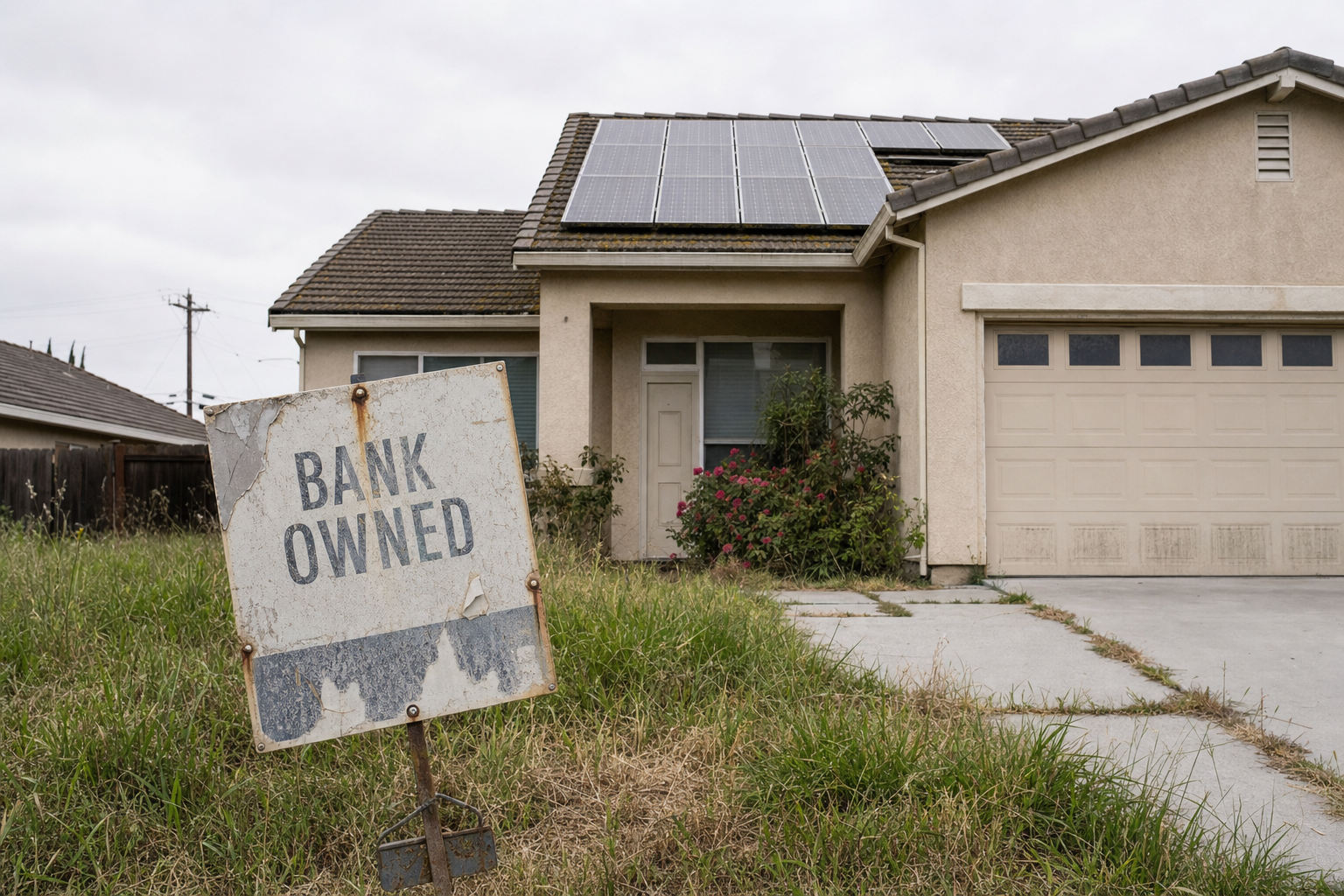
Foreclosure is stressful enough without adding a 20-year solar obligation to the list of things you're trying to sort out. But the solar company doesn't disappear when the bank takes the house, and the relationship between your mortgage, your solar contract, and your credit is more complicated than most homeowners expect.
Foreclosure Wipes Out the Lien on Title — Not Necessarily the Debt
Most financed solar systems in California are secured by a UCC-1 financing statement — a fixture filing that gives the lender a security interest in the equipment, recorded separately from your mortgage. When a first mortgage forecloses, junior liens recorded after that mortgage are generally extinguished from the property's title by the foreclosure sale. That's the mechanic that lets a bank sell a foreclosed home with a clean title even if a solar lien was sitting on it.
What that process doesn't automatically erase is the underlying debt. If your solar system was financed with a loan, the lien on your home may be wiped out by the foreclosure, but you can still personally owe the remaining loan balance to the solar lender — the collateral is gone, but the obligation to pay isn't, unless the loan documents say otherwise. Whether the lien was even properly perfected, and how it ranks against the mortgage, is a fact-specific title question that depends on recording dates and can genuinely go either way — this is not something to assume your way through without a title review.
A Solar Lease or PPA Works Differently
If your system is a lease or PPA rather than a loan, foreclosure doesn't cancel the underlying service contract either. You agreed to pay for 20 to 25 years of panel use or power purchased, and losing the home through foreclosure doesn't automatically terminate that agreement. Some contracts anticipate this and outline what happens if the home changes hands involuntarily; many don't address it clearly at all, leaving you to negotiate directly with the solar company about early termination, a buyout, or continued liability even after you no longer live there or own the property.
Does Anti-Deficiency Protection Cover a Solar Debt?
No — and this is a common point of confusion. California's anti-deficiency law under Code of Civil Procedure § 580b protects homeowners from owing money to a mortgage lender after a foreclosure on a purchase-money loan, in most cases. That protection applies to the mortgage. It does not extend to a separate solar loan, lease, or PPA — the solar company isn't your mortgage lender, and a debt to them is a completely separate legal relationship. A foreclosure that leaves you owing nothing further on your mortgage can still leave you owing the full remaining balance to your solar company.
The Double Hit to Your Credit
A foreclosure is already one of the most damaging marks a credit report can carry. A defaulted solar loan or an unresolved lease balance sent to collections is a second, independent derogatory item — not automatically tied to or resolved by the foreclosure itself. Homeowners going through foreclosure sometimes assume the solar obligation gets swept up in the same process. It usually doesn't, unless it's specifically addressed — through negotiation, bankruptcy, or a legal challenge to the original contract.
What the New Owner Inherits
A bank or investor who ends up owning the foreclosed home generally has no interest in taking on a 20-year solar lease they didn't sign. That can create a standoff over who's responsible for the panels — removal, continued payments, or a renegotiated transfer — while you may still be named on the original contract regardless of who currently owns the house.
Red Flags Worth Checking
- You don't know whether your solar system is financed by a loan or structured as a lease/PPA — that distinction changes everything about what survives foreclosure
- Nobody has told you whether your solar lien was recorded before or after your mortgage
- You're assuming the foreclosure automatically resolves your solar obligation without confirming that in writing
- You've received collection communications from your solar company or its loan servicer separate from your mortgage lender
- The original sales pitch overstated your ability to sell, refinance, or exit the system early — a misrepresentation issue independent of the foreclosure itself
What to Do
- Determine whether your solar system is a loan or a lease/PPA — this single fact changes the entire analysis of what happens to it in foreclosure.
- Get a title search or preliminary title report to see exactly when the solar UCC-1 was recorded relative to your mortgage.
- Don't assume foreclosure resolves the solar debt — get it in writing from the solar company or lender if they claim it does.
- Document any misrepresentation from the original sale — inflated savings, hidden fees, undisclosed lien — since that can be grounds for cancellation independent of the foreclosure itself, and is worth raising before you're negotiating from a weaker position.
- Talk to a foreclosure or consumer protection attorney about your specific situation before assuming either full liability or full relief.
Frequently Asked Questions
Does foreclosure automatically cancel my solar lease?
No. Foreclosure can extinguish a solar lien from your property's title, but it doesn't automatically terminate a solar lease or PPA contract, or erase a solar loan balance — those are separate legal obligations from your mortgage.
Am I protected from owing money on my solar loan the way I might be for my mortgage?
Not necessarily. California's anti-deficiency protections apply to purchase-money mortgages, not to separate solar financing. A solar lender or leasing company can generally still pursue you for what you owe them even after a mortgage foreclosure.
Who's responsible for the panels after the bank takes the house?
This is often unresolved and contract-specific. The new owner typically doesn't want the obligation, and the original homeowner may still be named on the contract — creating a dispute that's worth resolving directly rather than assuming it sorts itself out.
Can a solar company report a defaulted lease or loan to credit bureaus separately from my foreclosure?
Yes. It's an independent debt relationship and typically gets reported separately, meaning it can continue damaging your credit even after the foreclosure itself is resolved.
Facing foreclosure with a solar lease, loan, or PPA still attached to your home? California Solar Exit reviews solar contracts for homeowners across Los Angeles, Orange County, San Diego, the Inland Empire, Sacramento, and the Bay Area.
Call (213) 579-5156 for a free review, or book a consultation online.
Daniel Merritt, Senior Solar Contract Analyst
California Solar Exit — this content is for general informational purposes only and does not constitute legal advice or create an attorney-client relationship. If you're facing foreclosure, consult a foreclosure or consumer protection attorney about your specific situation.
Other insights
More from California Solar Exit