Latest insights
AB 942 in California: Why Selling Your Home Wipes Out Your NEM 2.0 Rate
AB 942 in California: Why Selling Your Home Wipes Out Your NEM 2.0 Rate
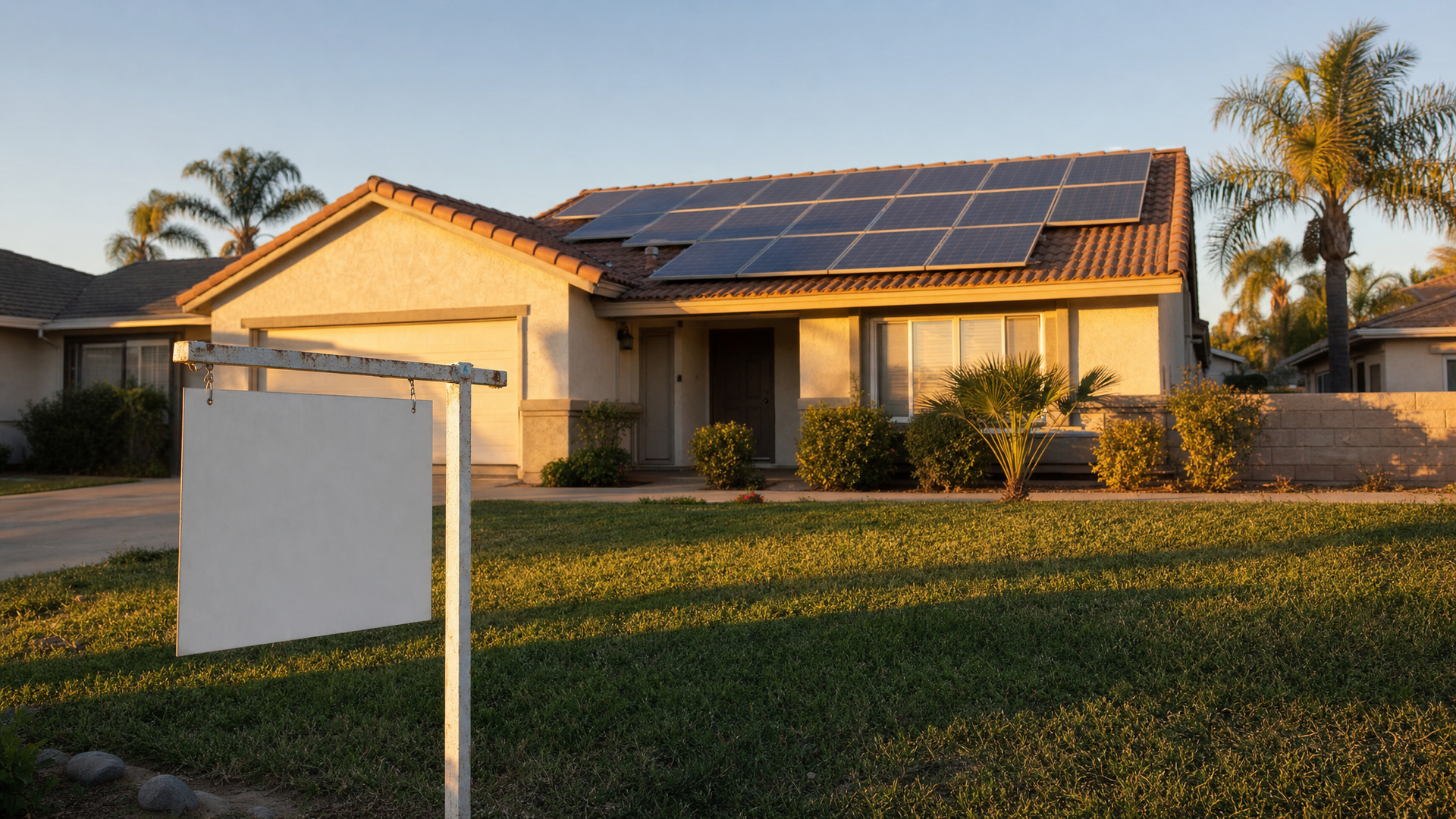
If you're planning to sell a California home with rooftop solar, Assembly Bill 942 already changed the deal you thought you were passing on to your buyer. As of January 1, 2026, a new owner who buys a property with an existing solar system no longer inherits your net metering rate. They're moved onto the California Public Utilities Commission's current Net Billing Tariff — the same NEM 3.0-era rates new solar customers get today, with export compensation cut by as much as 75% compared to NEM 1.0 or NEM 2.0. For the full ruling that cemented NEM 3.0 in place, see our breakdown of the California Supreme Court's final decision.
That's a problem if you're one of the estimated one million-plus California homeowners still on a legacy NEM 1.0 or NEM 2.0 contract and you're getting ready to list your house in Los Angeles, Orange County, the Inland Empire, San Diego, Sacramento, or anywhere else in the state. The rate you've been enjoying for years doesn't transfer. Your buyer's rate does not.
What Does AB 942 Actually Change for Home Sellers?
AB 942 requires that when a home with an existing rooftop solar system changes ownership, the new owner is enrolled in the utility's current tariff rather than continuing the seller's original net metering agreement. Authored by Assemblymember Lisa Calderon, the bill went through several amendments in the California State Legislature — an earlier draft would have sunset NEM 1.0 and 2.0 contracts entirely after 10 years, even without a sale, but that provision was stripped out before the bill reached its final form. What survived is narrower but still significant: the ownership-transfer trigger. Sell the home, and the buyer starts fresh under the current Net Billing Tariff, first adopted by the CPUC under Decision 22-12-056.
The bill also eliminates the California Climate Credit for eligible customer-generators beginning January 1, 2026 — another line item that quietly disappears from a solar homeowner's annual savings math, whether or not the home ever sells.
Why Does This Matter If You're Selling in Los Angeles, Riverside, or San Bernardino County?
It matters because the solar system's projected savings — the number that helped justify a 20-year lease, PPA, or loan when you signed — was built entirely around your rate, not your buyer's. A Rancho Cucamonga or Fontana homeowner who signed a NEM 2.0 agreement in 2019 was told the system would offset a specific dollar amount every month for two decades. That math assumed near-retail credit for excess exports. Under the current tariff, a buyer inheriting that same physical system in San Bernardino County gets a fraction of that credit.
For sellers, that creates three concrete problems at the exact moment you're trying to close escrow:
Appraisal and buyer resistance. Solar has historically added resale value in markets like Mission Viejo, Yorba Linda, and Temecula because buyers priced in the seller's utility savings. If the buyer can't inherit those savings, that value proposition weakens, and a sharp buyer's agent in Orange County or the Inland Empire will use AB 942 as leverage in negotiations.
Disclosure exposure. If you don't disclose that the solar contract's rate structure will not transfer at its current value, and the buyer discovers this after closing, you may be looking at a post-sale dispute. California's real estate disclosure requirements already put pressure on sellers to flag anything materially affecting a property's value — a lease, PPA, or UCC-1 filing tied to a solar system now carries an added wrinkle under AB 942 that didn't exist for sales before 2026. If your solar loan changed hands after a lender bankruptcy, see what that means for the lien on your home.
A stuck lease or PPA nobody wants to assume. If your solar agreement is a lease or power purchase agreement rather than a loan, most contracts require the buyer to qualify for and assume the remaining term. A buyer who just learned they won't get your rate has far less incentive to take on a 15-year-remaining lease at what now looks like an above-market monthly payment for reduced benefit.
Does AB 942 Apply to Every Solar System, or Just Older Contracts?
AB 942's ownership-transfer provision applies specifically to systems currently under NEM 1.0 or NEM 2.0 — the older, more favorable tariffs the CPUC closed to new applicants when the net billing tariff took effect. If your system was interconnected after April 2023, you're likely already on the current tariff and AB 942's transfer rule changes nothing for your sale, since there's no legacy rate to lose. It's homeowners in Fresno, Bakersfield, the Bay Area, and older solar-adopter neighborhoods across Sacramento County — anyone who went solar before the net billing tariff existed — who are affected.
What Should You Do Before Listing a Home With a Legacy NEM Contract?
Talk to whoever holds your solar contract — Sunrun, Vivint Solar, Sunnova, or a regional installer — about your specific transfer terms before you put a sign in the yard, not after you're already in escrow. Some lenders and lease-holders have their own assumption or buyout processes that predate AB 942 and don't automatically account for the new law. If your contract involves a lien, review whether a UCC-1 fixture filing is attached to the property, since an unresolved lien can independently delay closing regardless of what happens with the NEM rate.
If the original sales presentation for your system emphasized long-term savings that were calculated using the assumption that a future buyer would inherit your rate — something some installers used as a selling point without disclosing the legislative risk — that may itself be relevant to a misrepresentation claim, separate from the AB 942 issue. That's worth a real review before you list, not after a buyer's agent brings it up during negotiations.
For homeowners who decide the cleanest path is resolving the contract entirely before selling — rather than trying to negotiate a transfer or price concession around it — cancellation may be a faster route to a clean closing than either a buyout or an assumption negotiation.
Frequently Asked Questions
Does AB 942 cancel my current solar contract?
No. AB 942 doesn't cancel or modify your existing agreement with your solar company or lender. It changes only what tariff a new owner is placed on after a property transfers, starting January 1, 2026.
Will AB 942 lower my home's value?
It can reduce the resale premium historically associated with legacy NEM 1.0/2.0 systems, since the buyer no longer inherits the seller's export compensation rate. The effect varies by system size, remaining contract term, and local market.
Do I have to disclose AB 942's effect when selling my home?
California sellers are generally required to disclose material facts affecting a property's value. A solar lease, PPA, or loan whose economics change materially under AB 942 is the kind of detail a real estate attorney or agent would typically recommend disclosing.
Does AB 942 affect solar loans the same way it affects leases?
The tariff-transfer rule applies to the net metering agreement itself, not to how you financed the system. But a solar loan you're still paying off is unaffected in structure — you still owe the balance — while a lease or PPA additionally requires the buyer to assume or you to buy out the remaining agreement.
Trapped in a legacy solar contract you're trying to sell around? California Solar Exit reviews leases, PPAs, and loans for misrepresentation, disclosure defects, and lien issues — free, no-obligation contract review. Call (213) 579-5156 or visit californiasolarexit.com before you list.
Daniel Merritt is a Senior Solar Contract Analyst at California Solar Exit with over a decade of experience evaluating residential solar lease, PPA, and loan agreements under California consumer protection law. He has reviewed thousands of Sunrun, Vivint Solar, Sunnova, GoodLeap, and Mosaic contracts for homeowners across Los Angeles, Orange County, San Diego, the Inland Empire, and the Central Valley.
California Solar Exit is a consumer advocacy firm. This article is for general informational purposes and does not constitute legal advice. Responding to or contacting California Solar Exit does not create an attorney-client relationship. Individual results vary. Not all solar contracts qualify for cancellation.
Other insights
More from California Solar Exit