Latest insights
Why California Solar Cancellation Requests Are Rising in 2026
Why California Solar Cancellation Requests Are Rising in 2026
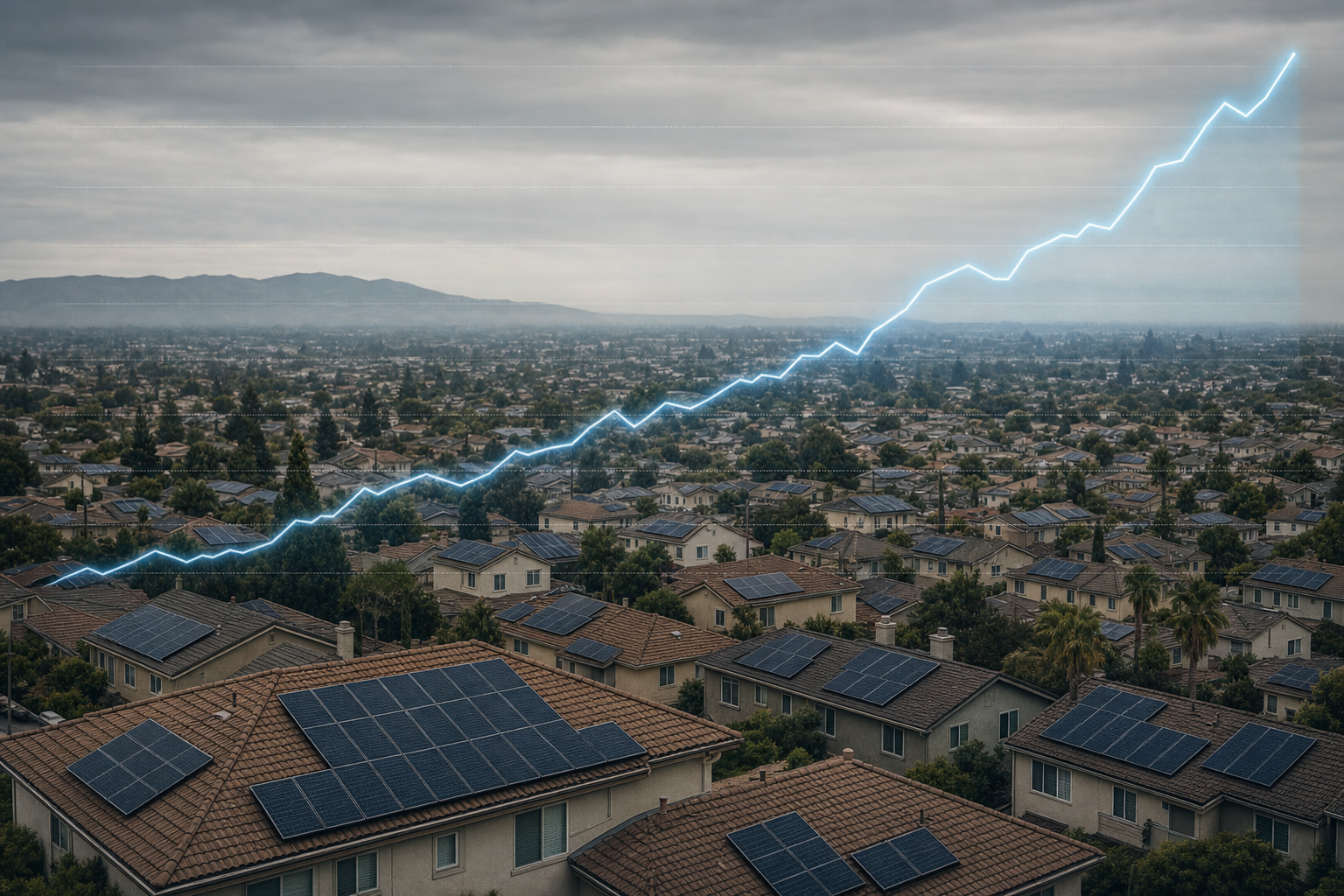
California Solar Exit has seen a measurable jump in homeowners requesting contract reviews over the past several weeks, and the timing lines up with a single event: the Chapter 11 filing of Freedom Forever, the California-founded installer that until recently held roughly 6.1% of the national residential solar market — the second-largest share behind Sunrun — according to research firm Wood Mackenzie. The filing, made in the U.S. Bankruptcy Court for the District of Delaware in April 2026, left an estimated 190,000 installed systems nationwide in limbo, a large share of them in California.
(For the step-by-step action checklist — documenting your contract, contacting your lender, filing with the bankruptcy court — see our earlier guide: Freedom Forever Filed for Bankruptcy. Here's What to Do. This post looks at the bigger pattern behind the surge in calls.)
What Is Actually Driving the Rise in Cancellation Requests?
The rise is being driven by three overlapping problems homeowners are calling in with at once: unactivated systems, unanswered service lines, and financing payments that keep coming regardless. "Homeowners are calling us with panels on the roof that were never activated, service requests that go nowhere, and a loan payment that's still due every month regardless of whether the company answers the phone," said Daniel Merritt, Senior Case Analyst at California Solar Exit. "That combination is exactly what drives someone to look into solar cancellation as an option."
That combination matters because none of the three problems resolves on its own. A bankruptcy filing doesn't activate a stalled system, doesn't route a service call to a live person, and doesn't pause a loan servicer's billing cycle. Financing partners like GoodLeap and Mosaic remain separate contractual counterparties from the installer regardless of what happens in bankruptcy court — which is precisely why case volume rises after a filing like this rather than settling down.
Is Freedom Forever the First Major California Installer to Collapse?
No — it's the fourth or fifth in a pattern that's been building for several years, following comparable filings and shutdowns at SunPower, Sunnova, Titan Solar Power, and ADT Solar, the residential solar division of security giant ADT Inc. "We've watched this pattern repeat itself with several major installers now," Merritt said. "A company overextends during the boom years, financing partners pull back, and the homeowners who signed 20- or 25-year contracts are the ones left managing the fallout. Most of them had no way to see it coming when they signed."
Three forces show up in nearly every one of these filings. Rising interest rates raised the cost of the debt many installers used to fund rapid expansion. The wind-down of the federal solar Investment Tax Credit compressed margins on both the sales and installation side. And California's own transition to Net Energy Metering 3.0, approved by the California Public Utilities Commission in 2022, cut the value of solar export credits and slowed new installation demand across the state — shrinking the pipeline of new business that installers needed to service their existing debt load. That's the same underlying policy shift our team broke down after the California Supreme Court's final NEM 3.0 ruling earlier this year.
Where in California Are These Requests Coming From?
Case reviews are concentrated wherever installer density and legacy contract volume are highest — Los Angeles County, Orange County, San Diego County, the Inland Empire, the San Francisco Bay Area, and the Sacramento and Central Valley regions. That distribution roughly tracks where installers like Freedom Forever, SunPower, and Sunnova did the heaviest door-to-door and referral-based selling during the 2018–2022 boom years, which means homeowners in those same regions are now the most likely to be holding a contract with a company that no longer exists in its original form.
Some of these homeowners are also dealing with a second layer of complexity: a UCC-1 lien recorded against their property title when the system was financed, which doesn't disappear just because the installer did.
What Does This Mean If You're Not a Freedom Forever Customer?
The lesson isn't specific to one installer — it's about what a contract can and can't protect you from once the company behind it is gone. Equipment warranties from manufacturers typically survive an installer bankruptcy; workmanship and service warranties issued directly by the installer typically don't. If the installer was licensed through the California Contractors State License Board, that license status can also change once a company enters bankruptcy, which affects what recourse remains available. Loan and lease obligations survive regardless of what happens to the installer, because they sit with a separate lender — the same dynamic we've seen play out with Tesla/SolarCity and Vivint contracts over the years.
Homeowners generally also retain rights that exist independently of any bankruptcy — protections under the Federal Trade Commission's door-to-door sales rules and California's own consumer protection statutes, which our California solar cancellation overview covers in more depth. Any homeowner holding a long-term solar agreement — whether the installer is currently healthy or not — benefits from understanding which of those categories their contract actually falls into before a filing like this one forces the question. If you're unsure what your own contract is actually costing you over its full term, our solar contract cost calculator can help put a number on it, and this rundown of red flags is worth a read even if your installer hasn't filed for bankruptcy.
California Solar Exit advises homeowners not to stop making loan or lease payments without first consulting a qualified attorney, and encourages anyone affected by an installer bankruptcy to gather their original contract, financing documents, and any correspondence with the company before requesting a case review.
Get a Free Contract Review
California Solar Exit consults remotely with homeowners statewide, with a no-obligation review that starts with your contract, financing documents, and original sales materials. If you're affected by the Freedom Forever bankruptcy — or by any solar installer closure — a free review can clarify what's actually still enforceable.
Call (213) 579-5156 or visit californiasolarexit.com to get started. You can also read more about Daniel Merritt and California Solar Exit's approach.
Frequently Asked Questions
Is Freedom Forever the only solar installer that's gone bankrupt recently?
No. Freedom Forever's Chapter 11 filing follows similar filings and closures involving SunPower, Sunnova, Titan Solar Power, and ADT Solar over the past several years, reflecting a broader pattern in the residential solar financing market rather than an isolated event.
How many California homeowners are affected by the Freedom Forever bankruptcy?
Freedom Forever's Chapter 11 filing left an estimated 190,000 installed systems nationwide in limbo, according to Wood Mackenzie, with a significant concentration in California, where the company was founded and did much of its early business.
Why is NEM 3.0 relevant to installer bankruptcies?
Net Energy Metering 3.0, approved by the California Public Utilities Commission in 2022, reduced the value of solar export credits and slowed new installation demand statewide, shrinking the pipeline of new sales that installers relied on to service the debt they took on during the growth years.
California Solar Exit is a solar contract cancellation and dispute consultancy based in Los Angeles, focused on helping California homeowners navigate deceptive, misrepresented, or disrupted solar agreements. All cases are attorney-reviewed. This article is for informational purposes only and does not constitute legal advice.
Other insights
More from California Solar Exit