Latest insights
I Was Lied to by a Solar Salesman in California. What Can I Actually Do?

I Was Lied to by a Solar Salesman in California. What Can I Actually Do?
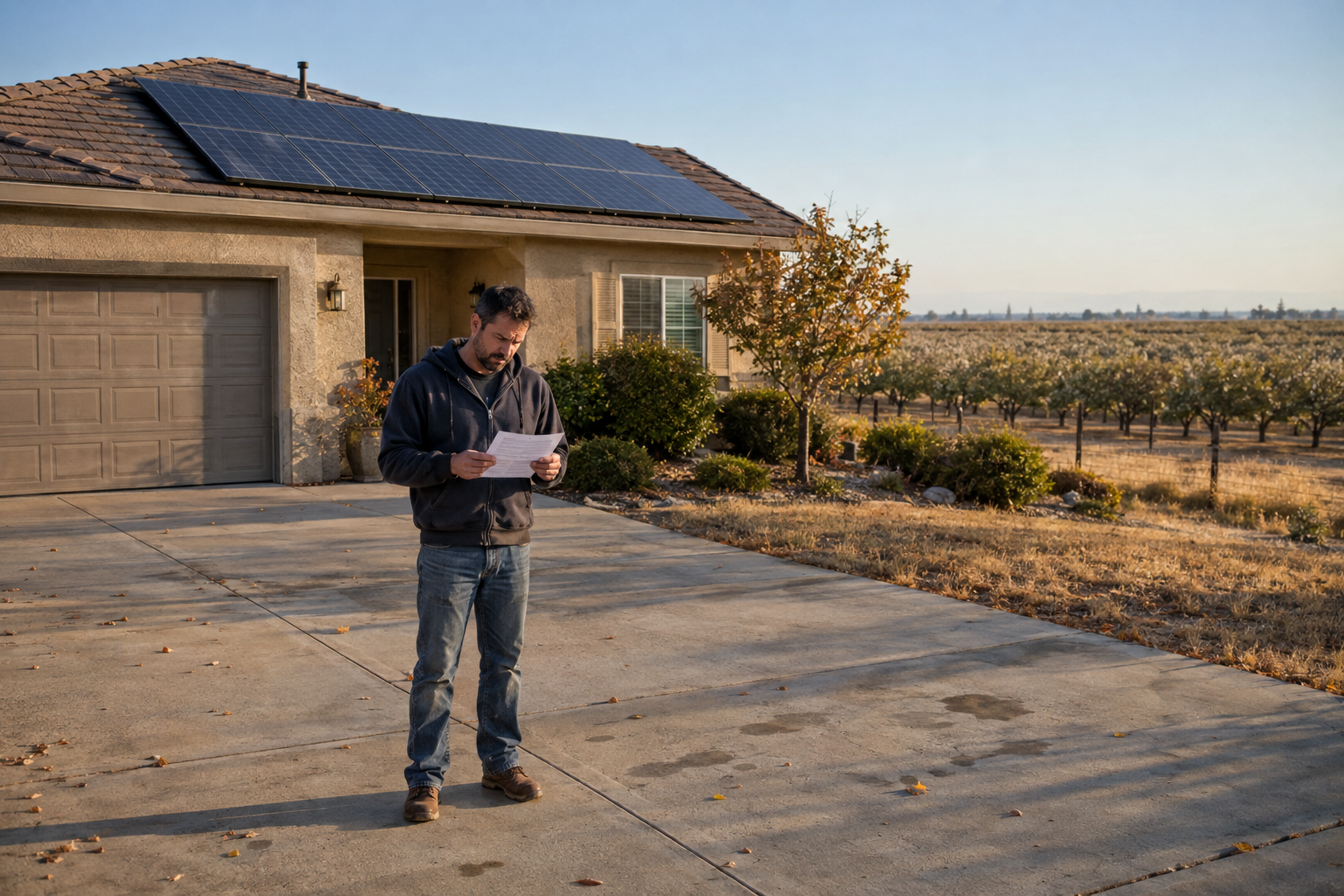
You signed because of something specific someone told you: your bill would be erased, the panels would be covered by a government program, the payment would never change. Now the bill didn't drop, the "government program" turned out to be a private loan, or the payment is climbing every year. You're not imagining it, and you're not the first person this has happened to.
Here's what to actually do, in order.
First: you're not alone, and this is a documented problem
The California Public Utilities Commission has formally studied this. In a 2020 proceeding on solar consumer protection, the CPUC found that CSLB received an average of 90 new solar-related complaints a month, and flagged the regularity of unlawful business practices in California's solar industry, including homeowners who were misled, left with systems that don't perform as promised, and in some cases given no copy of their own contract. The Commission noted solar fraud has particularly harmed low-income, elderly, and non-English speaking homeowners.
Real cases have made it to the state legislature. A Bellflower couple, Dan and Kerry Mason, testified to California lawmakers after a CBS2 investigation found they'd been told their $37,000 solar installation would be covered by "a government program." It was actually a PACE loan at 6.5% interest, added to their property taxes, working out to nearly $5,000 a year for 10 years, a debt that follows the property and that Dan told lawmakers had "made it impossible to refinance or sell" their home. In a separate case out of Sacramento, a blind homeowner told CBS13's Call Kurtis investigation that a now-defunct solar company promised his system would "erase" his power bill. It didn't, and the company closed before anyone could hold it accountable.
These aren't rare stories. They're the pattern the CPUC itself has documented.
Step 1: Write down exactly what you were told
Before anything else, while it's fresh: who told you what, when, and how. Specifically:
- Savings claims. Were you told your bill would be "erased," "cut in half," or some other specific figure?
- "Government program" language. Were you told a program was free, government-run, or a rebate, when it turned out to be a private loan or a PACE assessment on your property taxes?
- Tax credit claims. Were you told you'd get a tax credit you weren't actually eligible for, particularly if your system is leased rather than owned?
- Performance promises. Were you given a specific production or savings number that didn't match reality?
- Pressure tactics. Was there urgency, a "sign today" deadline, or a tablet put in front of you without time to read it?
Write this down even if you don't remember every detail perfectly. A timeline you create now, close to the events, is more useful than a vague memory months later.
Step 2: Pull together your actual paperwork
- The signed contract and any proposal or sales materials you were shown.
- Any text messages, emails, or voicemails from the salesperson or company.
- Your utility bills from before and after installation, to compare against what you were promised.
- Your loan or lease statement, including the company currently billing you.
Under California Business and Professions Code §7159, home improvement contracts have specific disclosure requirements, and a contract that's missing required terms or a proper notice of your right to cancel can itself be a problem independent of what was said verbally.
Step 3: Know which agency handles what
California split oversight of solar sales across several agencies, and you can file with more than one at the same time:
- The Contractors State License Board (CSLB) licenses and disciplines solar contractors. Willful or fraudulent misrepresentation by a contractor is specifically grounds for discipline under Business and Professions Code §7161. File at cslb.ca.gov, and check the contractor's license status first.
- The Department of Financial Protection and Innovation (DFPI) oversees solar financing, including PACE programs and the lenders behind solar loans.
- The California Public Utilities Commission (CPUC) covers utility-related and disclosure violations, and maintains the Solar Consumer Protection Guide every installer is required to provide before you sign.
- The California Attorney General's office handles broader business conduct and consumer protection violations under the Unfair Competition Law and the Consumer Legal Remedies Act.
Our full breakdown of where to file and what each agency actually does walks through the details.
Step 4: Understand your actual legal footing
California's Consumer Legal Remedies Act (CLRA) prohibits a list of specific deceptive practices in consumer transactions, including misrepresenting the benefits or performance of a product or service. If a salesperson's specific savings claim, "government program" framing, or tax credit promise turns out to have been false, that's the kind of misrepresentation the CLRA is built to address.
If your loan has since been sold to another lender, SB 784, which took effect in 2026, lets you raise the same misrepresentation claims against whoever currently holds your loan, not just the original salesperson. Our SB 784 guide explains how that works.
Step 5: Don't stop paying while you sort this out
Missing payments can hurt your credit and create a second problem layered on top of the first, regardless of how strong your misrepresentation claim is. Keep paying while you document and pursue your options, and talk to an attorney or a specialist before changing that.
When to involve an attorney, and when a review makes sense first
A licensed California consumer protection attorney can file suit, negotiate a formal settlement, and represent you if a case escalates. That's the right move once you know what you're dealing with. Before you're at that stage, a documented review of your specific contract and what you were told can help you understand whether you actually have a misrepresentation case worth pursuing, and what evidence you'd need to make it. We do exactly that kind of review, and if your situation calls for litigation, we tell you that directly rather than trying to handle it ourselves, since we are not a law firm.
Questions people ask after being misled by a solar salesman
Does it matter if I don't have everything in writing?
No. Verbal misrepresentations can still support a claim under the CLRA. What matters is being able to document what was said, when, and by whom, as specifically as you can.
Can I get out of my contract just because I was lied to?
It depends on what was said, how it's documented, and your specific contract. A documented misrepresentation claim is a path toward cancellation, a settlement, or damages, but outcomes depend on the facts of each case.
Is this actually common, or am I unusual for this happening to me?
It's documented and common enough that the CPUC has run a formal proceeding on solar fraud in California, and real cases have reached the state legislature. You are not the only one this has happened to.
Think you were misled by a solar salesman in California?
Send us your contract and what you were told, and we'll tell you honestly where you stand, usually in about 15 minutes.
Call (213) 579-5156 or visit californiasolarexit.com.
By Daniel Merritt, Senior Solar Contract Analyst
Daniel Merritt is a Senior Solar Contract Analyst at California Solar Exit. This article is general information, not legal advice, and results depend on the facts of each situation.
Other insights
More from California Solar Exit