Latest insights
Solar Bills of Rights: What Colorado and Oregon Just Did — and What California Already Has
Solar Bills of Rights: What Colorado and Oregon Just Did- and What California Already Has
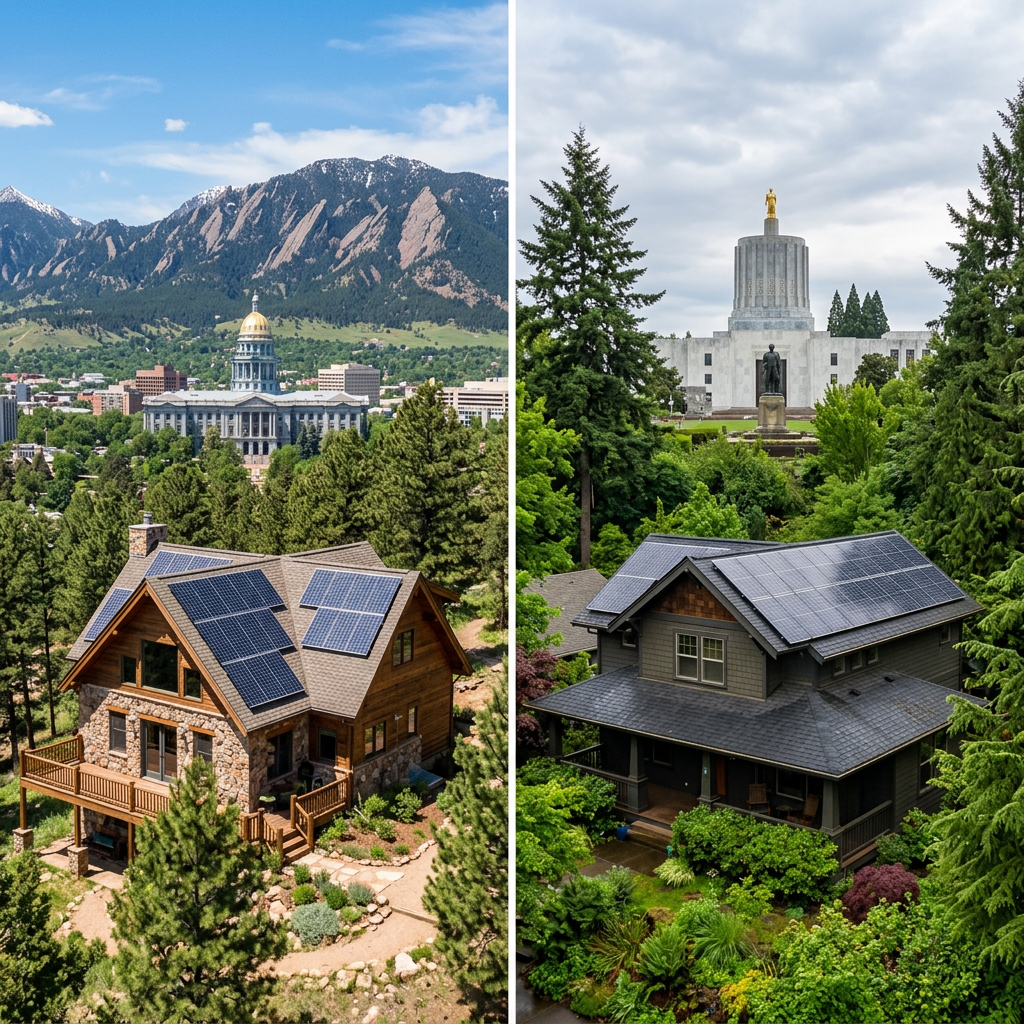
In 2026, two states took direct legislative action against the solar industry's most common abuse: door-to-door sales reps locking homeowners into 20–25-year leases and power purchase agreements (PPAs) using deceptive pitches, inflated savings projections, and fake government affiliations. Colorado's Senate Bill 25-299 and Oregon's House Bill 4029 both took effect in 2026 with explicit consumer protection frameworks targeting third-party owned solar — the same lease and PPA structures that have generated thousands of complaints in California.
If you're a California homeowner who already signed one of these contracts, this post matters to you. What Colorado and Oregon just passed into law reflects the same documented violations that California's regulatory framework — the CPUC Solar Consumer Protection Guide, the CSLB, the California AG, and the DFPI — has been fighting for years. And it reinforces something important: the problems in your contract are not unique to California, and they are not imagined.
If you have a solar lease or PPA in California and want to know whether your agreement contains violations, contact California Solar Exit for a free contract review.
Oregon House Bill 4029: Signed Into Law March 5, 2026
Oregon Governor Tina Kotek signed House Bill 4029 on March 5, 2026. It took effect June 5, 2026. The law is formally enrolled as Oregon Laws 2026, Chapter 11, amending ORS 646.608 — Oregon's Unlawful Trade Practices Act — and creating new statutory provisions specifically governing solar energy contractors, sales agents, installation contracts, and power purchase agreements.
Under the law's definitions, a "solar energy contractor" includes any person selling or leasing solar systems, installing systems on behalf of another person, or selling power from residential solar systems under a PPA. A "sales agent" is any person who solicits, negotiates, or executes an installation contract on behalf of a solar energy contractor. Both are covered.
What HB 4029 Requires
Plain Language Disclosure Form. Before any installation contract can be signed, the solar energy contractor or sales agent must provide a standardized disclosure form. The form must explicitly state total financing costs, dealer fees, and system maintenance expectations — in plain language, not buried in fine print. Per the Oregon Department of Energy's 2026 legislative session report, this disclosure requirement was specifically designed to address the practice of rushing customers through tablet signings without meaningful review of contract terms.
Honest Savings Estimates. Solar contractors can no longer present inflated or speculative savings projections. Under HB 4029, savings estimates must use specific utility rates and real local net metering rules — not optimistic assumptions or outdated export credits. The Eugene Water & Electric Board's legislative update noted this provision directly responds to complaints about salespeople using pre-NEM-change economics after net metering rules had already reduced export credits.
Three-Day Right to Cancel. Homeowners have a strict three-day right to cancel any solar installation contract without paying any penalties or fees. The cancellation right applies to both installation purchase contracts and PPAs. No waiver of this right is enforceable.
Dealer Fee Disclosure. HB 4029 explicitly defines "dealer fee" — the amount a solar contractor pays a lender to offer the customer credit — and requires it to be disclosed in the standardized form. This is the same undisclosed dealer fee that California's DFPI and SB 784 (effective January 1, 2026) now regulate in California.
Deceptive Statements Are Unlawful Trade Practices. Any deceptive statement made by a door-to-door solar sales representative — about government affiliation, utility partnerships, savings projections, or cancellation rights — is classified as an unlawful practice under ORS 646.608. The Oregon Department of Justice has enhanced enforcement authority to pursue bad actors, and homeowners have a private right of action to sue for damages.
The Energy Trust of Oregon, a nonprofit that administers energy efficiency programs across the state, welcomed the law while noting it applies prospectively — homeowners who signed contracts before the law took effect are not covered by its protections.
Colorado Senate Bill 25-299: Consumer Protection Residential Energy Systems Act
Colorado's Senate Bill 25-299 — formally titled the Consumer Protection Residential Energy Systems Act — was enacted by the Colorado General Assembly and applies to residential energy system agreements signed on or after July 1, 2026. It covers solar leases, PPAs, and third-party owned solar agreements specifically, alongside other residential energy systems.
What SB 25-299 Requires
Ban on Fake Government Affiliations. Door-to-door solar salespeople are explicitly prohibited from claiming their company is "part of a government program," "sponsored by the state," or affiliated with a utility or government agency unless they have explicit written authorization confirming that affiliation. This directly targets one of the most documented misrepresentation categories in solar sales nationally — the same conduct cited in California's February 2026 Riverside County DA settlement with Vivint Solar, which became a Sunrun subsidiary in 2020.
Mandatory Workmanship Warranties. Solar sales companies must provide enforceable warranties covering the physical installation and long-term workmanship of the system — not just the manufacturer's warranty on the panels themselves. This addresses the "orphaned system" problem where a sales company collects a contract and then leaves a homeowner with installation defects and no recourse.
Full Disclosure for Third-Party Leases and PPAs. SB 25-299 explicitly wraps its requirements around third-party leased equipment and PPAs. The fine print commonly buried in 25-year contracts — escalator clauses, buyout provisions, UCC-1 lien filings, transfer obligations — must be clearly disclosed upfront before signing. This mirrors California's existing Solar Consumer Protection Guide requirements, which mandate disclosure of PPA terms, escalators, and cancellation rights.
Deceptive Trade Practice Classification. Violating SB 25-299's requirements is legally classified as a deceptive trade practice under the Colorado Consumer Protection Act, opening violators to state enforcement actions and civil penalties. Solar United Neighbors, a nonprofit solar consumer advocacy organization, highlighted the law's enforcement mechanism as one of its most significant features.
What These Laws Do Not Fix
Both HB 4029 and SB 25-299 are forward-looking. They protect future solar customers — not homeowners who already signed problematic contracts.
As the Energy Trust of Oregon explicitly noted, these laws generally do not help homeowners already locked into bad agreements. If you signed a 25-year lease in 2021, 2022, or 2023, Oregon's HB 4029 doesn't cancel it. If a Colorado homeowner signed a PPA before July 1, 2026, SB 25-299 doesn't reach back to fix it.
Two specific gaps both laws leave open:
No retroactive relief. Homeowners already in problematic leases or PPAs are not covered by the new disclosure requirements, cancellation rights, or deceptive trade practice classifications in these laws. Their remedies, if any, lie in the laws that existed at the time they signed — consumer protection statutes, contract law, and existing regulatory frameworks.
Orphaned systems. If a solar company goes bankrupt mid-project, refuses to honor a warranty, or stops returning calls on a malfunctioning system, disclosure laws cannot compel them to fix it. The Energy Trust of Oregon flagged this as an unresolved gap: new disclosure rules don't create a guarantee fund or bonding requirement that would protect homeowners from contractor insolvency.
How California Compares — and Where the Gaps Are
California does not have a single "Solar Bill of Rights" statute equivalent to Oregon's HB 4029 or Colorado's SB 25-299. What it has is a more fragmented — but in some respects more extensive — consumer protection infrastructure built across multiple agencies and statutes.
What California already has that Oregon and Colorado just created:
The CPUC's Solar Consumer Protection Guide (Version 4, published 2025) already requires standardized disclosure before signing, plain-language explanation of PPA and lease terms, escalator cap disclosures, and installer signature confirmation. It specifically prohibits savings projections above a 10% annual escalation rate as of 2025.
SB 784, effective January 1, 2026, requires California solar dealers to disclose dealer fees — the same provision Oregon just added in HB 4029.
California's Consumer Legal Remedies Act (CLRA) and Unfair Competition Law (UCL) already classify solar misrepresentation — including fake government affiliations — as actionable deceptive practices, the same classification Colorado's SB 25-299 just created.
The CSLB already has jurisdiction over installation workmanship and licensing, parallel to Colorado's mandatory workmanship warranty requirement.
Where California still lags:
California does not have a single, consolidated enforcement mechanism equivalent to Oregon's enhanced Oregon DOJ authority under HB 4029. Enforcement is distributed across the CSLB, CPUC, California AG, and DFPI — four agencies with four different jurisdictions and four different complaint processes. For a full breakdown of how to use all four, see our guide to filing a solar complaint with the CSLB, CPUC, AG, and DFPI.
California also has no equivalent to Colorado's mandatory workmanship warranty statute — CSLB licensing requirements cover contractor conduct but don't impose a statutory minimum warranty period on the solar company itself.
And critically: like Oregon and Colorado, California's consumer protection framework is largely prospective. Homeowners who signed contracts before key disclosure requirements took effect — before SB 784 in 2026, before the NEM 3.0 transition in April 2023, before Version 4 of the Solar Consumer Protection Guide in 2025 — must rely on the laws that existed when they signed, plus the general consumer protection statutes that have always been available. For those homeowners, the CLRA, the Home Solicitation Sales Act, and TILA remain the primary tools.
What the National Trend Means for California Homeowners Already in Contracts
The fact that Colorado and Oregon — two states with significant residential solar markets — passed consumer protection legislation specifically targeting the lease and PPA model in 2026 is not incidental. It reflects a documented national pattern. The same pattern that produced the Texas AG's April 2026 Civil Investigative Demands against Sunrun, Freedom Forever, Lone Star Solar Services, and CAM Solar. The same pattern documented in the Massachusetts federal lawsuits Karam v. Sunrun Inc. (Case No. 1:2024-cv-11112) and Murphy v. Sunrun, Inc. et al (Case No. 4:2025-cv-11708). The same pattern the WGBH Boston investigative team documented through court records and homeowner interviews in April and May 2025. For more on that national enforcement record, see our post on the Sunrun investigation and what California homeowners need to know.
For California homeowners already in contracts, that national trend matters in one specific way: it validates the claim categories. If you were told your solar was affiliated with a government program, if your savings estimates never materialized, if a dealer fee inflated your loan without disclosure, if you signed on a tablet in 15 minutes without reviewing a 25-year contract — those are not local complaints. They are the documented violations that drove two state legislatures to pass new law in 2026.
California already has the statutory tools to address those violations. The question is whether they apply to your specific contract — and that requires a review.
California Solar Exit offers a free contract review for homeowners with solar leases, PPAs, or financed solar loans. Contact us today. No cost to find out where you stand.
Frequently Asked Questions
Do Oregon's or Colorado's new solar laws apply to California homeowners?
No. Oregon's HB 4029 and Colorado's SB 25-299 are state laws that apply within their respective states. California homeowners with solar contracts are governed by California law — the CLRA, the Unfair Competition Law, the Home Solicitation Sales Act, CPUC Solar Consumer Protection Guide requirements, and SB 784. The new Oregon and Colorado laws are relevant as evidence of a documented national pattern, not as direct legal remedies for California residents.
If these new laws don't cover existing contracts, what options do California homeowners have?
California homeowners already in problematic solar contracts can pursue relief under the laws that existed when they signed. The CLRA, the Home Solicitation Sales Act, the UCL, TILA, and the CPUC Solar Consumer Protection Guide requirements all predate 2026. Misrepresentation, undisclosed dealer fees, inflated savings projections, and fake government affiliations were all prohibited under California law before Oregon and Colorado passed their new statutes. For a full breakdown, see our guide to
how to get out of a solar contract in California.
What is the "dealer fee" that Oregon and California's SB 784 both now require to be disclosed?
A dealer fee is an amount a solar contractor collects from a lender — typically 20–30% of the loan amount — as compensation for originating the financing. This fee inflates the total principal the homeowner owes without appearing as a line item. Oregon's HB 4029 and California's SB 784 (effective January 1, 2026) both now require this fee to be disclosed before signing. If your pre-2026 California solar loan did not disclose the dealer fee, that is a documented complaint category for the
DFPI.
Why did Colorado and Oregon pass these laws now?
Both states saw significant increases in solar consumer complaints tied to out-of-state companies using third-party ownership models — leases and PPAs — with high-pressure door-to-door sales tactics. Colorado and Oregon legislators cited deceptive math locking homeowners into multi-decade contracts they could not exit, savings projections that did not account for current net metering rules, and misrepresentations about government affiliation as the primary drivers. Those are the same complaint categories documented in California's enforcement record going back to the February 2026 Riverside County DA settlement with Vivint Solar and the active Texas AG investigation.
Does California have a "Solar Bill of Rights" equivalent?
Not as a single consolidated statute. California's consumer protections are distributed across the CPUC Solar Consumer Protection Guide, the CLRA, the UCL, the Home Solicitation Sales Act, SB 784, and the CSLB licensing and disclosure framework — enforced by four separate agencies. The
CSLB,
CPUC,
California AG, and
DFPI each cover different parts of the transaction. Filing with all four simultaneously creates the strongest complaint record.
Other insights
More from California Solar Exit