Latest insights
Solar Cancellation in California: The Complete 2026 Guide for Homeowners Trapped in Bad Contracts

Solar Cancellation in California: The Complete 2026 Guide for Homeowners Trapped in Bad Contracts
Solar Cancellation Isn't Always Off the Table — Even Years After You Signed
If you typed "solar cancellation" into Google from a kitchen table in Riverside, a Tesla in Irvine, or a job site in San Bernardino, you're already past the point most homeowners reach. You signed something you regret. The savings didn't show up. Maybe a lien did. And now the solar company that used to call you twice a week won't return your messages.
Here's what most homeowners across California — from Pacific Beach to Pasadena, from the Coachella Valley to the Sonoma wine country — don't realize: solar cancellation is a real legal pathway, not a marketing slogan. It's grounded in the California Consumer Legal Remedies Act (CLRA), the California Home Solicitation Sales Act, the Rosenthal Fair Debt Collection Practices Act, and SB 784 (which took effect January 1, 2026 and extended cancellation protections statewide).
This guide breaks down exactly what solar cancellation means in California in 2026, who qualifies, the realistic timeline, what it costs, and where homeowners most often go wrong trying to do it alone.
What "Solar Cancellation" Actually Means
Solar cancellation is the legal termination of a residential solar agreement — a lease, a power purchase agreement (PPA), or a financed solar loan — based on consumer protection violations, contract defects, or misrepresentation in the original sale.
It is not the same as:
- The 3-day cooling-off period (5 days for homeowners 65+) printed on every California solar contract
- A solar company "buyout" where you pay tens of thousands to terminate the lease
- Walking away from payments and hoping for the best (this damages credit and invites collections)
- A prepayment refinance through a third-party solar loan consolidator
Real solar cancellation works by identifying violations the solar company already committed — falsified utility bill projections, undisclosed UCC-1 liens, missing CSLB-required disclosures, forged initials, language access violations, or escalator clauses buried beneath the signature line — and using those violations as legal leverage to terminate the contract.
In California, that leverage is unusually strong. The state has the most residential solar installations in the country (more than 1.5 million, per the California Energy Commission) and also the strictest disclosure requirements. When a solar contractor in El Cajon or Modesto skips a required disclosure, the contract becomes vulnerable.
Who Qualifies for Solar Cancellation in California
Not every homeowner with regret qualifies. Solar cancellation requires a legal basis — a violation, misrepresentation, or contract defect. The most common qualifying scenarios our team has reviewed across Orange County, the Inland Empire, the South Bay, and the Central Coast include:
1. Inflated savings projections that never materialized. A rep in Chino Hills shows you a chart promising $0 utility bills. Three years later, you're paying both the solar company and SCE. That gap is documented misrepresentation under California's CLRA.
2. Undisclosed UCC-1 liens. A homeowner in Eastvale lists their property and discovers the title is encumbered by a financing statement they were never told about. The lien blocks the sale. This is one of the fastest-moving cancellation paths in 2026.
3. NEM 3.0 / NEM 2.0 misrepresentation. Reps signed homeowners onto systems sized for NEM 2.0 export rates after April 14, 2023, when NEM 3.0 reduced export credits by roughly 75%. If the production estimates in your contract assumed NEM 2.0 economics, you have a strong case.
4. Language access violations. California law requires the contract to be provided in the language the sale was conducted in. Spanish-speaking homeowners in Boyle Heights, Korean-speaking homeowners in Koreatown, and Mandarin-speaking homeowners in Arcadia and the San Gabriel Valley are routinely handed English-only contracts after Spanish, Korean, or Mandarin sales presentations. That's a violation.
5. Forged or rep-completed signatures. Common with door-to-door sales in retiree-heavy markets like Sun City, Laguna Woods, and Leisure World in Seal Beach.
6. Sales conducted by unlicensed reps. California requires the salesperson — not just the installer — to hold the appropriate registration. Many regional dealers in the Central Valley and High Desert skip this.
7. Verbal promises that never made the contract. "We'll buy your panels back if you move." "The federal tax credit covers everything." Standard verbal traps that don't appear in the written agreement.
If any of these match your situation, you likely qualify for a contract review — even if you signed five or seven years ago. SB 784 specifically extended the rescission window for misrepresented sales beyond the original cooling-off period.
What California Regulators Have Actually Found
The enforcement record in California isn't speculative. It's documented.
In February 2026, the Riverside County District Attorney's office released a settlement involving Vivint Solar — which became a wholly owned subsidiary of Sunrun on October 8, 2020 — detailing alleged consumer protection violations in residential solar sales across California. The Riverside County DA's office noted that Sunrun was not a named party in that action. But the conduct the settlement cited is the same conduct California regulators continue to scrutinize across the industry:
- Misrepresenting relationships with utility companies including Pacific Gas & Electric (PG&E), Southern California Edison (SCE), and San Diego Gas & Electric (SDG&E)
- Misrepresenting projected energy savings or total costs over the life of the agreement
- Misrepresenting cancellation rights at the time of signing
- Obtaining credit reports or creating solar-related accounts without written customer consent
- Failing to provide written contract translations in the language used to negotiate the contract
- Enforcing liquidated-damages provisions alleged to be noncompliant with California law
If any of those categories match what happened during your solar sale — a rep claiming to work "with SCE," a savings projection that never materialized, a tablet signing where no one mentioned you had three days to cancel — your situation falls within a documented enforcement framework, not just a general complaint.
The Three Solar Contract Types — and Why Cancellation Looks Different for Each
The cancellation pathway depends on which contract you signed. Most California homeowners aren't entirely sure which they have, which is the first thing a contract review clarifies.
Solar Lease
You rent the panels. You pay a fixed monthly amount whether the system produces 20 kWh or 200 kWh in a day. Sunrun and Sunnova dominate this market across California — particularly in the Bay Area suburbs (Walnut Creek, Pleasanton, San Ramon) and the Sacramento metro (Roseville, Folsom, Elk Grove).
Cancellation leverage: Misrepresented savings, escalator clauses (typically 2.9% annual), undisclosed lien filings, and NEM 3.0 misrepresentation.
Power Purchase Agreement (PPA)
You buy the electricity the panels produce at a per-kWh rate. The kWh rate often escalates 2.9% annually — meaning by year 15, you're paying significantly more per kWh than a homeowner in Long Beach paying SCE retail rates. SunPower (now operating under Complete Solaria after the 2024 bankruptcy), Sunnova, and Tesla Energy run heavy PPA portfolios across California.
Cancellation leverage: Production shortfalls (your system produces 60% of what was promised), escalator misrepresentation, and bankruptcy-related successor liability for SunPower contracts.
Solar Loan
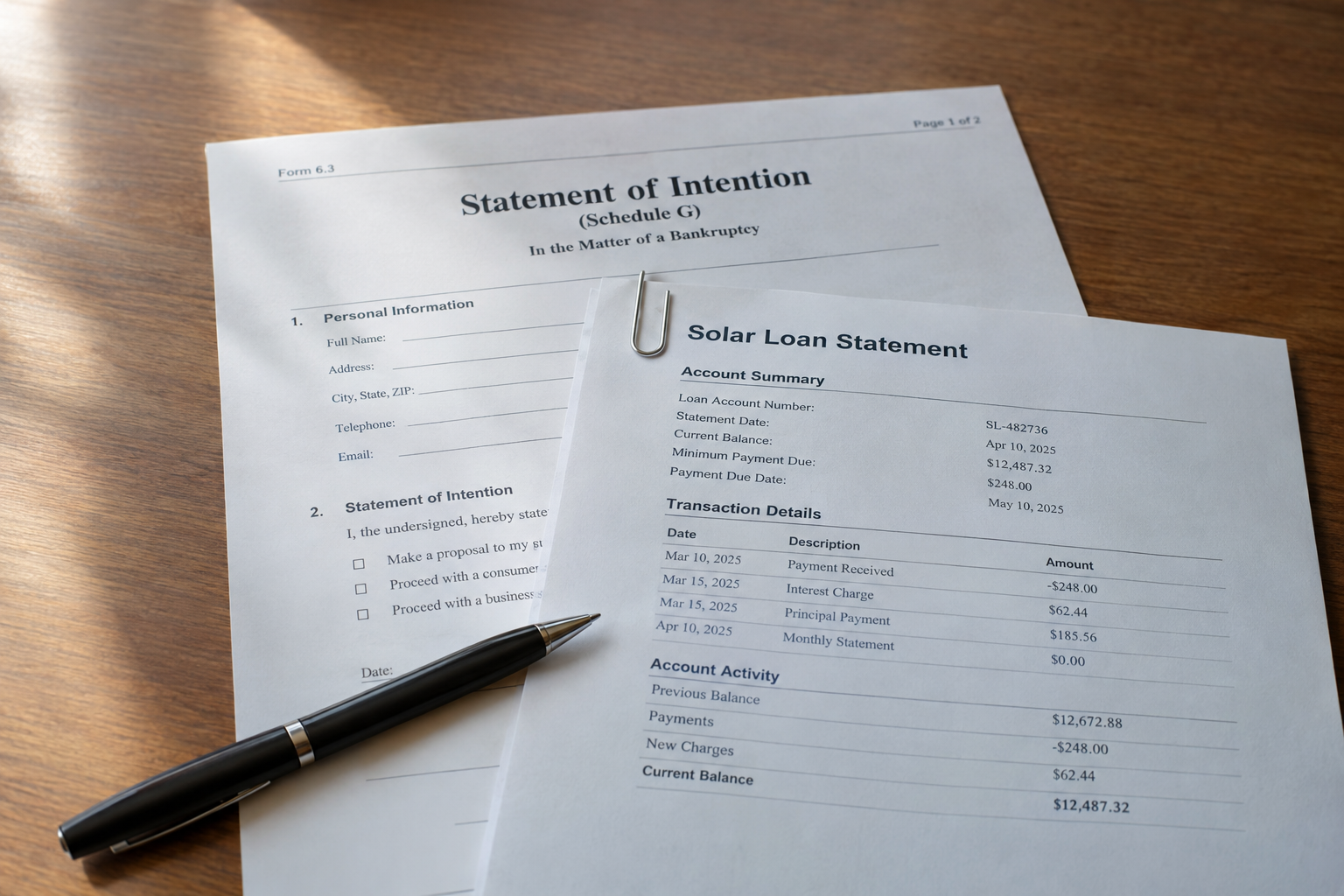
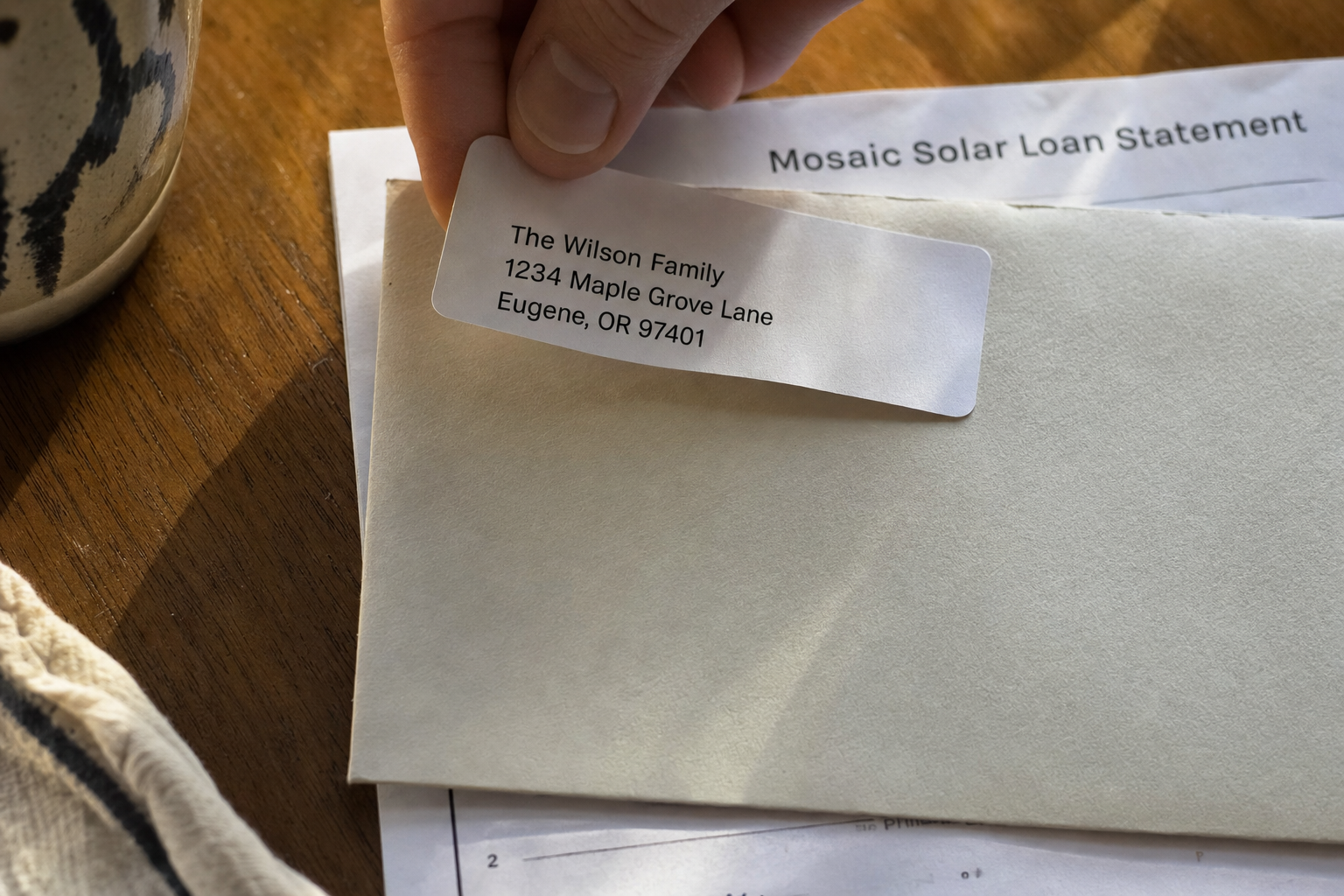
You financed the system through GreenSky, Mosaic, Loanpal/GoodLeap, Dividend Finance, or Sunlight Financial. You technically own the panels — but a UCC-1 lien is recorded on your home's title. This is the structure most popular in newer Inland Empire developments (Murrieta, Menifee, Wildomar, Beaumont, Banning) and the Central Valley (Bakersfield, Fresno, Visalia, Tulare).
Cancellation leverage: Truth in Lending Act (TILA) violations, undisclosed dealer fees (often 25-30% baked into the loan principal), misrepresented APR, and lender liability under the FTC Holder Rule — which makes the lender legally responsible for the dealer's misrepresentations.
The Realistic Timeline (And What Actually Happens at Each Stage)
Solar cancellation in California isn't fast. Anyone promising you a 30-day exit is overselling it. Here's the realistic timeline based on hundreds of California cases:
Days 1-7: Contract review. Your contract, sales documents, and any text/email communications are analyzed for violations. You get a clear yes-or-no on whether you have a viable case.
Weeks 2-4: Demand letter and intake. Formal correspondence goes out to the solar company and any lender. Communication shifts from you to the consumer advocacy team.
Months 1-3: Negotiation phase. Most cases resolve here. The solar company or lender agrees to terminate the contract, release the lien, and in many cases issue a refund or settlement credit.
Months 3-6: Escalation if needed. When companies stall — Sunnova and Mosaic are the slowest in 2026 — the case escalates to formal consumer protection complaints with the CSLB, the California DFPI, the FTC, and in some cases litigation through partner attorneys.
Cases involving home sales (escrow on a property in Newport Beach, a refinance in Carlsbad, a HELOC application in Burlingame) move faster because the title issue forces the lender's hand.
What Solar Cancellation Costs (And the Pricing Models to Avoid)
The honest answer: it depends on the contract type, the solar company, and the strength of the violation evidence.
Free contract reviews are standard. Any firm that charges for the initial review is a red flag. California Solar Exit, Solar Equity Solutions, and most legitimate consumer advocacy firms offer the case evaluation at no cost.
Watch for upfront retainers. Some firms charge $2,000 to $5,000 before they've done a single thing. If the firm is confident in your case, they'll structure the fee around the outcome — flat fee at engagement, success fee at resolution, or a hybrid.
Watch for contingency-only firms making contingency-style promises. Solar cancellation isn't a personal injury case. A pure 33% contingency model often means the firm is only motivated to push for cash settlements, not actual contract termination — which leaves you with the lien still attached.
The cost should always be less than continuing the contract. A homeowner in Diamond Bar paying $327/month on a 25-year Sunrun lease will pay roughly $98,000 over the life of the contract. Spending $4,000-$7,000 to legally terminate that obligation is the math that justifies cancellation work.
Why Homeowners Fail When They Try DIY Solar Cancellation
We've reviewed hundreds of cases where the homeowner started the process alone and ended up in a worse position. The most common failures:
- Stopping payment. This is the single most damaging move. It triggers default reporting, collections, and a lien enforcement posture from the lender — which is harder to unwind than the original contract.
- Filing a BBB complaint and waiting. BBB complaints don't terminate contracts. They notify the solar company of dissatisfaction. The company responds with boilerplate. Nothing changes.
- Sending a generic cancellation letter past the 3-day window. Solar companies file these in the trash. Without a documented violation cited under specific California statute, the letter has no legal weight.
- Posting on Reddit's r/solar and r/RealEstate hoping for advice. You'll get conflicting opinions from people in Texas, Florida, and Arizona — none of which have California's consumer protection framework.
- Accepting a "buyout offer" from the solar company. Sunrun and Sunnova will often offer a buyout figure that's 80-90% of the remaining contract value. That's not a settlement. That's the solar company protecting its asset.
The cases that resolve cleanly are the ones where the violation is documented, the demand is grounded in specific California statute, and the homeowner stops communicating directly with the solar company.
What to Do Right Now If You Think You Qualify
If you're reading this from a home in Long Beach, Fresno, Stockton, Anaheim, Glendale, San Jose, Oakland, or anywhere else in California, here's the sequence:
- Pull your full contract. Lease, PPA, loan agreement — and the original sales presentation if you have it.
- Pull 12 months of utility bills. SCE, PG&E, SDG&E, LADWP, SMUD, Roseville Electric, whichever utility serves you. Compare them to the projections in your contract.
- Search your county recorder's site for a UCC-1 filing under your name. Most California county recorder offices (Los Angeles, Orange, San Diego, Riverside, San Bernardino, Alameda, Santa Clara, Sacramento) offer free UCC search tools online.
- Document any verbal promises. Texts, emails, voicemails, anything in writing where the rep made claims that didn't appear in the contract.
- Get a free contract review.
The contract review is the deciding step. Either you have a case or you don't, and a 30-minute review with a California-specific consumer advocacy firm tells you which.
Frequently Asked Questions About Solar Cancellation in California
Can I cancel my solar contract in California after the 3-day window?
Yes, in many cases. The 3-day cooling-off period (or 5-day for seniors 65+) is the unconditional cancellation window. After that, cancellation requires a legal basis — misrepresentation, undisclosed liens, language access violations, or other consumer protection violations under California law. SB 784, effective January 1, 2026, expanded the rescission window for documented misrepresentation cases.
How long does solar cancellation take in California?
Most cases resolve within 3 to 6 months. Cases tied to a home sale or refinance often resolve faster because the title issue forces the lender to act. Cases with cooperative solar companies sometimes resolve in 4 to 8 weeks.
Will solar cancellation hurt my credit score?
Not when handled correctly. The damage to credit comes from stopping payments without a strategy in place. A properly managed cancellation maintains payment status during negotiation and protects credit throughout the process.
Can I cancel a Sunrun, SunPower, or Sunnova contract?
Yes — these are the most common cancellation cases in California. Each company has different contract structures and different vulnerabilities, but all three are subject to the same California consumer protection framework. SunPower contracts have additional cancellation pathways tied to the 2024 bankruptcy and successor liability under Complete Solaria.
What if my solar contract is a financed loan, not a lease?
Solar loans cancel through a different pathway — Truth in Lending Act violations, undisclosed dealer fees, and the FTC Holder Rule (which makes lenders like GreenSky, Mosaic, GoodLeap, and Dividend Finance liable for the dealer's misrepresentations). The UCC-1 lien on your title is the leverage point.
Does solar cancellation remove the panels from my roof?
Not necessarily. In some cases the panels stay (you keep the system, the contract is voided). In others the solar company is required to remove them. The outcome depends on the contract type, the violation, and the resolution structure. This is decided case-by-case.
Can I cancel solar if I'm trying to sell my home?
Yes — and this is often the highest-priority case type. An unresolved solar lease, PPA, or UCC-1 lien blocks home sales across California. Buyers in Newport Beach, Manhattan Beach, La Jolla, and Palo Alto regularly walk from deals when a solar contract surfaces during escrow. If you're listing or already in escrow, contact a consumer advocacy firm immediately.
How much does it cost to cancel a solar contract in California?
The contract review is free. Engagement fees vary by case — typically $3,000 to $7,000 depending on contract type, solar company, and complexity. The cost should always be substantially less than continuing the contract obligation.
Where to File a Solar Complaint in California
Filing a complaint — with the right agency — is one of the most effective tools California homeowners have. Solar companies respond differently to formal regulatory complaints than they do to phone calls or BBB submissions. A documented complaint creates a paper trail that strengthens any subsequent negotiation or legal action.
California has four primary complaint channels for residential solar disputes:
CSLB (Contractors State License Board) handles complaints against licensed solar installers and their subcontractors. If your system was improperly permitted, installed by an unlicensed crew, or the contractor violated disclosure requirements, the CSLB solar complaint form is your starting point. Many large solar companies use regional installation subcontractors — the CSLB has jurisdiction over each one.
CPUC (California Public Utilities Commission) oversees solar consumer protection standards and required disclosures, including the Solar Consumer Protection Guide that every installer is required to provide before signing. CPUC complaint procedures specifically cover "free solar" claims, rushed tablet signing, missing disclosures, PPA escalator terms, and interconnection or PTO delays.
California Attorney General (AG) accepts consumer complaints against businesses operating in California. Solar companies with patterns of misrepresentation — inflated savings, utility company impersonation, hidden liquidated damages clauses — fall within the AG's consumer protection enforcement authority.
DFPI (California Department of Financial Protection and Innovation) handles complaints involving solar financing: loan origination, interest rate disclosures, PPA structures, and undisclosed dealer fees. If your complaint involves how the system was financed, DFPI is the right filing channel.
You can file with more than one agency. Homeowners who reach resolution most often do so after filing across multiple agencies simultaneously — creating a documented regulatory record that solar companies and lenders take far more seriously than a single complaint.
Ready to See If Your Solar Contract Qualifies for Cancellation?
California Solar Exit has helped more than 500 homeowners across Los Angeles, Orange County, San Diego, the Inland Empire, the Bay Area, Sacramento, and the Central Valley terminate predatory solar contracts. The contract review is free. The conversation is direct. And if you don't have a case, we'll tell you.
📞 Call (213) 579-5156 for a free contract review — no obligation, no pressure, no sales pitch.
Or book a consultation online and we'll get back to you within one business day.
Related Reading
- 7 Ways to Get Out of a Solar Contract in California — Ranked From Worst to Best
- SB 784 Just Took Effect: What California's New Solar Cancellation Law Means for Homeowners in 2026
- How to Get Out of a Sunrun Solar Contract in California (2026 Guide)
- Solar Misrepresentation in California: 9 Sales Tactics That Could Cancel Your Contract
- Solar Lien on Your House in California? Here's How to Find It, Fight It, and Get It Removed
Other insights
More from California Solar Exit