Latest insights
California Solar Door-to-Door Scams: What They Don't Tell You Before You Sign

California Solar Door-to-Door Scams: What They Don't Tell You Before You Sign
The solar salesperson who knocked on your door seemed confident. He had a tablet, a pitch about your utility bill, and a contract ready to sign before he left your driveway. What he may not have told you is that California law gives you significant rights in exactly this situation — rights that many solar companies actively work to obscure.
Door-to-door solar sales is one of the most complaint-heavy segments of the California consumer protection landscape, and the tactics haven't changed much in a decade: high-pressure closing, confusing financing structures, contracts signed on tablets with no copy provided, and promises about energy savings that never materialize. If any of this sounds familiar, you're not alone — and you may have more options than you think.
What Is California's Home Solicitation Sales Act and How Does It Protect Solar Customers?
California's Home Solicitation Sales Act covers virtually every consumer transaction over $25 that takes place outside a seller's brick-and-mortar business — which means it applies to the vast majority of residential solar sales. Under this law, you have the right to cancel a solar contract signed at your home, at a trade show, at a convention center, or anywhere else that isn't the company's official place of business.
The cancellation window is three days for most buyers. If you were 65 or older at the time of signing, that window extends to five days. And critically: if the contract you were handed doesn't include the specific cancellation language the law requires, you may have the right to cancel at any time — not just within the three-day window. Many solar contracts fail this test.
What Are the Most Common Solar Door-to-Door Scams in California?
California's consumer protection attorneys have documented several patterns that appear repeatedly in solar door-to-door sales complaints:
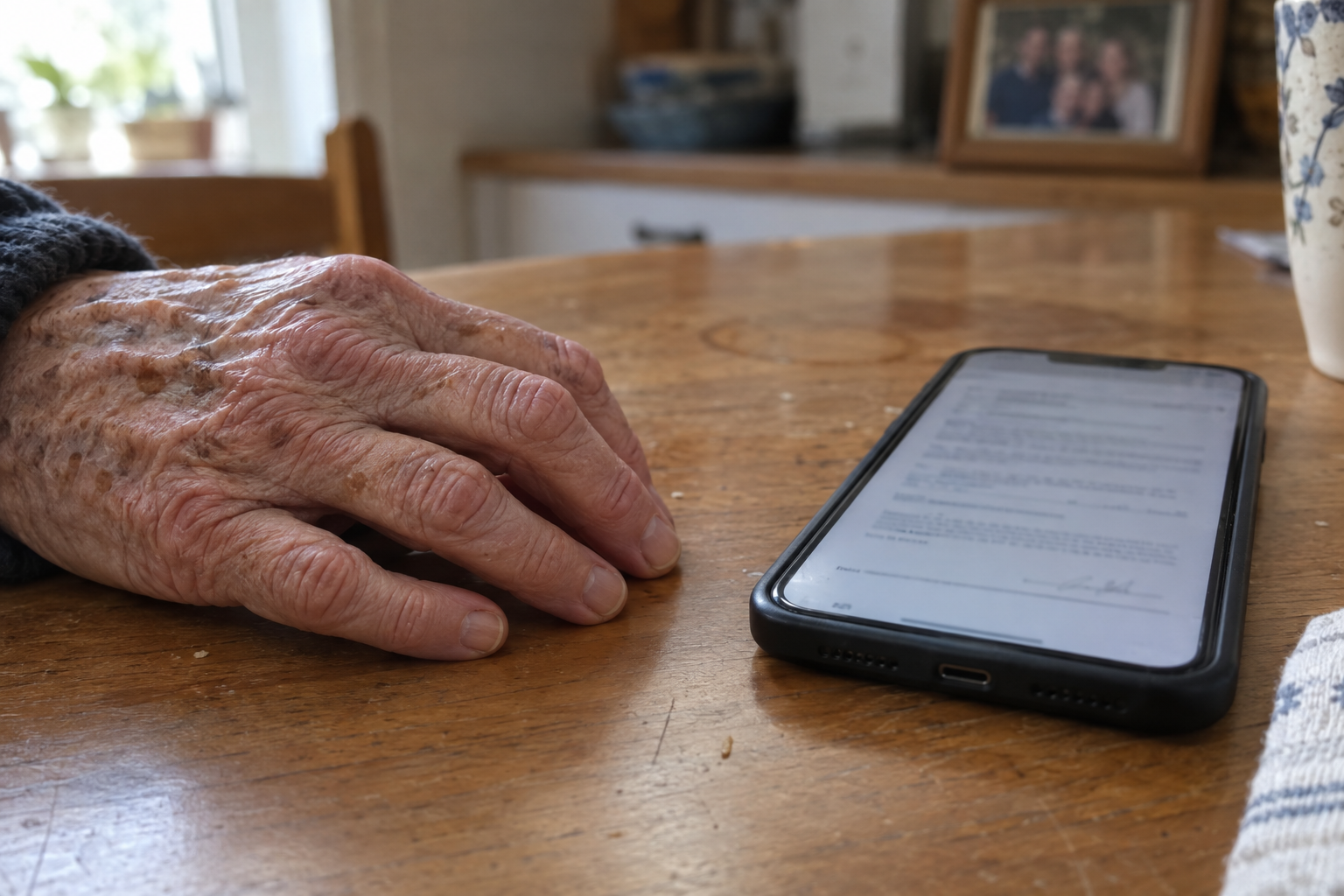
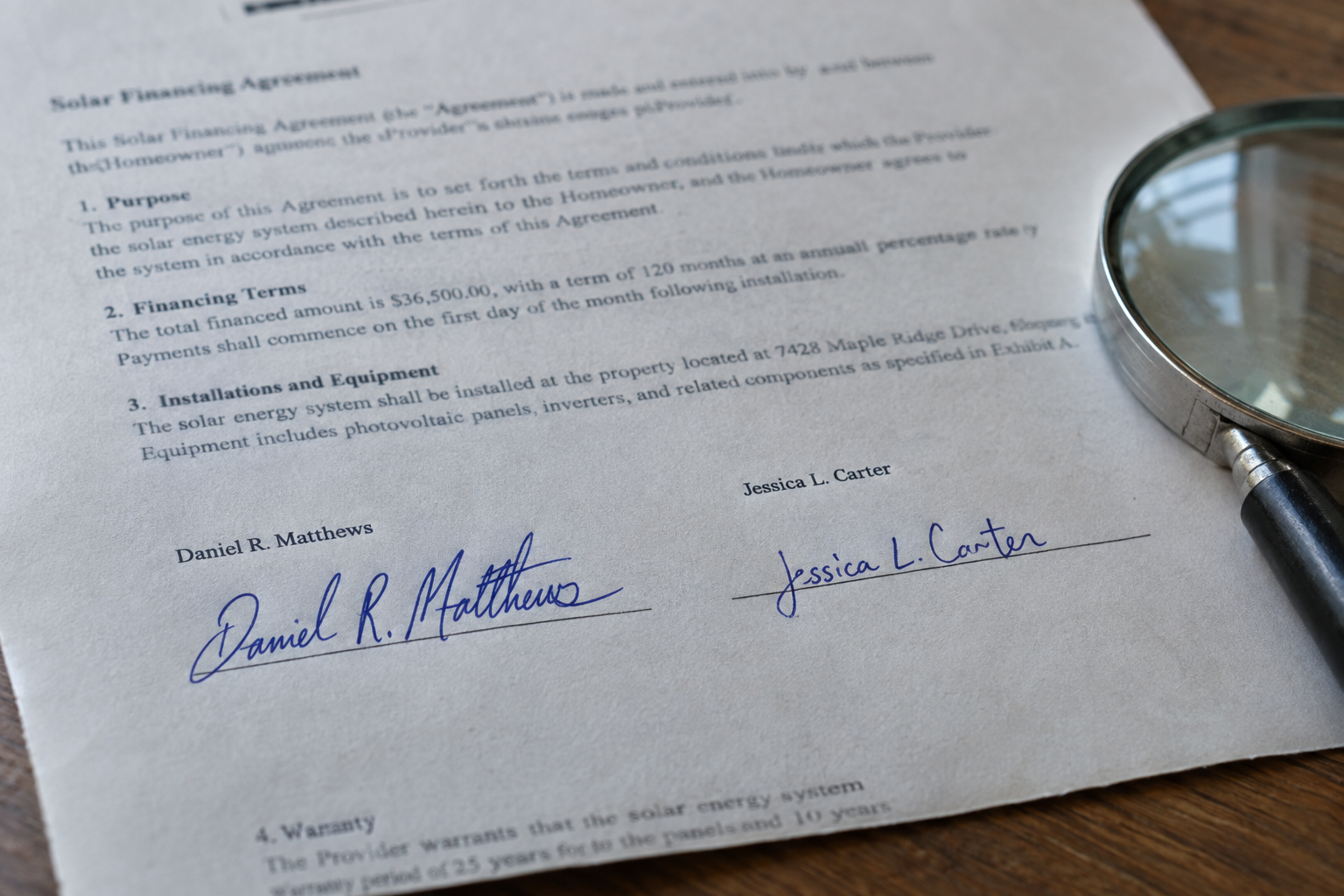
Fake email addresses and forged signatures. Sales reps sometimes create email addresses on behalf of the customer, then e-sign financing documents the homeowner never sees. The customer later discovers they've been enrolled in a loan they didn't knowingly agree to.
Hidden financing costs. The salesperson presents the solar panel system as the product being sold, while quietly enrolling the homeowner in a high-interest loan through a third-party lender like GoodLeap, GreenSky, Sunlight Financial, or Dividend Finance. The true cost of financing — sometimes doubling the sticker price over a 20-year term — is never clearly disclosed.
Inflated savings projections. Verbal promises about utility bill reductions, net metering credits, and "free electricity" are made during the pitch, then absent from the written contract. When the system underperforms, the company points to the contract and says the promises were never made.
No copy of documents provided. Under California law, you're entitled to receive copies of every document you sign — including all financing agreements. Reps frequently leave without providing them, or provide only partial sets.
Language mismatches. Negotiations conducted in Spanish (or another language) with a contract written only in English are a violation of California's translation requirements under the Home Solicitation Sales Act.
Which Solar Companies Are Most Frequently Named in California Complaints?
While any solar installer can engage in predatory door-to-door tactics, certain companies and lenders appear repeatedly in California consumer complaints and legal actions. These include Sunrun, Vivint, Complete Solar, Solgen Construction (also operating as Core Energy Group), Green Power Pros, Sunergy, and Pacific Energy Network. On the financing side, GoodLeap, GreenSky, Sunlight Financial, EnerBank, Dividend Finance, Service Finance Company, and Cross River Bank are frequently named as the lenders tied to contracts consumers are trying to exit or dispute.
Being a customer of any of these companies doesn't automatically mean your contract was improper — but if you feel something was off about the sales process, it's worth a closer look.
What Should You Do Immediately If You Signed a Solar Contract at Your Door?
Act within the cancellation window if you can. Three days moves fast. Here's what to do right now:
First, gather every document related to the sale — the contract itself, any financing agreements, brochures, and any digital records. If you signed on a tablet and never received a copy, that alone may be a violation giving you extended cancellation rights.
Second, check whether the contract includes a cancellation notice with specific statutory language. California law specifies exact wording that must appear. If it's missing, vague, or buried, your right to cancel may not have a deadline.
Third, send any cancellation notice in writing via certified mail with return receipt. Verbal cancellations are difficult to prove and companies frequently claim they were never received.
Fourth, if the cancellation window has already passed, don't assume you're out of options. Misrepresentation during the sales process, forged signatures, missing disclosures, and contract language violations are all independent grounds for legal action under California consumer protection law and the federal Truth in Lending Act (TILA).
Can You Cancel a Solar Contract After the Three-Day Window?
Yes — under the right circumstances. The three-day right to cancel is the floor, not the ceiling. If the contract was missing required disclosures, if the sale involved fraud or misrepresentation, if the financing was structured without your knowledge, or if the company failed to perform the services promised, California law and federal consumer protection statutes may provide additional remedies regardless of when you signed.
The California Public Utilities Commission (CPUC) also maintains complaint and mediation channels for solar customers, though navigating these without professional guidance is difficult and slow.
If you're past the cancellation window and still looking for options, California Solar Exit offers a free contract review to assess whether your situation qualifies for exit or resolution.
What Happens If You Exercise Your Right to Cancel?
Under the Home Solicitation Sales Act, the seller is required to return any money you paid within 10 days of receiving your cancellation. If the company installed equipment on your property and fails to retrieve it within 20 days of you making it available for return, you're legally entitled to keep it.
Document everything. Keep records of when you sent cancellation notice, who received it, and any responses. If the company fails to honor a valid cancellation, that's a separate violation — one that may entitle you to additional damages under California law.
Frequently Asked Questions
Does California's door-to-door cancellation law apply to solar leases and PPAs, not just purchases?
Yes. California's Home Solicitation Sales Act applies to both sales and leases of goods and services conducted outside a seller's traditional place of business. Solar leases and power purchase agreements (PPAs) signed at your home are covered.
What if my solar contract was negotiated in Spanish but written in English?
This may be a violation of California's contract translation requirements. If negotiations were conducted primarily in a language other than English, you may have grounds to rescind the contract based on the language mismatch alone. Document the language used in all communications.
Can I cancel a solar loan separately from the solar panel contract?
In some cases, yes. Federal Truth in Lending Act (TILA) rescission rights may apply to certain secured loan transactions tied to your home, giving you a three-day cancellation window independent of the state home solicitation rules. If the lender failed to provide required disclosures, that window may extend to three years.
What if the solar company that sold me my system is now out of business?
Installer bankruptcy or closure doesn't eliminate your legal rights. The financing company (GoodLeap, GreenSky, etc.) remains liable, and depending on how the transaction was structured, you may have claims against both the installer and the lender.
Contact California Solar Exit to review your specific situation.
Is it worth pursuing a claim if my solar system is working but I feel the sales process was dishonest?
Potentially. California consumer protection law — including the Consumer Legal Remedies Act (CLRA) and the Unfair Competition Law (UCL) — allows claims based on deceptive sales practices even when the physical product is functioning. The issue is how you were sold to, not just what you received.
Other insights
More from California Solar Exit
A Federal Court Just Said "No" to Forcing Arbitration — Because the Signature Might Not Even Be Real