Latest insights
Solar Lien on Your House in California? Here's How to Find It, Fight It, and Get It Removed
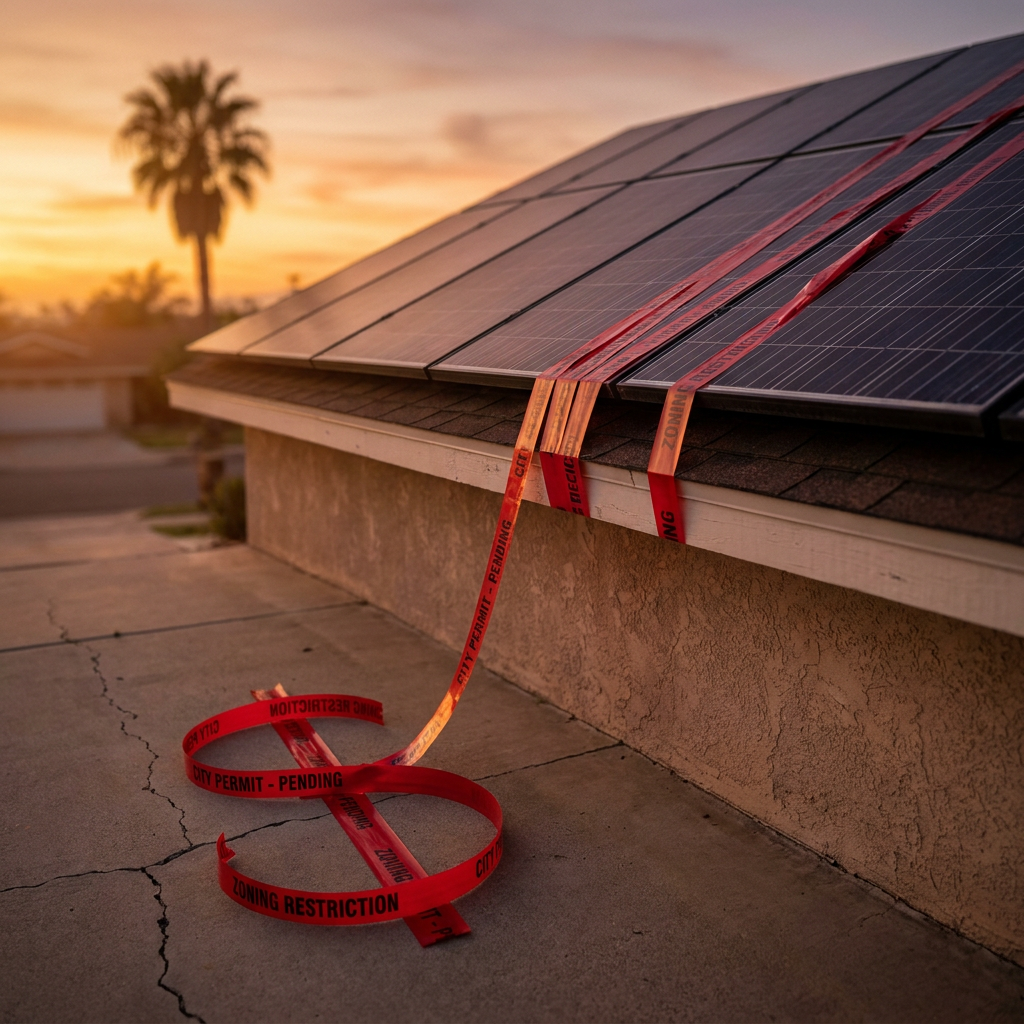
Solar Lien on Your House in California? Here's How to Find It, Fight It, and Get It Removed
Most California Homeowners Don't Know There's a Lien on Their House Until It's Too Late
You signed the solar contract three years ago. The rep in the polo shirt promised your bill would disappear. Maybe you were sitting at your kitchen table in Mission Viejo, or in a Fresno cul-de-sac, or on the patio of a San Marcos townhome — and the conversation moved fast. Sign here. Initial there. Welcome to the future. Nobody mentioned the UCC-1 financing statement that would be filed against your property within thirty days. Nobody said the words "lien on your home." And so, like more than a million other California homeowners across Los Angeles County, Orange County, the Inland Empire, San Diego, the Bay Area, Sacramento, and the Central Valley, you only found out about it when something else forced the issue: a refinance application denied, a buyer's title company flagging a cloud on the deed, or a HELOC offer that came back with conditions you didn't expect.
If you're discovering a solar lien on your California home right now, you are not alone. The California Department of Financial Protection and Innovation has logged thousands of complaints related to solar financing disclosures since 2021, and lien-related disputes are one of the most common categories. The good news: under California's Consumer Legal Remedies Act, the Home Solicitation Sales Act, and the consumer protection framework rebuilt by SB 784 in 2026, homeowners have real, enforceable options. The path out is not simple, but it exists. Let's walk through what a solar lien actually is, how to find out if one is on your house, what removal looks like, and where the leverage points sit in California law.
What Is a UCC-1 Solar Lien, Exactly?
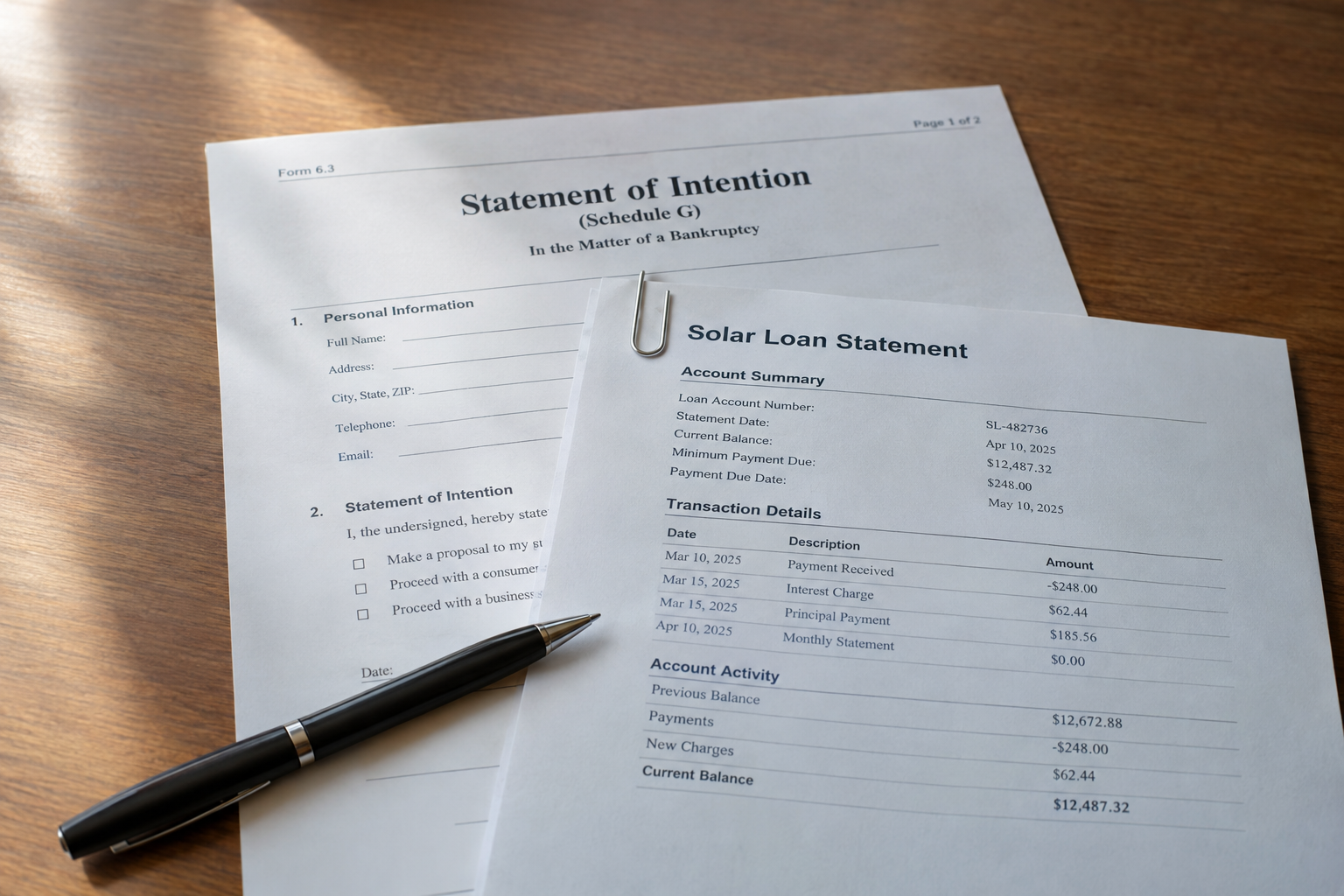
A UCC-1 financing statement is a legal filing recorded under the Uniform Commercial Code that gives a lender a security interest in a specific piece of property — in this case, the solar system installed on your roof. When you finance solar panels through GreenSky, Mosaic, GoodLeap (formerly Loanpal), Dividend Finance, Sunlight Financial, or Service Finance Company, the lender almost always files a UCC-1 with the California Secretary of State and, in many cases, records a fixture filing with the county recorder where your property sits — Los Angeles County, San Bernardino County, Riverside County, Orange County, San Diego County, Alameda County, Santa Clara County, Sacramento County, or wherever you live.
The lien isn't on the panels alone. It clouds your title. That means when you go to sell your Huntington Beach bungalow, refinance your Temecula tract home, or pull equity out of your Roseville new-build, the title company will flag it. Most buyers' lenders will not close on a property with an unresolved fixture filing. Most refinance underwriters will require the lien either be paid off, subordinated, or removed before they fund. In hot real estate corridors like the South Bay, North County San Diego, the Tri-Valley, and the Sacramento suburbs of Folsom and Roseville, an unresolved solar lien has cost homeowners deals worth hundreds of thousands of dollars.
The kicker: California solar reps are required by Civil Code §1689.7 and Business & Professions Code §7169 to clearly disclose financing terms, including any security interest in the property. When that disclosure is buried, glossed over, or misrepresented during the sale, the contract itself becomes vulnerable to cancellation.
How to Find Out If There's a Solar Lien on Your California Home
Three ways to check, in order of speed:
1. Search the California Secretary of State UCC database. Go to bizfileonline.sos.ca.gov, run a UCC search using your name as the debtor, and you'll see every active UCC-1 filing tied to your name. This is free. It takes about three minutes. If you live in Burbank, Bakersfield, Berkeley, or anywhere in between, the same database covers you.
2. Pull your property profile from your county recorder. Los Angeles County, Orange County, San Diego County, Riverside County, San Bernardino County, Alameda County, Contra Costa County, and Sacramento County all offer online property record searches. Look specifically for a "fixture filing" or any document with the solar lender's name on it. Many counties charge a small fee for certified copies, but the lookup itself is free.
3. Order a title report from a local title company. Stewart Title, Fidelity National, First American, Old Republic, and Chicago Title all operate throughout California and can pull a preliminary title report for a modest fee. This is what your buyer's title company will see, so it's the most realistic preview of what's actually on your record.
If a lien shows up in any of these searches and you don't recognize the lender, or you don't remember being told a security interest would be filed, that's a documentation issue worth investigating immediately.
Why So Many California Solar Liens Are Vulnerable to Cancellation
Here's what most homeowners don't realize: the existence of a lien isn't automatically bulletproof. The lien depends entirely on the validity of the underlying contract. If the solar contract was sold to you through misrepresentation, deceptive savings projections, undisclosed escalator clauses, or sales practices that violated California's CLRA or Home Solicitation Sales Act, the contract — and by extension, the lien — becomes contestable. (See our full breakdown of 9 misrepresentation tactics that can cancel your contract.)
Common patterns we see across the California solar market, from Long Beach to Lodi to Lake Forest:
- Verbal promises that never made it into writing. "Your bill will be zero." "You'll get a federal tax credit that covers most of the cost." "You can transfer this easily when you sell."
- Falsified or wildly optimistic NEM production estimates. Solar Energy Industries Association data shows that real-world residential solar production in California averages 10–25% below initial sales projections — and in some Inland Empire and Central Valley markets the gap runs even wider.
- Failure to clearly explain the UCC-1 filing. Civil Code §1689.7 requires plain-language disclosure of financing terms, including security interests.
- Pressure tactics that violate California's three-day cooling-off rule. The Home Solicitation Sales Act gives California homeowners a clear three-day right to cancel any door-to-door or in-home solicitation sale.
- Forgery or proxy signatures on disclosure pages. This one is more common than people think, especially with rushed in-home closes in markets like Stockton, Modesto, Fresno, and the Coachella Valley.
When any of these are present in the original sale, you're not just disputing a lien — you're challenging the underlying contract. That's the leverage point.
What the Removal Process Actually Looks Like
There is no single button to push. Solar lien removal in California typically follows one of four pathways:
Pathway A: Negotiated buyout or settlement with the lender. GreenSky, Mosaic, GoodLeap, and Dividend will sometimes negotiate a discounted payoff, especially when the contract is contested or the homeowner is mid-transaction on a property sale. We've seen settlements in the 40–70% range when the underlying sales conduct is well-documented.
Pathway B: Cancellation under the Consumer Legal Remedies Act. When the original sale involved misrepresentation, the CLRA allows for rescission of the contract, which removes the basis for the lien. This typically requires written demand, documentation of the misrepresentation, and a structured negotiation with both the solar company and the lender.
Pathway C: Cancellation under the Home Solicitation Sales Act. If the contract was signed in your home (which most California residential solar contracts are) and certain disclosures were missing or improperly executed, the cancellation window can extend well beyond the standard three days.
Pathway D: Litigation or arbitration. Most California solar contracts include mandatory arbitration clauses. A consumer protection arbitration filing can sometimes accomplish what direct negotiation can't, particularly when the lender is uncooperative.
The right pathway depends on your specific contract, the documentation you still have from the original sale, the lender involved, and your timeline (a homeowner trying to close escrow next month has different priorities than one starting from scratch).
Real Numbers: What This Costs California Homeowners
The financial damage from a misrepresented solar contract in California is rarely just the monthly payment. Here's what we see:
- Lost home sale equity. Buyers who back out over solar lien complications cost sellers an average of $15,000–$45,000 in carrying costs, price reductions, and re-listing expenses, based on California Association of Realtors data on transaction failures.
- Refinance opportunity cost. A homeowner in Pasadena who couldn't refinance from a 7.2% mortgage to 6.1% because of a solar lien lost roughly $340/month — over $80,000 across a 20-year horizon.
- HELOC denial. Equity locked behind a solar lien can't be tapped for renovations, medical bills, college tuition, or business needs.
- The contract itself. A 25-year solar lease at $250/month is a $75,000 obligation. A misrepresented loan at $400/month over 20 years is $96,000. These are not small numbers.
Frequently Asked Questions
How do I know if there's a UCC-1 lien on my California home from solar?
Search the California Secretary of State UCC database at bizfileonline.sos.ca.gov using your name as debtor, and pull a property records search from your county recorder (Los Angeles, Orange, San Diego, Riverside, San Bernardino, Alameda, Sacramento, etc.). For the most accurate picture, order a preliminary title report from a California title company.
Can a solar lien stop me from selling my house in California?
Yes. Most buyers' title companies will flag a UCC-1 fixture filing tied to a solar system, and most mortgage lenders will not close on a property with an unresolved lien. Sellers in Orange County, North County San Diego, the South Bay, the Tri-Valley, and the Sacramento suburbs have lost deals over unresolved solar liens.
How long does it take to remove a solar lien in California?
It depends on the pathway. A negotiated buyout can resolve in 3–8 weeks. A CLRA-based cancellation typically runs 2–6 months. Litigation or arbitration can extend longer. Real estate timelines often accelerate negotiations.
Is the lien on my whole house or just the panels?
Functionally, on your whole house. While the security interest technically attaches to the solar equipment, a UCC-1 fixture filing recorded against your property creates a cloud on title that affects your ability to sell, refinance, or borrow against the home until it's resolved.
What if I didn't know about the lien when I signed?
That's a strong indicator the original sale may have violated California's disclosure requirements under Civil Code §1689.7 and Business & Professions Code §7169. Lack of disclosure is one of the most common grounds for contract cancellation under California consumer protection law.
Does SB 784 help with solar liens?
SB 784, which took effect January 1, 2026, expanded cancellation windows and added lender accountability provisions for California solar contracts. It doesn't automatically remove existing liens, but it strengthens the legal framework for challenging contracts where disclosures were inadequate.
Can I just stop paying my solar loan to force the issue?
No — and we strongly advise against it. Stopping payment without a documented dispute strategy can damage your credit and complicate the cancellation process. Work with consumer protection professionals before changing your payment status. For a full comparison of approaches, see 7 ways to get out of a solar contract in California, ranked.
Will canceling the contract remove the lien automatically?
When a contract is rescinded under the CLRA or Home Solicitation Sales Act, the underlying basis for the lien dissolves and the lender is required to terminate the UCC-1 filing. Coordinated paperwork is required to ensure the lien is properly released through the Secretary of State and county recorder.
Found a Solar Lien on Your House? Don't Wait.
If you've discovered a UCC-1 filing tied to your solar system — or if a real estate transaction is about to surface one — the timeline matters. Every week of delay narrows your options, especially if you're in escrow or planning to list. California Solar Exit reviews every solar contract for free, identifies the disclosure failures and misrepresentation that may give you grounds for cancellation, and handles the lender communications so you don't have to. We've helped more than 500 homeowners across Los Angeles, Orange County, San Diego, the Inland Empire, the Bay Area, Sacramento, and the Central Valley resolve solar contracts and the liens that came with them.
Call (213) 579-5156 for a free, no-obligation contract review.
Looking for direct help with your solar exit? We refer homeowners to Solar Equity Solutions, California specialists in solar PPA, lease, and lien resolution.
California Solar Exit is a consumer advocacy firm. The content of this post is for general informational purposes only and does not constitute legal advice or create an attorney-client relationship. Individual results vary. Consult our team to evaluate your specific situation.
Other insights
More from California Solar Exit