Latest insights
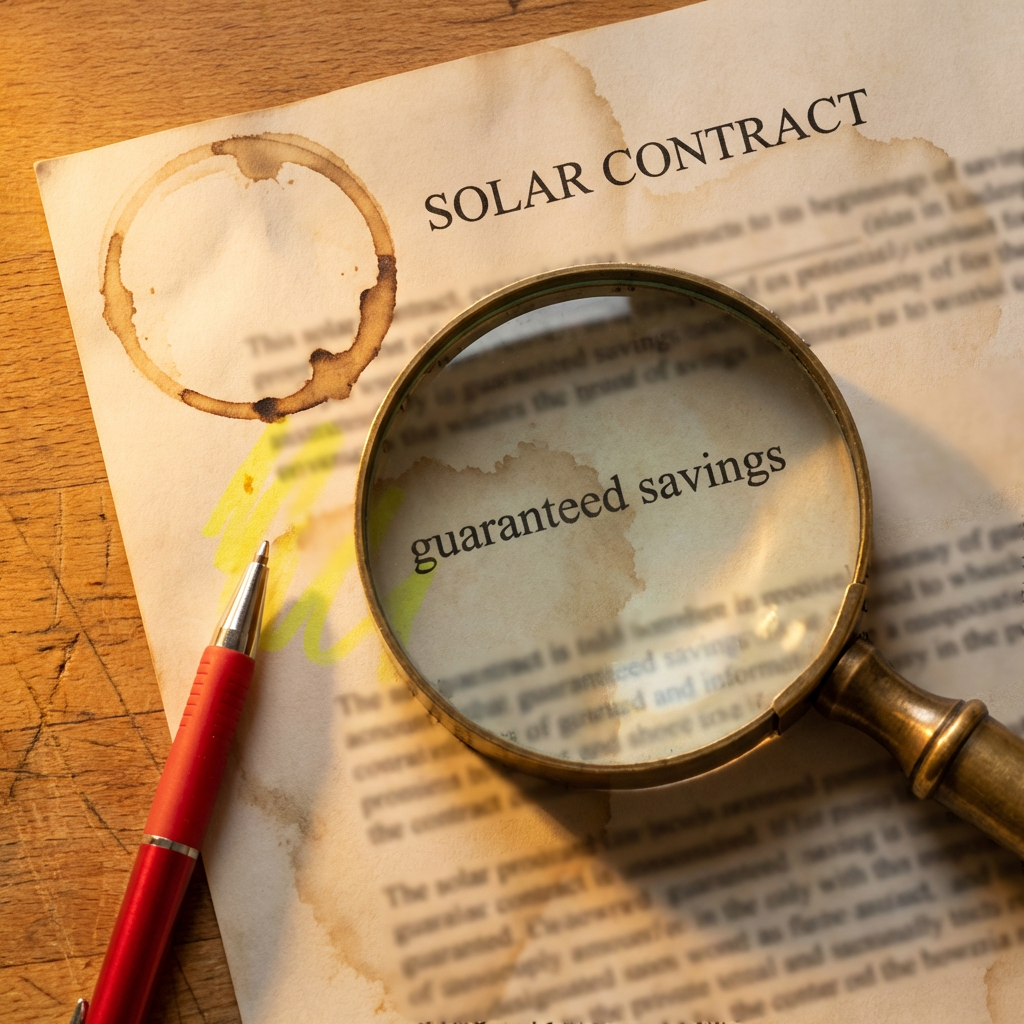
Solar Misrepresentation in California: 9 Sales Tactics That Could Cancel Your Contract
Solar Misrepresentation in California: 9 Sales Tactics That Could Cancel Your Contract
If your solar payment hasn't matched what you were promised, and your utility bill hasn't disappeared the way the rep said it would, you may have grounds to cancel your contract under California law.
Solar misrepresentation cases are the single most common reason California homeowners successfully exit solar leases, PPAs, and loans. From Long Beach to Bakersfield, from the Inland Empire to the East Bay, the same handful of sales tactics show up in case after case, and California's Consumer Legal Remedies Act (CLRA), the Home Solicitation Sales Act, and FTC cooling-off rules give homeowners real leverage against them.
Call (213) 579-5156 for a free contract review or keep reading to see the 9 misrepresentation tactics we see most often.
What Counts as Solar Misrepresentation in California?
Under California Civil Code § 1770 (the CLRA), it's unlawful for a seller to make false or misleading statements about the characteristics, benefits, or quantities of goods or services. Solar sales reps fall squarely under this statute, and so do the lenders and dealers who train them.
Misrepresentation doesn't have to be a deliberate lie. It can be:
- A verbal promise that contradicts the written contract
- An "estimate" presented as a guarantee
- A material fact that was withheld during the sale
- A document the homeowner was rushed through without time to read
If any of those happened during your sale, you may have a case. Here are the 9 tactics we see most often across California.
1. Inflated Savings Projections
This is the single most common misrepresentation in California solar sales.
The rep shows you a glossy savings comparison: your current SCE, PG&E, or SDG&E bill versus your projected solar payment. They promise "free electricity," "$0 utility bill," or "guaranteed savings of $40,000 over 25 years."
Then you sign, and the math falls apart.
The projection assumed utility rate increases of 6%, 7%, or even 9% per year. It ignored your actual usage patterns. It didn't account for the NEM 3.0 transition that slashed export credits for systems installed after April 2023. The "savings" never materialize, and you're paying both your solar bill and your utility bill,sometimes more than before.
Why it's actionable: California courts have repeatedly found that materially false savings projections, especially those presented as guarantees, violate the CLRA and California's false advertising statutes (Business & Professions Code § 17500).
2. Undisclosed UCC-1 Liens on Your Home
Homeowners across Orange County, the South Bay, and the Sacramento suburbs have discovered solar liens only when they tried to sell, refinance, or pull a HELOC.
A UCC-1 financing statement gives the solar lender a security interest in the panels and by extension, your roof. When you go to close on a real estate transaction, that lien must be resolved, subordinated, or transferred. Buyers walk. Lenders refuse to close. Deals fall through.
If the rep never told you a lien would be filed against your property or if they told you the system "doesn't affect your home" that's a material omission under California consumer law.
3. Fake or Falsified Utility Bill Projections
Some reps go further than optimistic math. They generate falsified utility projections that show wildly inflated future bills from PG&E, SCE, or SDG&E to make the solar deal look like a no-brainer.
We've seen "projected" 25-year utility costs north of $200,000 used to pressure homeowners in Riverside, Bakersfield, and the Central Valley into signing. None of those projections held up against actual rate filings with the California Public Utilities Commission.
If your rep showed you a utility cost projection that turned out to be fabricated or grossly exaggerated, that's textbook misrepresentation under § 1770(a)(5) and (a)(7).
4. Misrepresented Net Energy Metering (NEM) Credits
Many California homeowners signed solar contracts believing they'd be credited at full retail rate for every kilowatt-hour their panels exported back to the grid.
Then NEM 3.0 changed the rules. Systems installed after April 14, 2023 receive export credits at a fraction of retail rates — often 75% lower than NEM 2.0 customers.
If your rep promised NEM 2.0 economics on a system that was actually grandfathered into NEM 3.0, or if they implied your "credits" would offset your full bill when they wouldn't, you have a misrepresentation case. This is hitting homeowners hard from San Diego County to Marin.
5. Verbal Promises That Never Made the Contract
"You'll qualify for the federal tax credit — that'll cover your down payment."
"We'll buy back your panels at fair market value if you ever want out."
"The 30% ITC comes back to you as a check."
If your rep made promises like these and the written contract says nothing about them — or directly contradicts them — that's actionable. California's parol evidence rule has exceptions for fraud, and Civil Code § 1572 specifically defines actual fraud to include promises made without intention of performing them.
We've reviewed contracts across Los Angeles, the Inland Empire, and the Central Coast where the rep's verbal pitch was completely disconnected from the document the homeowner signed.
6. Forged Signatures or Initialed Boxes
This one is more common than most homeowners realize.
A rep walks the homeowner through a tablet during a high-pressure pitch, taps through dozens of disclosure screens, and "helps" by checking boxes or initialing on the homeowner's behalf. The homeowner later finds they "agreed" to escalator clauses, prepayment penalties, or arbitration provisions they never saw.
Under California's Home Solicitation Sales Act (Civil Code § 1689.5), in-home solicited sales over $25 require specific written disclosures and a 3-business-day cancellation window. If those weren't properly executed — or if your "signatures" were applied by someone else — the contract may be voidable from day one.
7. Hidden Escalator Clauses on PPAs
A power purchase agreement (PPA) charges you for the electricity your panels produce at a per-kilowatt-hour rate. The catch: most PPAs include an annual escalator — typically 2.9% to 3.9% — that compounds over the 20- or 25-year term.
Reps often present the first-year rate as the "rate" and gloss over the escalator. By year 15 or 20, homeowners in places like Fresno, Stockton, and the High Desert are paying more per kWh through their PPA than they would from the utility.
If the escalator was buried in fine print or never explained, and the rep made comparisons based on year-one pricing only, that's a material misrepresentation.
8. Production Guarantees That Don't Actually Guarantee Anything
The rep tells you the system will produce, say, 12,000 kWh per year. The contract includes a "production guarantee."
Then year one comes in at 8,400 kWh. You file a claim. The fine print kicks in: the guarantee only applies after panel degradation, weather adjustments, shading allowances, and a dozen other carve-outs. The "guarantee" is meaningless.
We've seen this pattern across the Bay Area, Sacramento, and Inland Empire — particularly with systems installed by regional dealers who white-label financing through GreenSky, Mosaic, or GoodLeap. If your contract's production language was misrepresented as a real guarantee, you have grounds to challenge it.
9. Pressure Tactics and Rushed Signings
California's Home Solicitation Sales Act exists specifically because in-home sales pressure is a recognized consumer protection issue.
Common patterns we see:
- The rep shows up for a "free quote" and stays for four hours
- The "expiring incentive" pitch — sign tonight or lose the deal
- Signing on a tablet with no time to read
- Being told the cancellation window is shorter than California law actually provides
- Spouses pressured to sign without the other present
If any of these happened to you, the sale itself may have been improperly executed regardless of what the contract says.
What to Do If You Recognize Your Situation
If even one of these tactics matches what happened during your sale, you may have a viable misrepresentation case under California law. SB 784 — which took effect January 1, 2026 — also expanded cancellation windows and added lender disclosure rules that strengthen many existing cases.
The strongest cases combine:
- A documented sales pitch (texts, emails, marketing materials, brochures)
- The original contract and any addenda
- Utility bills before and after installation
- The production projection vs. actual production
- Notes or recordings from the sales meeting
Even if you don't have all of these, we can usually piece together what you need.
Get a Free Contract Review — No Obligation
California Solar Exit has helped more than 500 California homeowners cancel deceptive solar leases, PPAs, and loans. We work remotely with homeowners across Los Angeles County, Orange County, San Diego County, the Inland Empire, the Bay Area, Sacramento, and the Central Valley.
If you were misled, pressured, or shown projections that didn't hold up, the consultation is free and there's no obligation to proceed.
Call (213) 579-5156 or book a consultation.
Frequently Asked Questions
Q: How do I prove my solar rep misrepresented the deal? A: The strongest evidence is anything in writing — text messages, email exchanges, marketing flyers, savings projection printouts, or screenshots from the rep's tablet. Recordings, where lawful, are also valuable. California is a two-party consent state for recordings, but written communications are fair game. We help clients reconstruct the sales presentation from whatever documentation they have.
Q: How long do I have to file a misrepresentation claim in California? A: The statute of limitations under the CLRA is generally three years from the date the misrepresentation was discovered, or reasonably should have been discovered. For fraud claims under Civil Code § 1572, the window can extend further. SB 784 also expanded certain cancellation windows for solar contracts specifically. The sooner you act, the more options you have.
Q: Does it matter which solar company sold me the system? A: California consumer protection law applies to all solar sellers operating in the state — Sunrun, Sunnova, Tesla Energy, the former SunPower (now Complete Solaria), Vivint Solar (now part of NRG), and regional dealers alike. The tactics differ slightly by company, but the legal framework is the same.
Q: What if I signed years ago — am I out of options? A: Not necessarily. Many homeowners only discover the misrepresentation years later — when a refinance fails, when a home sale stalls, or when the savings simply never show up. The discovery rule under California law often allows older contracts to be challenged. We've successfully resolved cases on contracts signed five and even seven years prior.
Q: Will challenging my contract hurt my credit? A: It depends on how the dispute is handled. Stopping payment on a financed solar loan without a strategy in place can have credit consequences. That's why we coordinate with lenders like GreenSky, Mosaic, and GoodLeap as part of the cancellation process — to protect your financial standing while resolving the underlying contract issue.
Q: Is California Solar Exit a law firm? A: California Solar Exit is a consumer advocacy firm that works with general counsel and a specialized team focused on solar contract cancellation through consumer protection law. We're not a law firm and our consultations don't constitute legal advice or create an attorney-client relationship. We do, however, know exactly how to apply California consumer protection statutes to deceptive solar contracts — and we've done it 500+ times.
Other insights
More from California Solar Exit

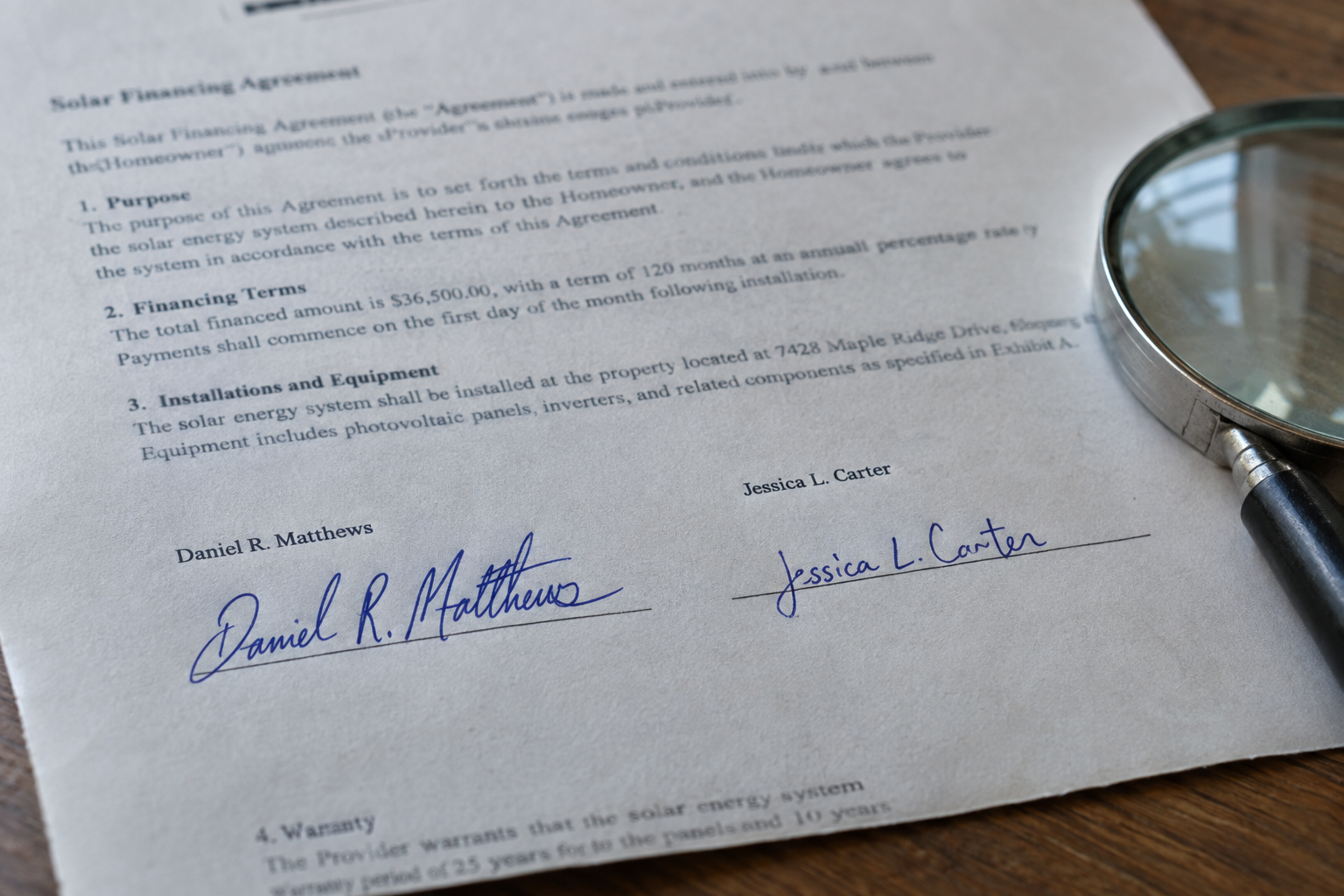
A Federal Court Just Said "No" to Forcing Arbitration — Because the Signature Might Not Even Be Real