Latest insights
When Do You Actually Need a Solar Attorney in California? An Honest Guide
When Do You Actually Need a Solar Attorney in California? An Honest Guide
Most California homeowners who've been misled by a solar company assume they need a lawyer immediately. Some go the opposite direction and assume the situation isn't serious enough for legal representation. Both assumptions can cost you.
The honest answer is that many solar contract issues can be resolved without an attorney — through direct negotiation, regulatory complaints, or buyout agreements. But some situations clearly warrant legal representation, and waiting too long to get it can close windows that don't reopen.
Here's how to tell the difference.
When You Probably Don't Need an Attorney
Your complaint is about service quality or system performance. If your panels aren't producing as promised but the gap is relatively small, your first step is a written complaint to the company and your monitoring data to support it. Many companies will address documented performance shortfalls through warranty service or compensation without litigation.
You want to negotiate a buyout. If you want to exit a lease or PPA by buying out the remaining contract value, this is typically a direct negotiation with the solar company. No attorney required — though having your contract reviewed first helps you understand what leverage you have.
You're filing regulatory complaints. Attorney general complaints, CFPB filings, and FTC reports are free, don't require legal representation, and sometimes produce faster results than formal litigation. These are almost always worth doing before escalating to legal action.
The financial gap is small. If the discrepancy between what you were promised and what you're experiencing amounts to a few hundred dollars over the contract term, the cost of litigation may exceed the potential recovery. Regulatory complaints and direct negotiation are proportionate responses.
When You Should Consult an Attorney
The solar company is refusing to honor a buyout clause. If your contract includes a buyout provision and the company is ignoring it or adding conditions not in the agreement, that's a breach of contract issue that typically requires legal pressure to resolve.
You believe your contract was forged or materially altered. If pages were added after signing, if your signature appears on documents you never saw, or if contract metadata shows modification dates after your signing date — this is potential fraud. Get legal counsel before taking any other action.
You have a strong FTC Cooling-Off Rule violation. If you were sold solar door-to-door and never received a proper written cancellation notice — and you want to exercise your right to cancel — having an attorney send the cancellation notice and manage the company's response significantly reduces the risk of the company disputing the cancellation improperly.
Your lender added hidden dealer fees. TILA rescission claims — which can cancel your loan entirely — are complex and time-sensitive. The three-year rescission window under TILA is one of the most powerful remedies available, but it requires precise legal execution. This is not a DIY process.
The company has gone bankrupt and a third party now holds your contract. Navigating bankruptcy creditor claims while simultaneously pursuing consumer protection rights against the original seller, the acquiring company, and the current servicer requires legal coordination that most homeowners can't manage alone.
You're a senior who was sold solar under conditions that may constitute elder abuse. California's Elder Abuse Act provides treble damages and mandatory attorney fees for successful plaintiffs — meaning attorneys frequently take these cases on contingency. If you're over 65 and believe the sale was conducted under undue influence or misrepresentation, a consultation costs nothing and the potential recovery is substantial.
Your PACE financing has resulted in a property tax lien you weren't told about. PACE loan disputes involving property tax liens require specialized legal knowledge. The consequences of getting this wrong — including potential foreclosure — are serious enough that legal representation is warranted.
What to Expect From a Solar Attorney
Free initial consultations are standard among consumer protection attorneys handling solar cases. Most reputable solar consumer protection attorneys offer a free first call to evaluate your situation before discussing representation.
Contingency arrangements are common in cases with strong CLRA, elder abuse, or TILA claims. Under a contingency arrangement, the attorney takes a percentage of the recovery rather than charging hourly fees — meaning you pay nothing unless you win. California's CLRA mandates attorney fees for successful plaintiffs, which makes many cases attractive to contingency attorneys.
Flat fee arrangements exist for more defined scopes of work — reviewing a contract, sending a demand letter, or managing a cooling-off cancellation. Flat fees for solar contract matters typically run $1,500–$5,000 depending on complexity.
Realistic timelines: Consumer protection litigation in California moves slowly. Most solar cases that go to formal litigation take 12–24 months to resolve. Cases that settle through negotiation or mediation — which is most of them — typically resolve in 3–9 months after legal engagement.
How to Find the Right Attorney
Not every consumer protection attorney handles solar cases. The specific legal frameworks — TILA, the FTC Cooling-Off Rule, California UCL, the Elder Abuse Act — require familiarity with how solar contracts are structured and how solar companies respond to legal pressure.
Look for attorneys who specifically list solar contract disputes, predatory lending, or home improvement fraud as practice areas. The California State Bar's referral service at calbar.ca.gov can identify consumer protection attorneys in your area. Many consumer protection attorneys also advertise directly to solar fraud victims given the volume of cases in California.
Questions to ask in an initial consultation:
- Have you handled solar contract cases specifically?
- Which legal theories do you think apply to my situation?
- Do you work on contingency for cases like mine?
- What is a realistic range of outcomes?
- What is your assessment of the strength of my documentation?
A good attorney will answer these questions directly. One who is vague about applicable legal theories or unrealistically optimistic about outcomes is a red flag.
The Middle Path: Professional Contract Review First
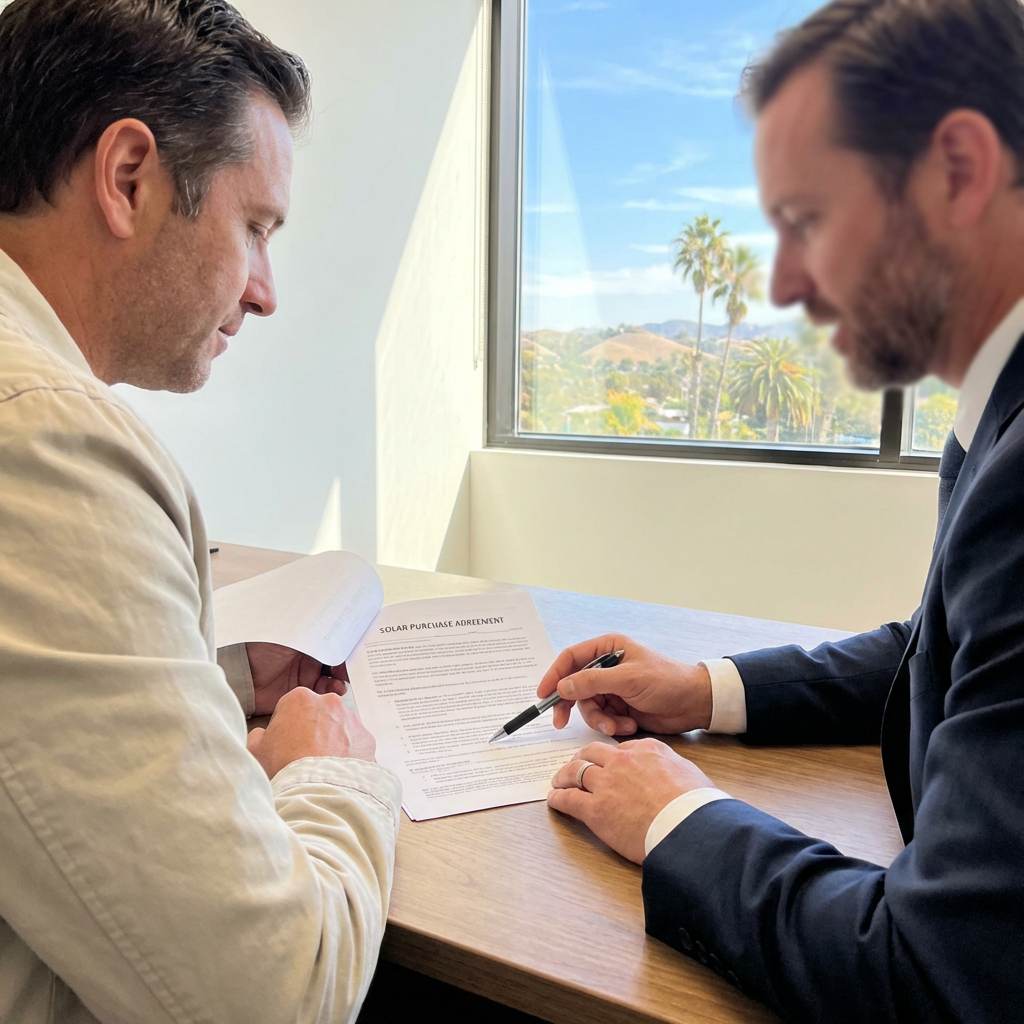
For most California homeowners, the right sequence is not "file a complaint" or "hire an attorney" — it's get a professional contract review first, then decide.
A contract review identifies which red flags are present, which legal protections apply, and which exit pathways are available — before you spend money on legal fees or make moves that could complicate your position. Many issues can be resolved without an attorney once you know what leverage you actually have.
Frequently Asked Questions
How much does a solar attorney cost in California? Initial consultations are typically free. Contingency arrangements — common in CLRA and elder abuse cases — mean no upfront cost. Flat fee arrangements for defined scopes run $1,500–$5,000. Hourly rates for consumer protection attorneys in California typically run $300–$500 per hour.
What if I can't afford an attorney? California's CLRA mandatory attorney fee provision means attorneys take strong cases on contingency at no upfront cost. Additionally, California's Department of Consumer Affairs and nonprofit legal aid organizations provide free assistance for qualifying homeowners. The California AG's solar complaint intake system is also free and sometimes produces company responses without any legal fees.
Can I represent myself in a solar dispute? For regulatory complaints and direct negotiation, yes — no attorney required. For formal litigation, particularly TILA rescission claims or elder abuse cases, self-representation is strongly inadvisable. The procedural requirements are specific and errors can waive rights permanently.
What if the solar company offers me a settlement before I've consulted an attorney? Do not accept a settlement offer without understanding what you're giving up. Settlement agreements in solar cases typically include broad releases of all claims — meaning once you sign, every legal right you have against the company is extinguished regardless of what you later discover. Get a professional review of any settlement offer before signing.
Not sure whether your situation warrants legal representation? Book a free consultation or call (213) 579-5156. We'll help you understand what you have before you decide what to do with it. Serving all of California — remote consultations available.
Other insights
More from California Solar Exit