Latest insights
Solar Loan vs. Solar Lease: Which One Is Harder to Cancel in California?
Solar Loan vs. Solar Lease: Which One Is Harder to Cancel in California?
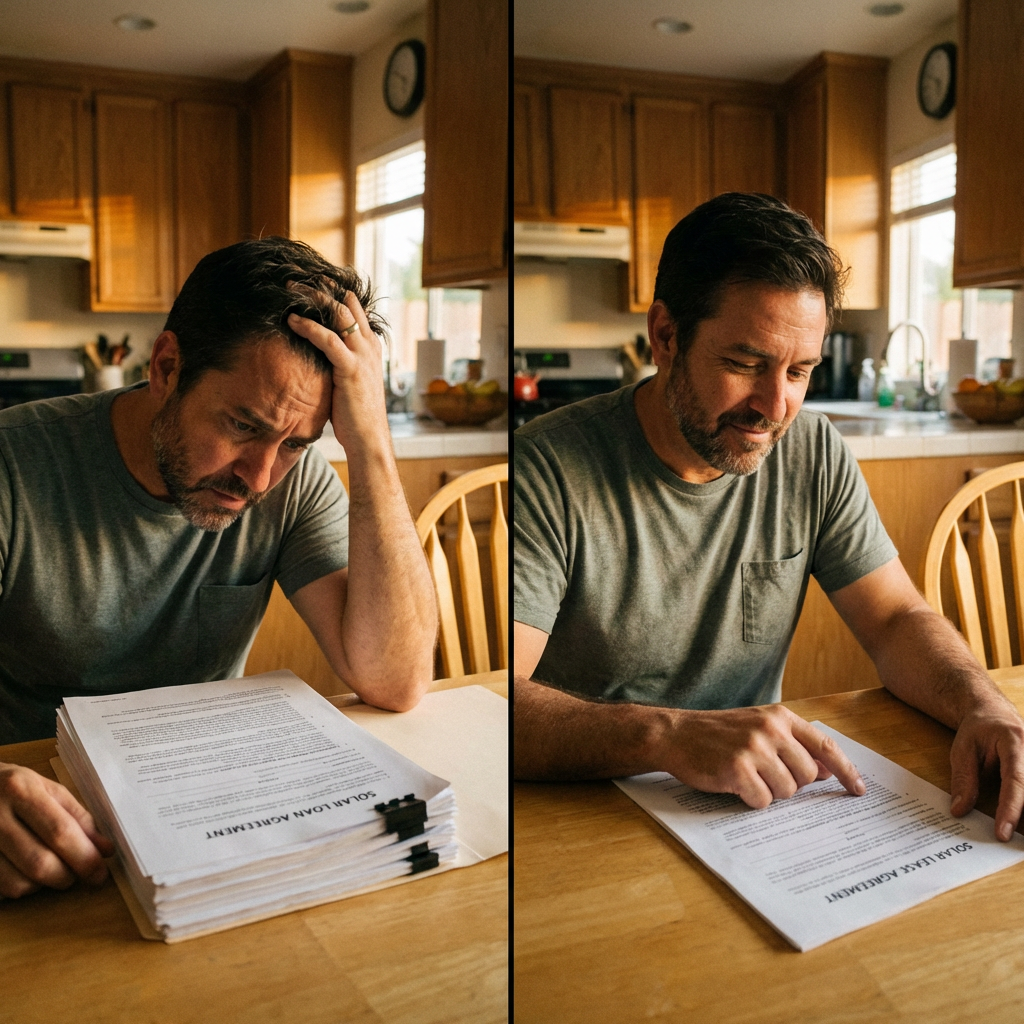
If you're trying to get out of a solar agreement in California, one of the first questions that matters — and one most people don't think to ask until they're stuck — is whether you have a loan or a lease. The answer changes everything about what options you have and how hard the exit is going to be.
These two financing structures are fundamentally different legal animals. A solar lease ties you to the solar company itself. A solar loan ties you to a lender — and often one you've never heard of, buried in the paperwork from the original sales appointment. Each one has different protections under California law, different points of leverage, and different failure modes that solar companies exploit.
Here's how they actually work and what your options look like under each.
What You Signed Matters More Than You Think
During the sales process, many California homeowners — particularly in the Inland Empire, Central Valley, and suburban Los Angeles markets — weren't given a clear explanation of which type of financing they were agreeing to. Some were told they were "just leasing" when they'd actually signed a solar loan agreement. Others were handed a financing agreement through a third-party lender like Mosaic, GoodLeap, or Sunlight Financial and didn't realize the solar company and the lender are entirely separate entities.
That distinction matters the moment you want out.
Solar Leases and PPAs: The Basics
A solar lease means you're renting the equipment. The solar company retains ownership of the panels on your roof and charges you a monthly payment for using the electricity they produce. A power purchase agreement (PPA) is similar — instead of paying a flat monthly lease fee, you're paying per kilowatt-hour of power generated at a contracted rate.
Both structures are 20–25 year agreements. Both typically include escalator clauses that increase your payments 2–3% per year. And both are notorious in California consumer protection circles for being sold with unrealistic production estimates — particularly to homeowners in partially-shaded markets like the foothills of San Bernardino County or neighborhoods in Fresno and Bakersfield where roof orientation varies significantly.
The leverage point on a lease or PPA: the solar company owns the equipment. They have skin in the game. If their representations about production or savings were materially false, that creates a direct breach of contract claim against the same entity you're trying to exit from. There's one company to deal with.
The challenge: 20–25 year agreements with escalators and buyout clauses that often scale with remaining contract value. Getting out of a lease typically requires negotiation, documentation of misrepresentation, or consumer protection escalation — including complaints to the California AG's office, which has been increasingly aggressive about solar company practices since 2023.
Solar Loans: A Completely Different Problem
A solar loan means you purchased the panels. You own the equipment. The lender — not the solar company — is who you actually owe money to.
This sounds cleaner. It isn't.
The problem is how these loans are structured. Solar loans are commonly originated through third-party lenders (Mosaic, GoodLeap, Sunlight Financial, Service Finance) during the sales appointment itself. The solar company acts as a dealer or broker. The loan is sold off to the lender, and the solar company moves on. If the system underperforms, if the savings projections were inflated, if the installer is now out of business — your loan payments keep going to the lender who had nothing to do with any of it.
California homeowners in San Diego, Riverside, and the greater Sacramento metro have reported being shocked to discover their "solar agreement" was actually a 25-year, $45,000–$80,000 loan originated the same day as the sales appointment — sometimes while they were still talking to the salesperson.
The UCC-1 Issue
One thing that catches people by surprise: many solar loans are accompanied by a UCC-1 financing statement filed against your property. This is a lien — not recorded as a traditional real estate lien through the county recorder's office, but filed through the Secretary of State — that gives the lender a security interest in the solar equipment. When you try to sell or refinance your home, the title company finds it. It has to be resolved before close of escrow. If the lender won't release it quickly, deals fall apart.
This is not disclosed clearly during the sales process. It's buried in the loan documents. And it becomes a serious problem for homeowners in high-turnover markets like Temecula, Murrieta, and Rancho Cucamonga, where move timelines don't always give you months to negotiate.
Which Structure Has More Exit Options?
Both have paths. Neither is easy.
For leases/PPAs, your strongest tools are:
- California Consumer Legal Remedies Act (CLRA) — if the contract involved material misrepresentation (inflated savings projections, false production guarantees), California's CLRA provides for actual damages, punitive damages, and mandatory attorney fees. This is one of the strongest consumer protection statutes in the country.
- California AG complaints — the attorney general's office has jurisdiction over unfair business practices under the UCL (Business and Professions Code § 17200). A formal complaint sometimes produces direct company response, particularly for larger solar operators.
- Direct negotiation — lease buyouts exist in most agreements. The question is whether the formula is fair, and whether the company will honor it.
For solar loans, your strongest tools are:
- TILA rescission — the Truth in Lending Act provides a three-business-day right of rescission for home-secured loans. If the transaction involved a security interest in your principal dwelling, and proper rescission notices weren't provided, the rescission window may extend to three years. This is one of the most powerful remedies available — it can cancel the loan entirely — but it requires precise execution. This is not a DIY process.
- FTC Cooling-Off Rule — if the loan was originated during a door-to-door sales appointment and you weren't provided the required written cancellation notice, you may retain a right to cancel the transaction. California's Home Solicitation Sales Act provides parallel protections.
- Dealer fee claims — many solar loans include undisclosed dealer fees paid by the lender back to the solar company. In California, failure to disclose these fees in the loan documents is a TILA violation. The amounts are sometimes substantial — $5,000–$15,000 on larger loan originations.
The short version: leases have more direct leverage against the solar company. Loans have more powerful federal legal remedies, but they're more complex to execute and typically require professional review to determine whether the violations are present and documentable.
What to Do If You're Not Sure Which You Have
Pull your paperwork. Look for the entity you're making payments to. If it's a company like Mosaic, GoodLeap, Sunlight Financial, or a regional credit union, you have a loan. If you're paying the solar company directly — SunRun, Sunnova, SunPower, or a regional installer — you likely have a lease or PPA.
Then look at the red flags in your solar contract — undisclosed escalators, inflated production estimates, missing cancellation notices — because those are the specific violations that open exit pathways.
If you've been told the panels are "yours" but you're paying a monthly financing bill you weren't clearly shown before signing, get a contract review before assuming you're stuck. Many California homeowners paying on solar loans right now have viable exit claims they don't know exist. You can also use our solar savings calculator to see how far off your actual savings are from what you were promised — that gap is often the clearest evidence of misrepresentation.
Whether you have a lease, a PPA, or a loan, the framework for solar contract cancellation in California applies differently depending on your structure. Get a professional review of your specific documents before making any moves.
Frequently Asked Questions
Can you cancel a solar loan in California? Yes, under certain conditions. Federal law under TILA provides a rescission right for home-secured loans where proper disclosures weren't made — potentially extending to three years in cases of serious violations. Undisclosed dealer fees and missing cancellation notices are the two most common violations that open loan cancellation pathways in California solar cases.
Is a solar lease or a solar loan harder to get out of? They're difficult in different ways. Leases involve 20–25 year agreements with buyout clauses, but you're dealing with one company. Loans involve a lender that's separate from the installer, and federal remedies like TILA rescission — while powerful — require precise documentation and execution to work.
What is a UCC-1 and why does it affect my solar loan? A UCC-1 financing statement is a lien filed by your solar lender against the solar equipment as collateral. It doesn't prevent you from selling your home, but it has to be resolved at closing. If the lender doesn't release it in time, it can delay or kill real estate transactions. Many California homeowners aren't told about it until they list their home.
Can I get out of a solar loan if the solar company is out of business? Yes — your contract with the lender survives the installer's bankruptcy. But a defunct installer can actually strengthen certain claims, particularly around warranty obligations and installation defects. The lender still owns the debt; your legal remedies against the original transaction may still apply depending on which violations are present.
What if I was told my solar would pay for itself but it hasn't? If the savings projections used to sell you the system were materially overstated, that can support a misrepresentation claim under California's CLRA or UCL — regardless of whether you have a lease or a loan. Document your actual production and utility bills from the start of service. The gap between projected and actual savings is often the foundation of a viable claim.
Not sure where your agreement falls? Book a free contract review or call (213) 579-5156. We'll identify which structure you have, which violations may apply, and what your realistic options are. Serving all of California — remote consultations available.
Other insights
More from California Solar Exit