If you have an old HERO Program loan on your property — or you're dealing with a PACE assessment tied to solar or energy-efficiency work from years ago — there's a piece of California legal history worth knowing about that rarely comes up in general solar coverage.
Renovate America, the company that administered the HERO Program (one of the largest PACE — Property Assessed Clean Energy — financing programs in California), was the subject of a coordinated legal action brought jointly by the district attorneys of Napa, Kern, Monterey, Riverside, and San Diego counties, along with the San Diego City Attorney's office. The result was a settlement requiring the company to pay $2.79 million into a consumer legal assistance fund and an additional $1.21 million in civil penalties.
Why This Case Specifically Named Elderly and Non-English-Speaking Homeowners
What makes this settlement worth understanding, rather than just filing away as old news, is who prosecutors said was most affected. The case specifically cited elderly homeowners and non-English-speaking homeowners as populations the program's sales and underwriting practices had particular difficulty serving fairly — language you don't see in every solar-adjacent enforcement action, and one that echoes patterns we've documented elsewhere, including the
published court decision involving a homeowner with dementia whose signature on a solar loan was found invalid.
Why PACE Loans Like HERO Work Completely Differently From a Standard Solar Loan
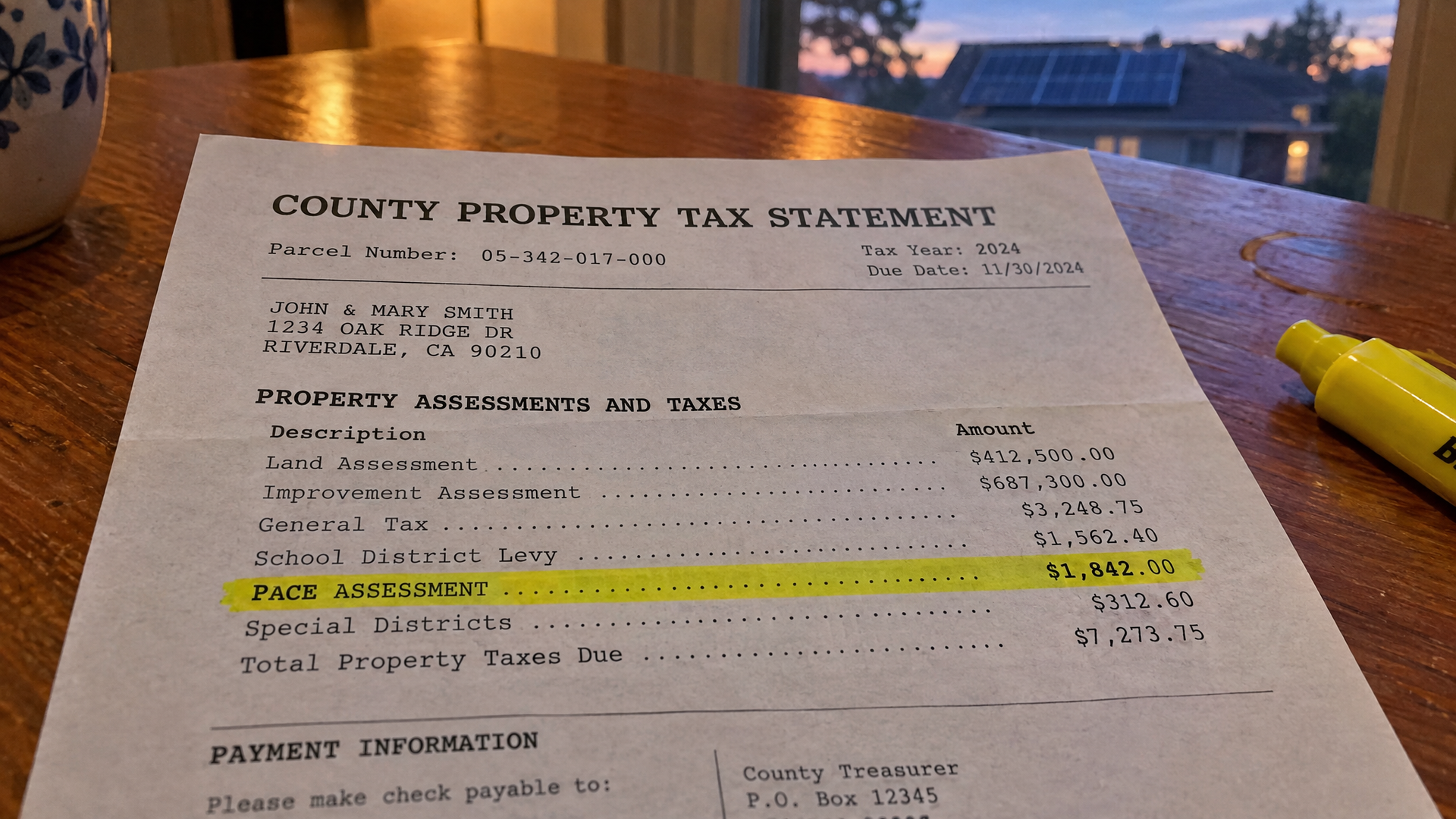
This matters because HERO and other PACE-financed obligations aren't structured like a typical solar loan or lease. Rather than a monthly payment to a lender, PACE financing is repaid through an assessment added directly to your property tax bill — which means the obligation is tied to the property itself, not just to you personally, and it can complicate a sale or refinance in ways that are genuinely different from a UCC-1 lien tied to a standard solar loan. We've covered the mechanics of PACE financing generally in our
guide to PACE solar financing in California, including how Fannie Mae and Freddie Mac won't purchase a mortgage with an active PACE lien attached.
What This Means If You Still Have a HERO Assessment
If you have an old HERO Program assessment still on your property tax bill, this settlement doesn't automatically resolve or reduce what you owe — settlements like this typically fund legal assistance and impose penalties on the company rather than canceling individual homeowners' obligations directly. But it does establish something concrete: a formal, multi-county legal finding that the program's practices specifically disadvantaged the populations most likely to have been misled at signing. If you fall into either category the settlement specifically named, or if you were never clearly told your solar or energy-efficiency financing would attach to your property tax bill rather than function as a standard loan, that's worth a real review of your specific assessment and how it was originally disclosed to you.
Have an old HERO Program or other PACE assessment tied to solar work on your property?
Get a free, no-pressure review of your situation.
Call (213) 579-5156 or visit californiasolarexit.com.
Daniel Merritt is a Senior Solar Contract Analyst at California Solar Exit.