Latest insights
“Your Battery Is Free Through a State Program.” What California’s SGIP Rebate Actually Covers, and Where Sales Pitches Go Wrong
“Your Battery Is Free Through a State Program.” What California’s SGIP Rebate Actually Covers, and Where Sales Pitches Go Wrong
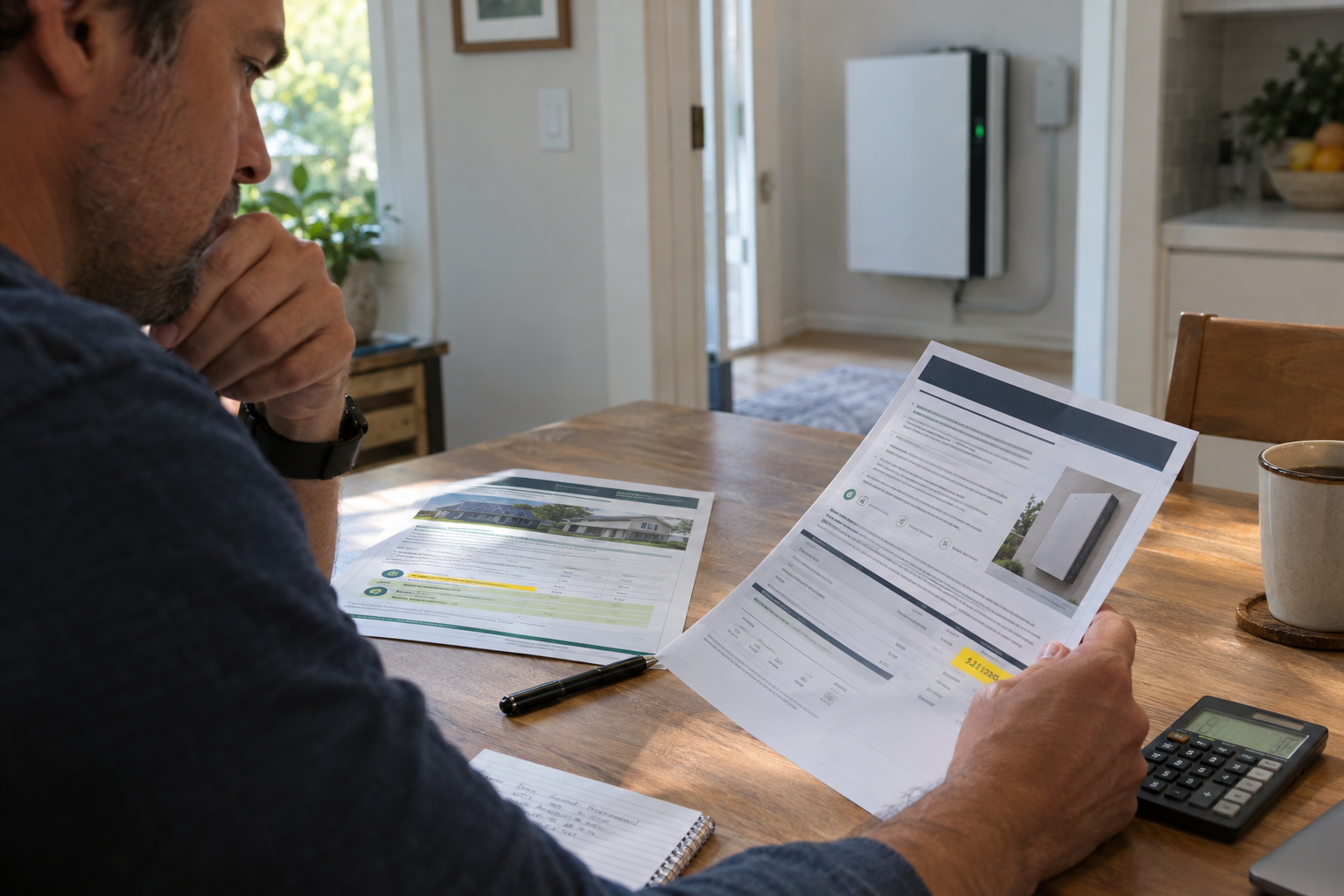
A salesperson tells you the state will pay for your battery, or nearly all of it, through a program with an official-sounding name. You sign. Months later, the rebate either never shows up, shows up for far less than promised, or turns out to have already been deducted from a price that was quietly marked up to begin with.
The program they’re likely referring to is real. It’s called the Self-Generation Incentive Program, or SGIP, and it’s run by the California Public Utilities Commission. The problem isn’t that it’s fake. The problem is how it gets described.
What SGIP actually is
SGIP offers rebates for installing battery storage at residential and non-residential properties in California, including systems that can keep power running during an outage. It’s one of the state’s longest-running distributed generation incentive programs, funded by California ratepayers and administered through Program Administrators tied to your utility (PG&E, SCE, or SoCalGas, depending on where you live).
According to CPUC’s own program fact sheet, the standard rebate structure has included rates around $850 per kilowatt-hour, covering roughly 85% of a typical battery’s cost, with an equity budget for income-qualified and medical-baseline customers at a higher rate, around $1,000 per kilowatt-hour, covering close to the full cost of an eligible system.
Those numbers can change over time as CPUC adjusts incentive levels and budget categories, so the specific rate quoted to you should match what’s current on the program’s own site, not a number a salesperson remembers from a past deal.
How this becomes a sales pitch problem
- “The state will pay for your battery” collapses “could qualify for a rebate covering most of the cost” into “free,” which isn’t accurate for most customers outside the equity budget.
- A rebate reserved isn’t a rebate received. SGIP applications are typically submitted by a developer or installer and reserved before being claimed after installation and interconnection. If the installer goes out of business, or the paperwork isn’t filed correctly, the reservation can fall apart entirely, something we’ve seen play out in several installer bankruptcies we’ve tracked.
- Who actually gets the rebate money matters. Some installers structure the sale so the rebate is paid directly to them, with the customer’s price reduced accordingly. That can be legitimate, but it only works in your favor if the full rebate amount is actually passed through, not partially absorbed into a price that was inflated to begin with.
- The equity-budget rate (close to 100% of cost) applies only to qualifying customers, generally income-qualified households or those relying on medical baseline electricity. A pitch that applies the equity-level numbers to every customer, regardless of eligibility, is misrepresenting the program.
What to verify before you sign anything tied to SGIP
- Check the current incentive rate and budget category directly at the program’s statewide site, selfgenca.com, or your utility’s own SGIP page (pge.com/sgip, sce.com/SGIP), rather than relying on a number quoted verbally.
- Ask whether you actually qualify for the equity budget, and ask to see the eligibility criteria rather than taking a verbal assurance.
- Get the rebate structure in writing: is it paid to you, or to the installer? If to the installer, is the price you’re being charged the price before or after that rebate is applied?
- Confirm the rebate has actually been reserved, not just mentioned as likely, and get documentation of the reservation and the expected payout amount.
- Ask what happens if the rebate reservation falls through before your system is installed and interconnected. A legitimate contract should address this, not leave you holding the risk silently.
If a battery system was sold to you on an SGIP promise that didn’t hold up
- Document everything you were told, especially any specific dollar figure or percentage quoted for the rebate.
- Get your proposal and contract, and check whether the SGIP claim appears anywhere in writing or only verbally.
- Check your production and billing data against what you were promised. Our guide to proving a solar production shortfall covers the documentation approach, which applies to battery performance claims too.
- File a complaint if the misrepresentation is significant. Our complaint agencies guide covers CSLB and CPUC routes.
Questions about SGIP and battery rebate claims
Is SGIP a real California program?
Yes. It’s run by the CPUC and offers rebates for battery storage installations, with higher rebate rates available for income-qualified and medical-baseline households.
Does SGIP pay for 100% of a home battery?
Generally not for most customers. Standard rebate rates have covered roughly 85% of typical cost, while the equity budget for qualifying low-income and medical-baseline customers has covered closer to the full cost. These rates change over time, so check the current figures directly.
What if my installer told me the battery would be “free” through SGIP and it wasn’t?
That’s worth documenting and raising as a potential misrepresentation claim, especially if it was a specific, written promise rather than a general description of the program.
Were you told your battery would be free or nearly free through a state program, and the numbers didn’t add up the way you were promised?
Send us your contract and your proposal and we’ll tell you where you stand, usually in one 15-minute call.
Call (213) 579-5156 or visit californiasolarexit.com.
By Daniel Merritt, Senior Solar Contract Analyst
Daniel Merritt is a Senior Solar Contract Analyst at California Solar Exit. This article is general information, not legal advice, and results depend on the facts of each contract.
Other insights
More from California Solar Exit