Latest insights
Solar Not Producing What You Were Promised? How to Prove a Shortfall in California

Solar Not Producing What You Were Promised? How to Prove a Shortfall in California
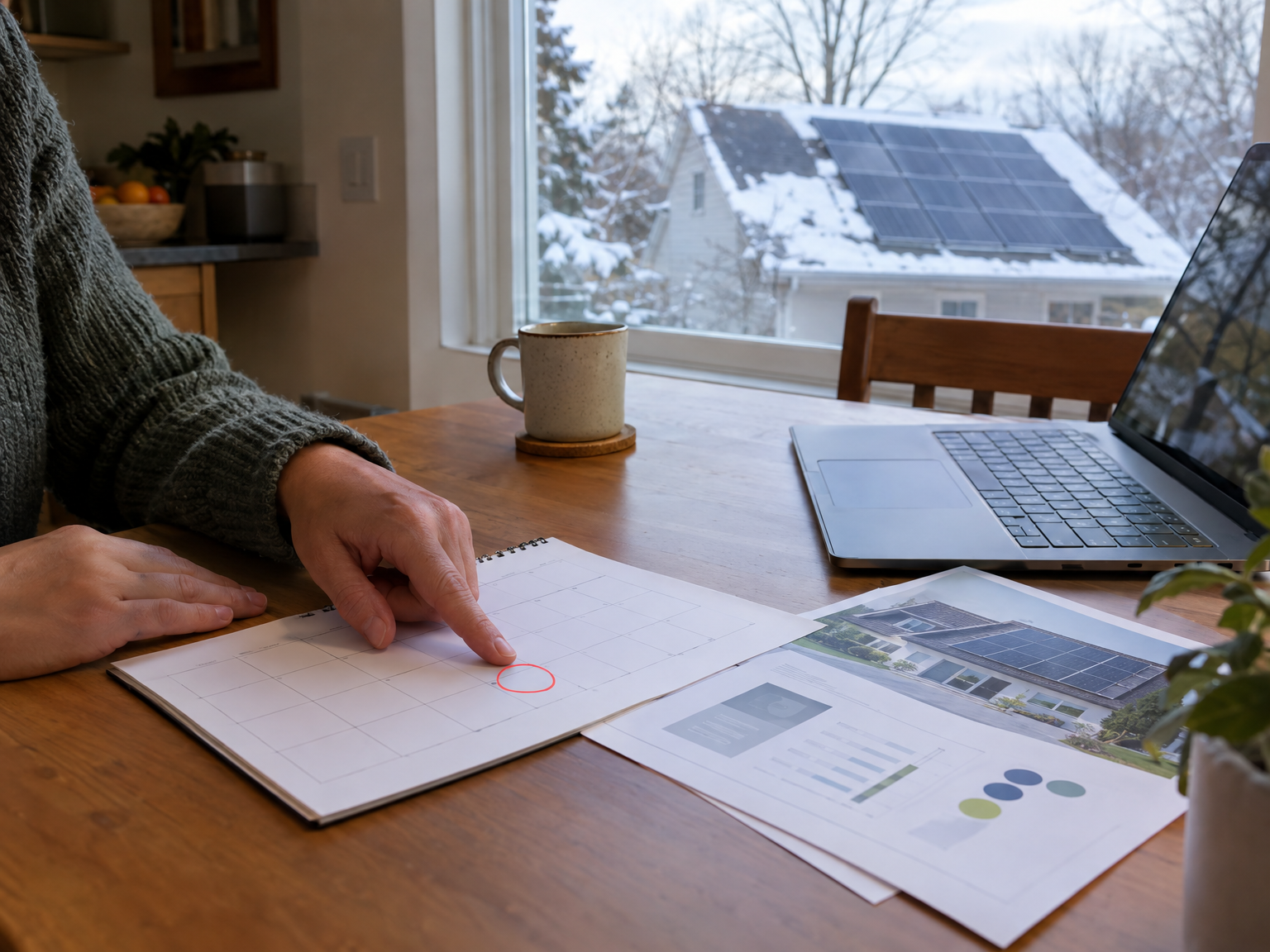
The proposal said your system would produce about 11,000 kilowatt-hours a year. Your utility bills, the monitoring app, and your own gut say it isn't close. You've called the installer. You've been told the weather was off, or the panels need time, or that's just how solar works.
Sometimes that's true, and sometimes it isn't. The difference between a normal year and a real shortfall comes down to data, and most homeowners have never been shown how to read theirs.
Three kinds of "promise," and why it matters which one you have
Not every promise is enforceable in the same way. Look for each of these:
- A production guarantee in the contract. Many leases and PPAs include one, sometimes with a remedy if the system falls short. Check the actual text of yours.
- A written production or savings estimate in the proposal. That's evidence of what you were told, even when it isn't a guarantee. CSLB's own advice is to get every sales claim in writing, because verbal claims are hard to prove.
- Warranties on the equipment and the workmanship. Panel and inverter makers back their equipment, and the installer backs the installation. These are separate from any production promise.
What's normal, and what isn't
Solar output isn't a fixed number. These are legitimate reasons it moves:
- Weather. Clouds are the least predictable factor, and a given year can run above or below the estimate.
- Seasons. A summer month and a December month can differ by a wide margin, so annual totals matter more than single months.
- Heat. A panel's output drops as it gets hotter, according to a U.S. Department of Energy overview of PV system performance.
- Age. The same overview puts normal degradation at about 0.5% per year, and a national lab review of nearly 2,000 published field measurements found a median of about 0.5% per year, with a wide range. Many panel warranties guarantee around 80% of rated output at year 25, which works out to roughly 0.8% a year.
- New shade or dirt. Tree growth and soiling can cut output, and neither is the installer's fault.
What isn't normal is a large, consistent gap against the estimate across a full year. That includes a system that's offline for long stretches, a string of panels producing nothing, or a system that has never matched its estimate since the first month.
How to measure it
- Pull 12 months of production data. Your monitoring app (Enphase, SolarEdge, the Tesla app, or another) usually lets you export or screenshot a full year. Get the data now, because some monitoring access is tied to the installer and can disappear if the company does.
- Find the written estimate in your proposal, for the first year or an average year.
- Run your address through PVWatts. It's the free production estimator from the national lab, and its documentation explains the inputs. Enter your address, system size, tilt, and direction. PVWatts uses typical-year weather, so a single year can differ, but a big gap is informative.
- Compute the shortfall: (estimate minus actual) divided by estimate. As a hypothetical, if the proposal said 12,000 kWh and your last 12 months show 9,600, you're 20% below.
- Check for causes you can rule out, like new shade, soiling, or a monitoring outage that recorded zeros while the system was running.
If your system never got the utility's go-ahead, that could explain a lot. See our Permission to Operate guide.
Signs of a real problem
- Long stretches of zero output in the monitoring app.
- Inverter error codes that keep returning.
- One or more strings of panels producing nothing while others work.
- A drop right after roof work or an electrical service call.
- A system that has been offline since installation.
- A gap that shows up in the first year and never closes.
What a shortfall can support
A shortfall isn't a one-click cancellation. What it can support depends on your contract and the facts:
- A production guarantee remedy, if your lease or PPA has one.
- A warranty claim, against the manufacturer for equipment or the installer for workmanship. If the installer is gone, see our guides to Titan Solar Power and Harness Power.
- A misrepresentation claim, if the savings or production projections you were shown weren't reasonable when they were made. Our escalator guide explains how contract terms can erode promised savings.
- A claim against the lender, if the system was financed. The FTC Holder Rule can let you raise against the lender what you could raise against the seller.
- A regulatory complaint. CSLB's data shows workmanship is the most common solar complaint it receives, and documented evidence matters, since "insufficient evidence" was the top reason complaints were closed. Our complaint agencies guide covers where to file.
A real example: in an arbitration award against Tech CU, a homeowner whose system underperformed, damaged the roof, and came from a bankrupt installer had a $61,000 loan canceled and won $34,895 in damages. The documentation is what made that claim work.
What not to do
- Don't remove panels or let an unauthorized contractor modify the system. That can void warranties and weaken a claim.
- Don't lose your monitoring access. Keep the login and export the data.
- Be careful with payments. Missed payments can damage your credit and create other problems, so talk to us or an attorney before changing how you pay.
What to gather
- Your contract or lease and the proposal, with any production or savings estimate.
- Twelve months or more of production data.
- Your utility bills from before and after installation.
- Photos and screenshots of error codes and offline arrays.
- Every message with the installer about the problem.
Our documentation checklist covers the rest, and the Calculator shows what your contract is costing you over time.
Questions about solar underperformance
How much underproduction is normal?
There's no single threshold. Weather, season, heat, shade, and about 0.5% per year of aging all move output. A large, consistent gap over a full year, compared against your estimate and a PVWatts run for your address, is worth investigating.
Does my lease or PPA have a production guarantee?
Many do, but not all. Read the performance section of your agreement, and if you can't find one, ask the company in writing.
Can I cancel just because my system underperforms?
Not automatically. It depends on your contract, any guarantee or warranty, and whether the promises made at the sale were misleading.
Think your system isn't delivering what you were promised?
Send us your contract, your proposal, and 12 months of production data and we'll tell you whether you have a case, usually in one 15-minute call.
Call (213) 579-5156 or visit californiasolarexit.com.
Daniel Merritt is a Senior Solar Contract Analyst at California Solar Exit. This article is general information, not legal advice, and results depend on the facts of each contract.
Other insights
More from California Solar Exit