Latest insights
Co-Signed a Solar Loan for a Family Member in California? What Your Liability Actually Looks Like
Co-Signed a Solar Loan for a Family Member in California? What Your Liability Actually Looks Like
Quick answer: If you co-signed a solar loan for a parent or family member, you're generally just as legally responsible for the full debt as they are — a co-signer isn't a backup plan the lender only turns to if the primary borrower can't pay, it's a second full obligation from day one. Missed payments can damage your credit exactly the way they damage theirs, even though you may have never seen the sales presentation, never lived in the home, and never benefited from the system itself.
Why Do Solar Companies Ask for a Co-Signer in the First Place?
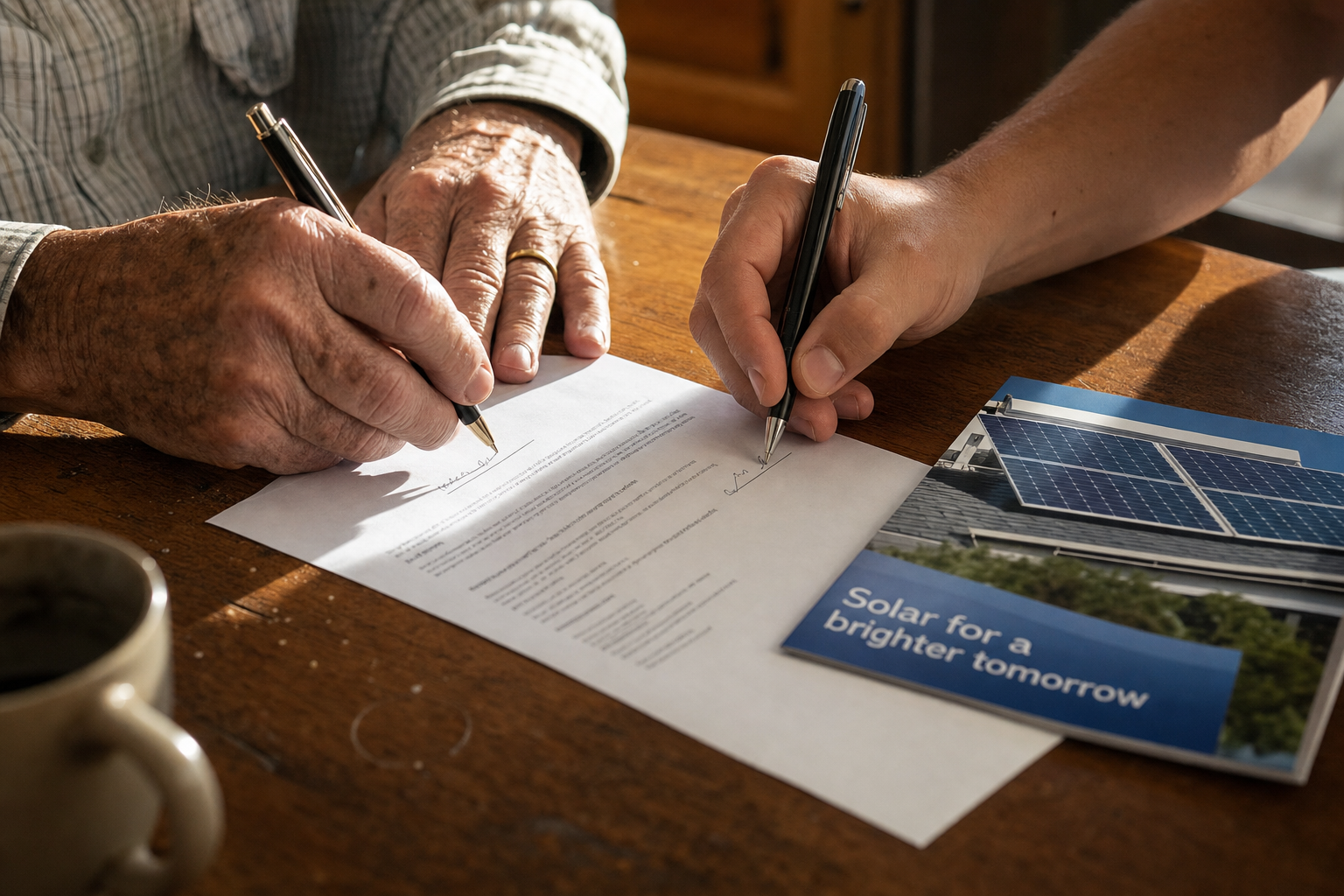
Solar loans are typically underwritten based on credit and income, and an older homeowner on a fixed income or with a thinner credit file may not qualify on their own for the loan amount a system requires. Bringing in an adult child or other family member as a co-signer lets the loan get approved using the co-signer's stronger credit profile — which is exactly why co-signer arrangements are common in cases involving elderly homeowners, the same population that's disproportionately represented in solar misrepresentation and elder financial abuse cases we cover elsewhere.
What Does "Joint and Several Liability" Actually Mean for You?
This is the legal concept worth understanding clearly. When you co-sign, you and the primary borrower typically become jointly and severally liable for the full debt — not liability split 50/50, but each of you individually responsible for the entire balance. That means the lender can pursue you directly for the full amount owed regardless of what arrangement you and the primary borrower privately agreed to about who would actually make the payments. If your parent falls behind, the lender doesn't need to exhaust efforts against them first before coming after you.
Does a Missed Payment Hurt Your Credit the Same Way It Hurts Theirs?
Yes, generally. A co-signed loan reports to credit bureaus under both parties' credit files, meaning a late or missed payment shows up on your credit report the same way it shows up on the primary borrower's — same reporting timeline, same delinquency escalation. We cover how solar loans actually report and what FCRA protects in more detail elsewhere, but the key point for co-signers specifically is that your own credit is exposed to a payment decision you may not even be the one making month to month.
Can You Dispute the Loan If You Weren't the One Who Was Misled?
This is genuinely more complicated than a standard misrepresentation claim, and it depends heavily on the specific facts. If the primary borrower — say, your parent — was misled about savings, terms, or an undisclosed lien during a sales presentation you weren't present for, your standing to independently challenge the loan on that basis may be more limited than theirs, since the misrepresentation claim generally centers on what was said to the person who was actually there. That said, you're not without options: if you were also present for any part of the sales process, if the loan documents themselves misrepresented your role or obligation, or if you're pursuing a joint challenge alongside the primary borrower, those are all situations worth a documented review rather than assuming you have no recourse at all.
What If the Primary Borrower Has Passed Away or Can No Longer Pay?
This intersects directly with what we cover in our guide to solar contracts after a homeowner's death — if the primary borrower on a loan you co-signed passes away, the debt doesn't disappear, and as a co-signer, you may find yourself responsible for the full remaining balance directly, separate from whatever happens with their estate. This is exactly the kind of situation where understanding your specific loan agreement's terms matters immediately, not after the estate settlement process has already begun.
What Should You Do If You Co-Signed and Now Regret It?
Start by getting a complete copy of the loan agreement and confirming exactly what your obligation says in writing, rather than relying on what you remember being told at signing. Document the current payment status and communicate directly with the primary borrower about the actual state of the account, since co-signers are sometimes the last to know when payments have started slipping. If misrepresentation was involved anywhere in the original sale, a joint review with the primary borrower is generally stronger than pursuing something separately, since you're both affected by the same underlying contract.
FAQ
Am I responsible for the full solar loan amount if I co-signed, or just half?
Generally the full amount. Co-signers are typically jointly and severally liable, meaning the lender can pursue either party for the entire balance, not a proportional share.
Will missed payments on a co-signed solar loan affect my credit even if I don't live in the home?
Yes, generally. A co-signed loan reports under both parties' credit files, so missed payments affect your credit the same way they affect the primary borrower's.
Can I dispute a solar loan I co-signed if I wasn't at the sales presentation?
It's more complicated than a standard claim, since misrepresentation typically centers on what was told to the person present. Your specific situation and any joint challenge with the primary borrower matter here.
What happens to a co-signed solar loan if the primary borrower dies?
The debt doesn't disappear, and as a co-signer you may become responsible for the remaining balance directly, separate from the primary borrower's estate settlement process.
Should I have my solar loan reviewed if I only co-signed and don't live in the home?
Yes, if you have concerns about the loan's terms or the original sale. Your liability is real even without living in or benefiting from the property, which makes understanding your exposure worthwhile.
Co-signed a solar loan for a parent or family member and now worried about your liability?
Get a free, no-pressure review. Call (213) 579-5156 or visit californiasolarexit.com.
Daniel Merritt is a Senior Solar Contract Analyst at California Solar Exit with over a decade of experience evaluating residential solar lease, PPA, and loan agreements under California consumer protection law.
Other insights
More from California Solar Exit