Latest insights
What Happens When Your California Solar Installer Files for Chapter 11? The 2026 Bankruptcy Wave Explained
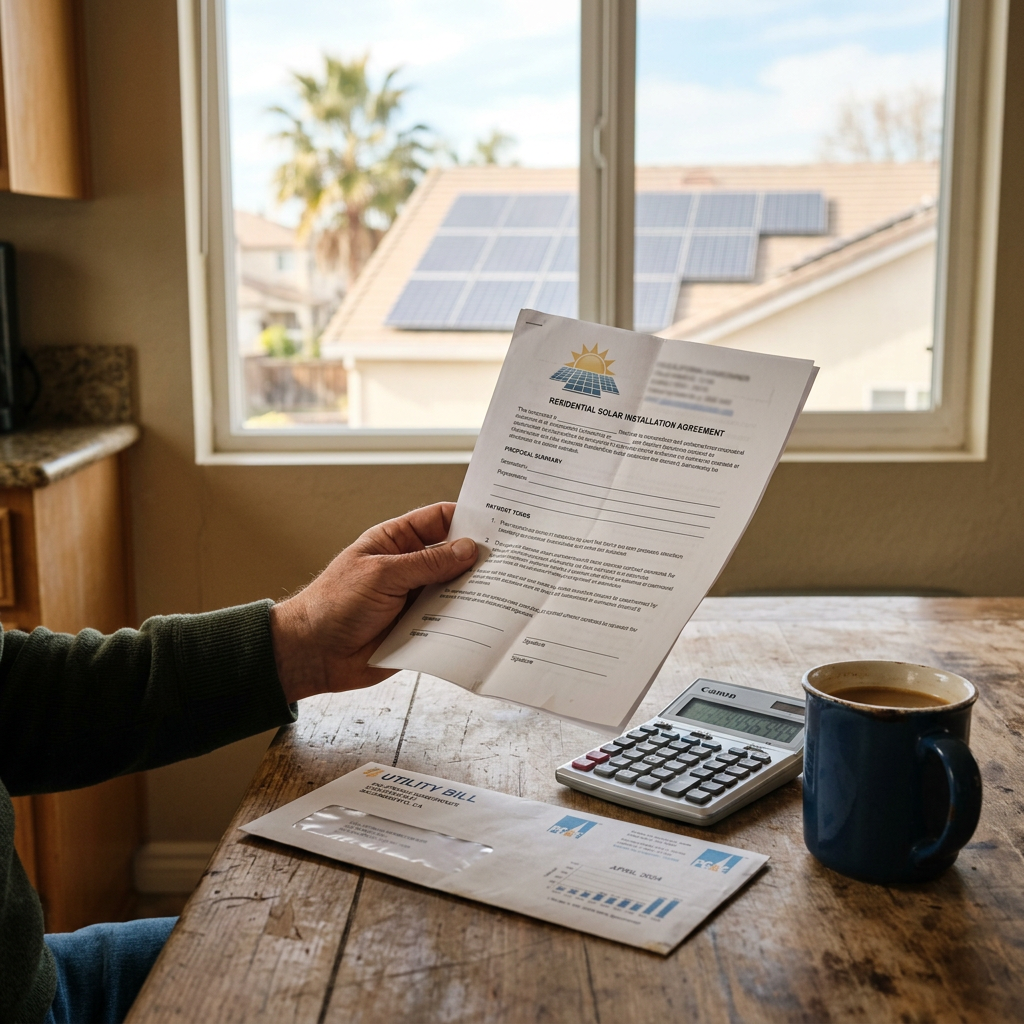
What Happens When Your California Solar Installer Files for Chapter 11? The 2026 Bankruptcy Wave Explained
If you signed a 20- or 25-year residential solar contract in California between 2018 and 2023, there's a meaningful chance the company you signed with no longer exists in the form it did when the ink dried. The residential solar industry has gone through a structural collapse over the past 24 months that hasn't received the public attention it deserves — and the people most affected are homeowners who are still making monthly payments to entities they've never heard of, on systems that nobody is contractually obligated to service the way the original sales rep promised.
Here's what actually happened, what it means for your specific contract, and what California consumer protection law says about it.
Just How Many California Solar Companies Have Filed Bankruptcy Since 2024?
The list is significantly longer than most homeowners realize. Major solar bankruptcies as of January 2026 include Sunnova, SunPower, Pink Energy, Harness Power (California), ASA – American Solar Advantage (California), Kuubix Energy (California), Infinity Energy (California), Suntuity Renewables (operating in California), ADT Solar, Vision Solar, Solcius (operating in California), Sunworks Inc. (California), Kayo Energy (operating in California), Lumio Solar, Posigen, Pure Light Power, and Freedom Forever — and that list doesn't include the smaller regional installers that simply closed their doors without formal bankruptcy proceedings. Solar Insure
A snapshot of the largest filings:
- SunPower Corporation — filed Chapter 11 in August 2024. Complete Solaria purchased key SunPower assets in September 2024, including the Blue Raven Solar business, its New Homes division, and its dealer network. In April 2025, Complete Solaria rebranded as SunPower and reclaimed the SPWR ticker on Nasdaq. In October 2025, the company formally changed its legal name to SunPower Inc. The legal entity that signed pre-September-2024 California contracts no longer exists in its original form. EnergySage
- Sunnova Energy International — filed Chapter 11 on June 8, 2025. Assets ultimately acquired by Solaris Assets LLC, with customer servicing transitioning to SunStrong Management. Our Sunnova bankruptcy deep-dive for California customers covers the contract-specific implications.
- Freedom Forever — in 2026, Freedom Forever, one of the largest residential solar installers in the country, filed for Chapter 11 bankruptcy. This is the most recent and arguably the most consequential filing for California homeowners because Freedom Forever was a high-volume California installer in the 2020-2023 window. Solarcc
- Vivint Solar — acquired by Sunrun in October 2020. Not a bankruptcy in the strict sense, but the legal entity that signed pre-2020 California contracts no longer operates independently. The Vivint Solar settlement covers a specific window of California customers; see our Vivint Solar contract guide.
- Lumio Solar — converted from Chapter 11 to Chapter 7 and the assets were sold to Zeo Energy.
- ADT Solar, Vision Solar, Pink Energy, Titan Solar Power — multi-state installers that operated in California and either filed bankruptcy or wound down.
The cumulative effect: tens of thousands of California homeowners are now servicing contracts with entities other than the companies they originally signed with.
What Happens to My Contract When My Solar Installer Files Chapter 11?
Your contract almost certainly still exists and is still enforceable — but it's now in the hands of a different operating entity than the one that sold it to you. Under U.S. Bankruptcy Code § 365, executory contracts like solar leases, PPAs, and service agreements can be assumed (kept), assigned (transferred to a buyer), or rejected (terminated) during a Chapter 11 proceeding. Courts almost always approve assumption or assignment of residential solar contracts because the predictable revenue stream is valuable to creditors and the underlying assets need to be maintained.
What this looks like in practice for California homeowners:
- Payment obligations continue. Whether the original company restructured, sold assets to a new entity, or wound down, your monthly payment is generally still due to the entity that ended up servicing the contract.
- Servicing changes hands. Billing, payment processing, monitoring, and customer service shift to whoever acquired the assets. For SunPower contracts, that's the new SunPower Inc. (formerly Complete Solaria). For Sunnova contracts, that's SunStrong Management. For Lumio contracts, that's Zeo Energy. The phone number, online portal, and ACH instructions in your original paperwork may be obsolete.
- Workmanship warranties are often the weakest link. Panel manufacturer warranties (Waaree, LG, Q Cells, Maxeon, etc.) and inverter warranties (Enphase, SolarEdge, etc.) generally survive the installer's bankruptcy because they're separate contracts with the manufacturer. The labor and workmanship warranty from the original installer is the part that often gets compromised — and most homeowners don't realize this until something fails.
- Production guarantees become harder to enforce. Many California solar contracts included production guarantees ("we promise the system will produce X kWh per year, and if it doesn't, you get a credit"). Enforcing those guarantees against a successor entity that didn't write the original contract is often slow, frustrating, and partial.
Is My SunPower Warranty Still Valid After the 2024 Bankruptcy?
The answer depends on three things: when your system was installed, who installed it under what entity, and what specific component you're trying to claim under warranty. If your system was installed and energized after September 30, 2024, your warranties are valid and SunPower Inc. can service your system. Pre-September-2024 systems are more complicated. EnergySage
For systems installed before September 30, 2024:
- The original SunPower Corporation no longer exists as the warranty-holding entity
- Complete Solaria/the new SunPower Inc. acquired certain assets and is honoring certain warranties, but coverage is not uniform across all pre-2024 customers
- Panel manufacturer warranties (Maxeon for many SunPower installations) are separate and remain in force per the manufacturer's original terms
- Inverter warranties (Enphase for most SunPower microinverter installations) are separate and Enphase has stated it will honor those warranties directly
- Battery warranties (SunVault) are a known gap area where coverage has been inconsistent
The Bloomberg Law reporting from February 2025 documented specific California homeowner cases where pre-bankruptcy SunPower customers were unable to obtain warranty service even after escalating to the bankruptcy court, consumer protection agencies, and the panel manufacturer. Those situations exist; how widespread they are depends on the specifics of each contract and which entity ended up holding the obligation.
What Does the Sunnova Bankruptcy Mean for California Customers?
The Sunnova story is structurally similar to the SunPower story but with key differences in how the asset transfer was structured and which entity now services customers. Sunnova filed Chapter 11 on June 8, 2025, with approximately 500,000 customers nationally and roughly $8.9 billion in long-term debt. Asset acquisition was completed by Solaris Assets LLC for approximately $118 million, with customer servicing transitioning to SunStrong Management.
For California Sunnova customers specifically, this means:
- Your lease, PPA, or loan contract is still in force, now serviced by SunStrong Management
- Billing routing, ACH instructions, and customer service contacts have changed
- Warranty coverage on the original contract should continue, but service responsiveness has been a moving target during the transition
- The fundamental misrepresentation grounds that existed before the bankruptcy still exist after the bankruptcy — they travel with the contract
Our Sunnova bankruptcy guide for California customers covers the specifics in detail.
Why Are So Many Residential Solar Companies Collapsing at Once?
The wave of California solar installer bankruptcies isn't random — it's the result of several pressures hitting the industry simultaneously between 2023 and 2026:
- NEM 3.0 cratered new-installation economics. The April 2023 net metering reform cut export compensation by roughly 75% for new systems, collapsing the savings projections that solar sales reps had been pitching for years
- Interest rates more than doubled between 2021 and 2024, which destroyed the residential solar financing model where dealer fees of 15-30% were baked into loan principals
- Sales-channel collapse. Door-to-door sales channels that drove growth in 2018-2022 became economically unviable as customer acquisition costs climbed and conversion rates fell
- The federal residential solar tax credit phase-down signaled the end of the underwriting environment that supported aggressive growth-stage investment in residential solar companies
- Consumer complaint backlogs from aggressive 2020-2022 sales practices produced regulatory exposure, litigation costs, and brand damage that compounded the financial pressure
- Capital markets closed. Investors and lenders pulled back from residential solar simultaneously, leaving even fundamentally viable companies unable to refinance debt as it came due
The Department of Energy's termination of a $3 billion Sunnova loan guarantee in early 2025 was a signal to the broader capital markets that federal underwriting was no longer reliable — and accelerated the bankruptcy cascade.
What If My Installer Was a Smaller Regional Company That Just Shut Down?
This is the harder case. Larger bankruptcies like SunPower and Sunnova went through formal Chapter 11 proceedings, which means there's an identifiable successor entity holding the contracts. Smaller regional California installers — Harness Power, ASA, Kuubix Energy, Infinity Energy, Sunworks, Altair Solar, and dozens of similar — often simply closed without a formal proceeding or asset sale. The customer is left without a counterparty.
What typically happens in these scenarios:
- The financing entity (the loan servicer or lease assignee) continues collecting payments because they're separate from the installer
- The panel manufacturer still honors the panel warranty if you can find the original equipment documentation
- The inverter manufacturer still honors the inverter warranty
- Workmanship and labor warranty from the original installer is functionally dead
- Production guarantees attached to the original installer are functionally dead
- Any service or maintenance commitments that were part of the original sale are functionally dead
For California homeowners in this position, the financing contract often becomes the entire focus — because the installation contract has effectively evaporated while the loan obligation is still very much in force. If your loan was financed through GoodLeap, Mosaic, Sunlight Financial, LightReach, GreenSky, or Dividend Finance, see our GoodLeap solar loan exit guide — the same framework applies across these lenders.
Does an Installer Bankruptcy Give Me Grounds to Cancel My Solar Contract?
The bankruptcy itself is generally not standalone grounds for cancellation in California, but the operational reality that follows a bankruptcy often does create real legal exposure. The stronger grounds usually come from how the original sale was conducted, how the contract was structured, and whether material obligations are no longer being performed.
The California consumer protection statutes that apply:
- Home Solicitation Sales Act (HSSA) — Civil Code §§ 1689.5–1689.15. Defective cancellation disclosures at the original sale extend the cancellation window indefinitely
- Consumer Legal Remedies Act (CLRA) — Civil Code §§ 1750–1784. Misrepresentation during the sales process creates a cause of action regardless of what happened to the installer later
- Unfair Competition Law (UCL) — Business & Professions Code § 17200. Deceptive business practices, including false savings projections, are actionable
- Solar Contract Disclosure Law — Business & Professions Code § 7169. Specific disclosure failures can invalidate the contract or extend cancellation rights
- Material breach — when the contract isn't being performed as promised (production guarantees ignored, service calls unanswered, warranty claims unprocessed), rescission may be available
A bankruptcy that results in degraded service often gives California homeowners stronger documentation of material non-performance than they had before. The original sales-side misrepresentation claim doesn't disappear; it travels with the contract. Our step-by-step guide to canceling a California solar contract after signing covers the procedural framework.
What Should I Do Right Now If My Solar Installer No Longer Exists?
Five concrete steps:
- Identify who currently holds your contract. Pull your last three monthly statements and confirm which entity is billing you, where ACH is routed, and what their relationship is to your original installer. The change in contact information is often the first sign that ownership has shifted.
- Pull your original contract and your original savings projection. Compare the actual savings being delivered against what was promised. Document the gap month by month — utility bill, solar payment, total cost — for the past 12 months minimum.
- Document any non-performance. Service calls ignored, warranty claims unprocessed, production guarantees unmet, monitoring access lost. Email confirmations, phone logs, and dated screenshots all matter.
- Inventory your warranty coverage by component. Identify your panel manufacturer, inverter manufacturer, and battery manufacturer separately, and confirm whether their warranties are still in force independent of your installer's status. Often the manufacturer-level coverage is the only meaningful protection left.
- Get a contract review. California Solar Exit reviews material at no cost and walks you through what your situation looks like under California law — what the strongest exit path is, what realistic outcomes are, and what the process involves. Our solar savings calculator gives a starting estimate of how far off your contract's original projections are from reality.
The Bigger Picture
The 2024-2026 California solar bankruptcy wave isn't a series of isolated company failures — it's a structural correction in an industry that grew faster than its underwriting could support. The companies that sold 20- and 25-year contracts in 2018-2022 priced those contracts on assumptions that proved wrong. The homeowners holding those contracts are paying for the mistake.
If you're in that position, you're not stuck because you signed a bad contract by accident. You're stuck because the company that sold it to you isn't around to honor what it promised, and the entity now holding the obligation isn't the one you trusted at the kitchen table. California consumer protection law was written for exactly this kind of gap.
Call (213) 579-5156 for a free contract review. We serve all of California — Los Angeles, San Diego, Orange County, the Inland Empire, the Bay Area, Sacramento, and the Central Valley — from our office at 617 W 7th St in downtown Los Angeles. Remote consultations available statewide.
About the author: Daniel Merritt spent over a decade inside the residential solar industry before founding California Solar Exit. He has reviewed thousands of California solar contracts and has watched the 2024-2026 bankruptcy wave unfold from the customer side of the table.
Disclosure: This article is for general informational purposes only and does not constitute legal advice. California Solar Exit is a consumer advocacy firm that works with general counsel and a specialized team focused on solar contract cancellation. Reading this article does not create an attorney-client relationship. Individual results vary by contract, contract date, sales channel, and documentation available. Not all contracts qualify for cancellation. If you are experiencing financial hardship and cannot make your solar payments, contact your solar company or lender directly first to ask about hardship programs.
Other insights
More from California Solar Exit