
Latest insights
The Most Common Solar PPA Problems California Homeowners Report
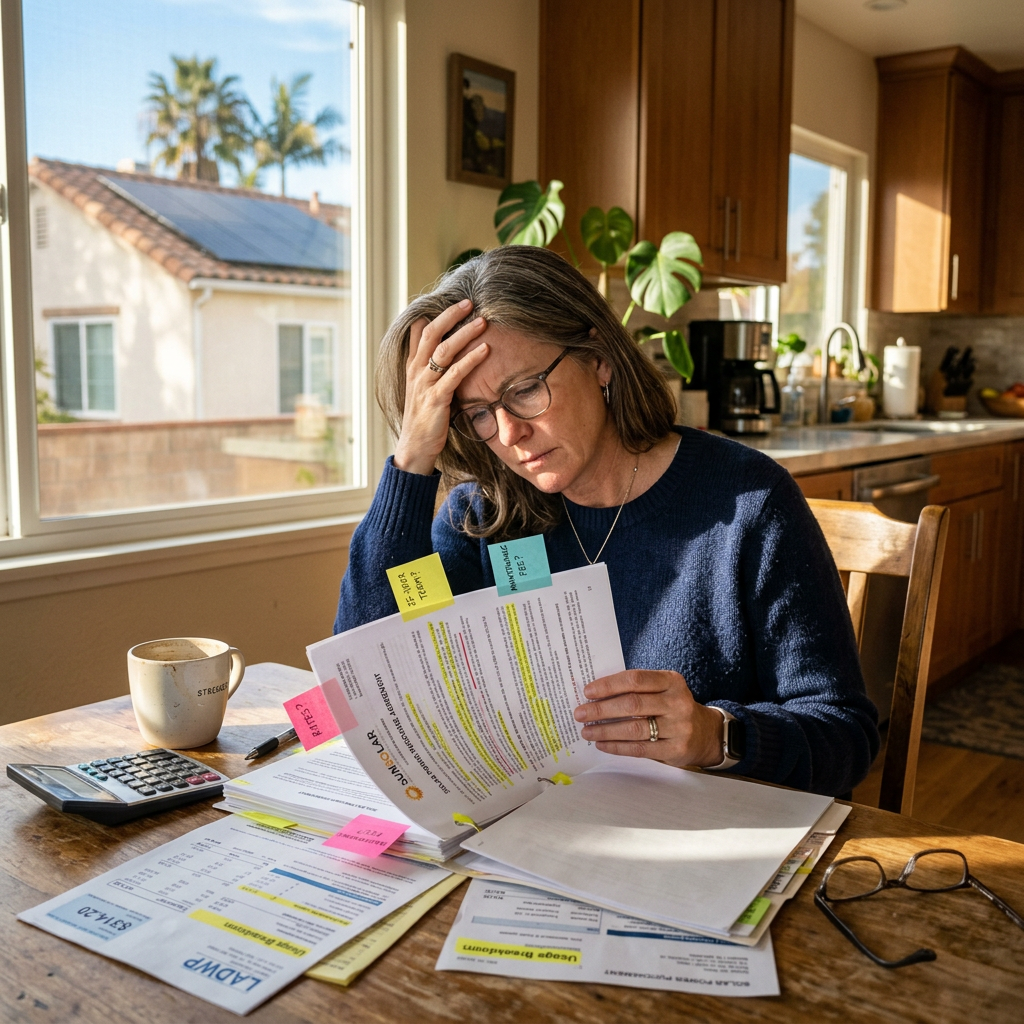
The Most Common Solar PPA Problems California Homeowners Report
A Power Purchase Agreement sounds like a simple deal: a solar company installs panels on your roof, you buy the electricity they generate at a set rate, and everyone wins. No upfront cost. Clean energy. Lower bills.
That's the pitch. The reality that many California homeowners discover, often years after signing is more complicated.
Solar PPAs are 20 to 25-year contracts with terms that were not explained clearly at the door, escalator clauses that erode the promised savings, and transfer provisions that create serious problems when you try to sell your home. This post covers the most common PPA problems California homeowners report and what your options are when you're facing them.
What a Solar PPA Actually Is
A solar PPA is not a purchase, a loan, or a lease. It's a contract to buy electricity from a solar system that someone else owns and that sits on your roof. The solar company retains ownership of the panels. You pay for the kilowatt-hours they produce, typically at a rate below your utility's retail rate at the time you sign.
The catch is the length. Most PPAs run 20 to 25 years. And most include an annual escalator, typically 2 to 4 percent, that raises your per-kilowatt-hour rate every year. Utility rates fluctuate. Your escalator does not.
Problem 1: The Savings Disappeared
The most common complaint California Solar Exit hears from PPA customers is that the promised savings never materialized or materialized for the first year or two and then reversed.
This happens for two reasons. First, the solar salesperson projected savings based on your current utility rate without disclosing that the PPA rate would escalate annually. Second, California utility rates particularly PG&E, SCE, and SDG&E, have historically increased, but not always at the rate the salesperson projected, and sometimes your usage changed, your household grew, or your utility switched rate structures.
If your PPA rate has escalated past what you're paying your utility, you're in a situation the salesperson almost certainly did not disclose to you at signing. Under California Business and Professions Code Section 17200, misrepresentations about expected savings can constitute an unlawful business practice.
Problem 2: You Didn't Know About the Escalator Clause
California law requires solar contractors to disclose the total cost of a PPA over its full term, including all escalator increases. This requirement comes from California Public Utilities Code Section 2827.1 and associated CPUC regulations.
Many homeowners report that they were shown a first-year rate and a general estimate, but were never shown the 20-year cost projection with escalators applied. Some report that the escalator was buried in the contract in language they didn't understand.
If your escalator clause was not clearly disclosed before you signed, that is a compliance failure with California law — and potentially grounds for contract cancellation.
Problem 3: You Can't Sell Your Home
Selling a home with a solar PPA is one of the most common transaction problems in California real estate right now. The PPA doesn't go away when you sell. It transfers to the buyer, but only if the buyer qualifies under the solar company's credit requirements and agrees to assume the contract.
Many buyers won't. They don't want a 15-year obligation to a company they've never heard of, at a rate that may or may not be competitive when they move in. This means the PPA can directly kill a sale or force a price reduction. For a full breakdown of what happens at escrow and how to handle it, see our guide on selling a home with a solar lease in California.
The solar company's solution is typically one of three things: the buyer assumes the contract, the seller pays the buyout fee to terminate the PPA, or the panels are removed which often comes with its own fees and roof repair obligations. None of these options were disclosed to most homeowners when they signed.
Problem 4: The Buyout Price Is Prohibitive
Most PPAs include a buyout provision, a formula that lets you terminate the contract by paying the present value of the remaining electricity payments. In practice, this number is often $10,000 to $30,000 or more depending on how many years remain.
The buyout was almost never disclosed as a real number at signing. Salespeople routinely described PPAs as "easy to get out of" or "transferable when you sell." The actual buyout formula, and the dollar amount it produces, is a different story.
Problem 5: The Company Changed or Went Bankrupt
SunPower, one of the largest solar PPA providers in California, filed for Chapter 11 bankruptcy in 2024. Dozens of smaller installers have done the same. When a solar company files for bankruptcy, your PPA may be sold to a third party, often a company you never agreed to do business with. If this has happened to you, read our full guide on what to do when your solar company goes bankrupt.
This creates confusion about who to contact for maintenance, who holds the contract, and what your rights are during a home sale. California law does not automatically give you the right to exit a PPA because the original company went bankrupt, but the change in counterparty combined with original misrepresentation claims can create a stronger case for cancellation.
What California Law Gives You
California homeowners have more protection against predatory PPA terms than homeowners in most other states. For a complete breakdown of every statute that applies, see our guide to California's solar consumer protections. Key statutes include:
The Contractor State License Law — Solar contractors must hold a valid C-46 or C-10 license. Work done by unlicensed contractors can void the contract entirely.
Business and Professions Code Section 17200 — Prohibits unlawful, unfair, or fraudulent business practices. Misrepresentations about savings, escalators, or transfer terms can trigger liability under this statute.
California Home Solicitation Sales Act — If your PPA was sold at your home, you had a three-day right to cancel. If that right was not disclosed or was obstructed, the cancellation window may extend.
CPUC Disclosure Requirements — Solar companies must provide written disclosure of total contract cost, escalators, and end-of-term options before you sign.
What to Do If You're Trapped in a Problematic PPA
Start by pulling your original contract and any documents you were given before signing. Look for the escalator clause, the buyout formula, the transfer requirements, and any savings projections. Our guide on how to document your solar case walks you through exactly what to gather before contacting anyone. Compare what you were told verbally to what the contract actually says.
If there's a gap, and for most homeowners there is, that gap is where your legal options live. California Solar Exit reviews PPA contracts at no upfront cost to determine whether your situation qualifies for cancellation under California consumer protection law.
Call (213) 579-5156 for a free review. We'll tell you what your contract says, what California law gives you, and what your realistic options are.
Frequently Asked Questions
Can I cancel a solar PPA in California? Yes, in some cases. Cancellation is possible when the contract was obtained through misrepresentation, when required disclosures were not made, or when the contractor lacked proper licensing. Not every PPA qualifies, but many do.
What happens to my solar PPA if I sell my house? The buyer must typically agree to assume the PPA. If they won't, you may need to pay a buyout fee or have the panels removed. This is a significant and commonly undisclosed issue at signing.
Does the annual escalator in my PPA have to be disclosed? Yes. California CPUC regulations require full disclosure of PPA terms including escalation rates and total contract cost projections before signing.
What is the average buyout cost for a California solar PPA? Buyout costs vary by company and years remaining, but typically range from $10,000 to $30,000 or more. The formula is usually the net present value of remaining payments.
Other insights
More from California Solar Exit