
Latest insights
Solar Loan Payment Jumped at Month 19? How Tax-Credit Re-Amortization Works (and What to Do)
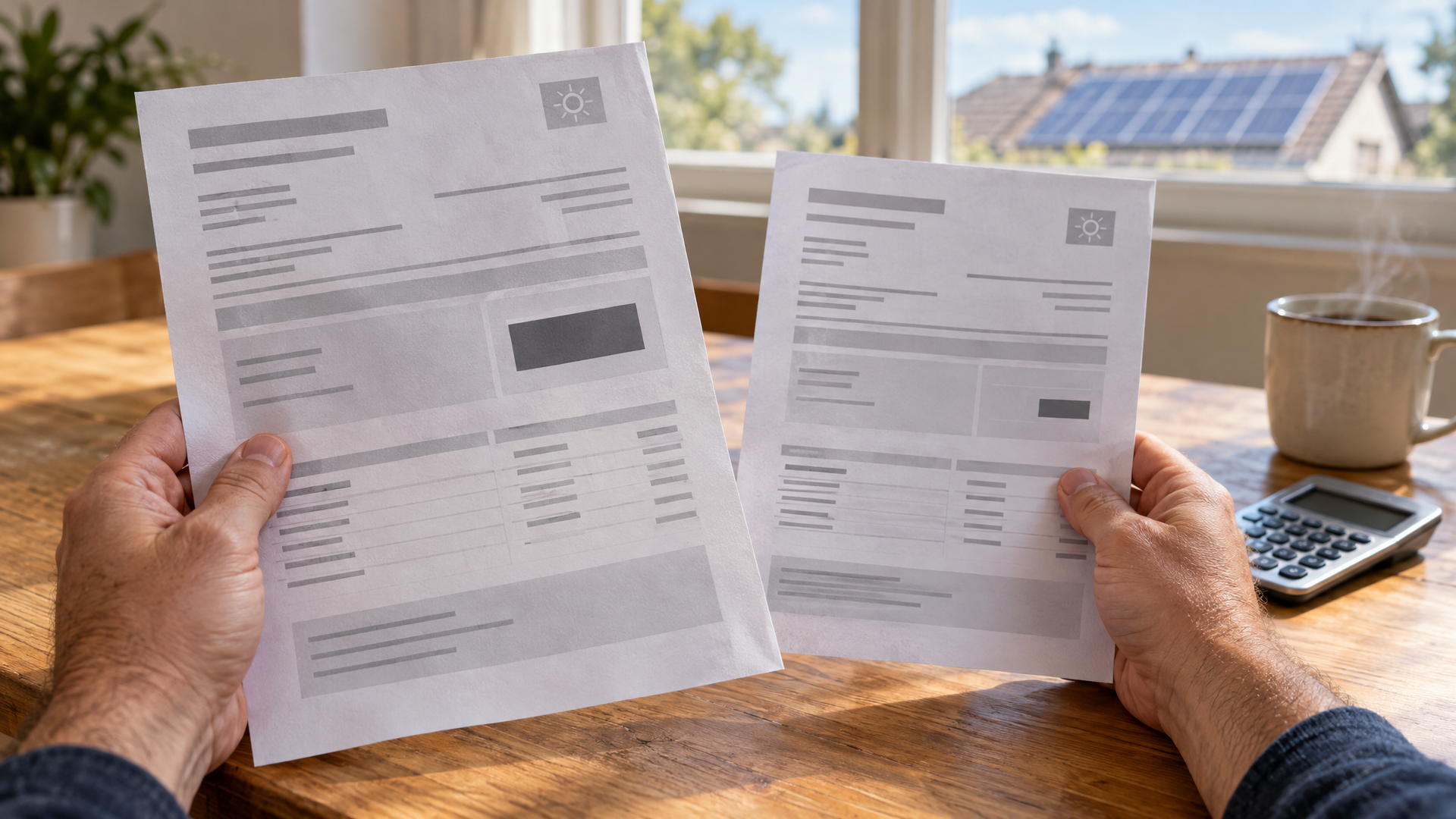
Solar Loan Payment Jumped at Month 19? How Tax-Credit Re-Amortization Works (and What to Do)
When you signed, the payment was $66.32 a month. Eighteen months later, the statement says about $97.
That isn't a billing error, and for many homeowners it isn't a surprise they were warned about in the way they'd have wanted. It's how a common type of solar loan is built. The low payment was calculated on a smaller balance, and it assumed you'd make a large lump-sum payment toward the loan before month 18.
How the structure works
GoodLeap's own FAQ describes it. For the first 18 months, payments are lower "to allow time to apply any eligible tax credit or make additional payments toward your loan." After month 18, the loan re-amortizes and the payment adjusts based on how much has been paid down. Pay down more, and it stays the same or drops. Pay down less, and it may increase.
The usual prepayment is the 30% federal tax credit. An industry example from SolarGraf shows what that does to a payment. On a $20,000, 25-year loan at 2.99%:
- If you prepay $6,000 (30%) by month 18, the payment is based on the remaining $14,000: $66.32 a month.
- If you don't, it rises to about $97.32, an increase of roughly 47%.
I re-ran the arithmetic and it holds: a $14,000 balance at 2.99% over 25 years is $66.32, and the balance that remains if you don't prepay re-amortizes to about $97. The numbers will differ with your loan, but the shape is the same.
The wording in the agreements is blunt. A GoodLeap loan agreement filed in court says the initial payments "will not be fully amortizing" and that if you don't make a voluntary prepayment, your monthly payment will go up to the adjusted amount. A Solar Mosaic loan agreement filed in federal court says that to avoid an increase, you must prepay approximately 26% of the total loan amount within 18 months of the loan start date, and that the lender isn't financially responsible for whether you receive the credit.
The tax credit isn't a refund check
This is where plans fall apart. GoodLeap's own page says the credit is a tax credit, not a rebate: you must owe federal taxes to use it, and people who don't pay much in federal taxes may not get the full benefit. It adds that borrowers can claim the credit over multiple tax years if they lack enough liability in year one, and that people who've already paid their taxes through withholding get a refund of the difference.
So a retiree on a modest income, or anyone with limited federal tax liability, can end up without the lump sum the payment was priced around. The payment promised at the kitchen table assumed the full credit would arrive and be sent to the lender on time.
Why this is landing now
- The 30% credit for homeowner-owned systems expired December 31, 2025. Loans funded in the spring of 2025 reach month 18 around now, and loans from later in 2025 and into 2026 follow over the next year.
- A hard deadline is days away. If you installed in 2025 and filed a tax extension, Thursday, October 15 is your last chance to claim the credit. Our extension deadline guide covers it.
- Anyone who signed in 2026 should look closely. If a salesperson pitched a lower payment that depended on a 30% credit prepayment for a system installed after 2025, the credit that payment was built around isn't available to a homeowner-owned system. That's a claim worth documenting.
If your payment is about to jump
- Find the schedule in your loan agreement. Look for terms like "re-amortization date," "target balance," "adjusted monthly payment," or "expected prepayment."
- Ask for the new payment in writing, and ask what it would be at different prepayment amounts.
- Consider a partial prepayment before month 18. GoodLeap says it never charges a prepayment fee or penalty, and its homeowner page says you can make additional payments during the first 18 months to reduce your balance even without the credit. Confirm the terms of your own agreement and get a written payoff quote.
- Don't stop paying while you sort it out. Missed payments can damage your credit and, as our solar lien guide explains, can create bigger problems.
When it becomes a dispute
A payment increase that's disclosed in the loan agreement isn't automatically a violation. The question is what you were told versus what you signed. Gather:
- Anything you were told about the monthly payment, including "it'll stay around $X" and "the tax credit covers the difference."
- The proposal and any text or email showing a single low payment.
- Your loan agreement and Truth in Lending disclosure, to see how and where the two payments are shown.
- Your tax situation, including whether you actually had liability to use the credit.
If the sale was financed through a dealer, our guides to GoodLeap loans, EnFin loans, and the Mosaic transition to Solar Servicing LLC explain the lender side, and the FTC Holder Rule explains how installer misconduct can reach the lender. Our documentation checklist covers how to organize it.
Questions about re-amortization
Is the increase legal if my contract disclosed it?
A written disclosure helps the lender, but it doesn't erase what a salesperson may have promised out loud. Whether it supports a claim depends on the facts of your sale.
Can I prepay even if I didn't get the tax credit?
Yes. GoodLeap says any additional payment during the first 18 months reduces your balance and helps manage future payments, with no prepayment fee.
What if I can't use the whole credit in one year?
GoodLeap notes that borrowers can claim the credit over multiple tax years. Talk to a tax professional about your situation, since eligibility is individual.
Does this apply to Mosaic and EnFin loans too?
Many point-of-sale solar loans use a similar design, and the Mosaic agreement in court filings does. Check your own agreement for the re-amortization date.
Payment about to jump, or told it would stay the same?
Send us your loan agreement and any texts or emails from the sale and we'll tell you where you stand, usually in one 15-minute call.
Call (213) 579-5156 or visit californiasolarexit.com.
Daniel Merritt is a Senior Solar Contract Analyst at California Solar Exit. This article is general information, not legal advice.
Other insights
More from California Solar Exit

CSLB Solar Restitution Fund Closed: What California Homeowners Can Still Do After an Installer Fails