Latest insights
Sunrun's CalReady Virtual Power Plant Just Hit 425 Megawatts — Here's What California Sunrun Customers Should Know
Sunrun's CalReady Virtual Power Plant Just Hit 425 Megawatts — Here's What California Sunrun Customers Should Know
Quick answer: Sunrun announced on July 14, 2026 that its California CalReady program — a virtual power plant that draws stored energy from customer home batteries to support the grid during peak demand — has grown to 80,000+ enrolled households and 425 megawatts of dispatch capacity. CalReady operates inside two separate state programs with their own legal authority, and it's distinct from a related CPUC program that auto-enrolls millions of Californians in a different way. Enrollment in CalReady itself is supposed to be opt-in and compensated, but some customers report difficulty confirming their status or opting out.
If you have a Tesla Powerwall or another battery installed through Sunrun, this affects you whether you live in Los Angeles, the Bay Area, San Diego, the Inland Empire, or the Central Valley. Here's what's actually happening, who regulates it, and how to check your own status.
What Is Sunrun's CalReady Program?
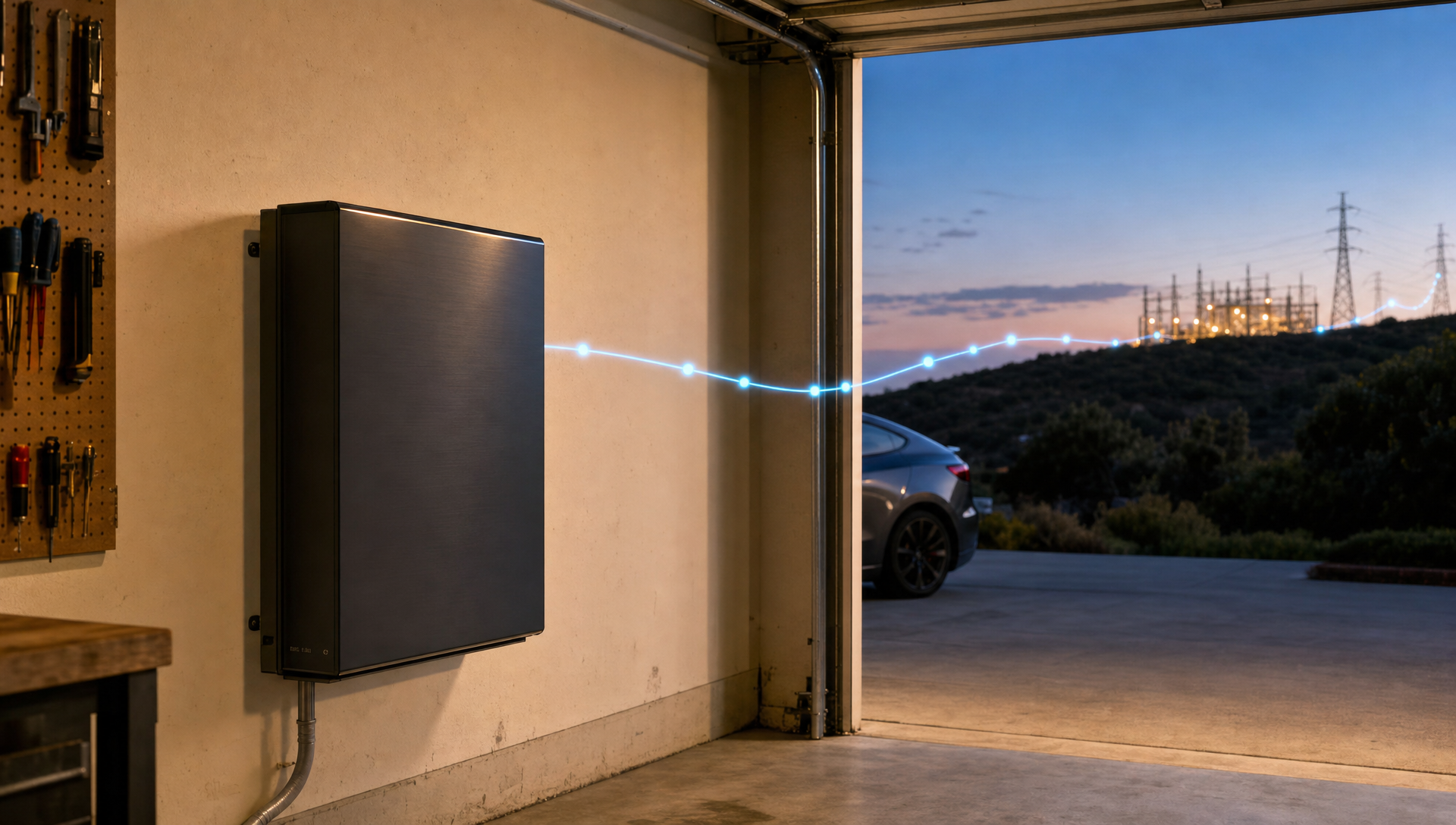
CalReady is Sunrun's virtual power plant — a network of customer home batteries that Sunrun coordinates to send stored energy back to the grid during high-demand summer evenings, typically in two-hour windows between May and October. According to Sunrun, participation is compensated, and the program has grown quickly: from about 16,000 customers at launch in 2024 to more than 80,000 households and 110,000 batteries as of this summer, making it — by Sunrun's account — the largest residential distributed power plant in the country.
Which State Programs Does CalReady Actually Run Through?
CalReady isn't a standalone Sunrun product — it's coordinated through two distinct state-authorized programs, and knowing which one applies to you matters if you ever need to dispute something. The first is the California Energy Commission's Demand Side Grid Support (DSGS) Program, created under Assembly Bill 205 and Assembly Bill 209 (both 2022) as part of the state's Strategic Reliability Reserve — a set of programs specifically built to offset grid strain from heat waves and wildfires. Statewide, the DSGS program now has more than 448,000 participants and roughly 1,145 megawatts enrolled across all providers, not just Sunrun. The second is the CPUC's Emergency Load Reduction Program (ELRP), which the California Public Utilities Commission created in 2021 to pilot demand response ahead of rotating outages, expanding to residential participation in 2022.
Is This the Same as the Program I Was Automatically Enrolled In?
Probably not — and this is where a lot of confusion happens. Separately from battery-specific VPPs like CalReady, the CPUC's ELRP also includes a much broader residential layer: nearly four million California utility customers were automatically enrolled in a bill-credit version of ELRP, administered directly by Pacific Gas & Electric, Southern California Edison, or San Diego Gas & Electric depending on your utility territory. That program doesn't touch your battery at all — it's a bill-credit mechanism tied to overall household usage. CalReady, by contrast, specifically enrolls your physical battery hardware to discharge on Sunrun's schedule. If you're trying to figure out what you're actually signed up for, don't assume the two are the same thing.
Does CalReady Enrollment Affect My Backup Power During an Outage?
This is the question we'd expect most Sunrun battery owners to actually care about, and the answer depends on your specific system configuration. Sunrun's own program materials state that enrolled batteries are managed to "maintain an energy reserve" through smart optimization features — but Sunrun also draws a distinction between CalReady participation and dedicated backup-power features, noting elsewhere that certain optimization modes do not themselves provide outage backup. In plain terms: don't assume CalReady enrollment automatically means your battery will be fully available the moment your power goes out. This matters most for homeowners in wildfire-prone and PSPS-affected areas — we cover the broader backup power picture in our guide to Public Safety Power Shutoffs and what they mean for your system.
Were You Enrolled Without Realizing It?
Sunrun describes CalReady as opt-in, but we've seen consumer complaints describing a different experience: homeowners who say they were enrolled without a clear, proactive choice, and who then had difficulty getting a straight answer on how to opt out — with Sunrun, the battery manufacturer, and the utility each pointing at one another. If any of that sounds familiar, the first step is simple: log into your Sunrun account and confirm your CalReady enrollment status directly, in writing, rather than relying on a phone call.
What This Means If You're Already Trying to Get Out of a Sunrun Contract
If you're already unhappy with your Sunrun lease or PPA for other reasons — an escalating payment clause, savings that didn't materialize, or service issues since the Vivint Solar merger — a VPP enrollment dispute is a separate issue from your underlying contract, but it's still worth documenting. Additional undisclosed terms or difficulty getting a company to honor an opt-out request can be relevant if you're building a broader case. Our guide to getting out of a Sunrun solar contract in California walks through the process end to end, and if you've hit a wall trying to resolve a CalReady issue directly with Sunrun, our guide to filing a solar complaint in California covers which state agency actually handles that kind of dispute — whether that's the CPUC, the CEC, or another body depending on which program your complaint touches.
FAQ
Is Sunrun's CalReady program mandatory for battery owners?
No, Sunrun describes CalReady as an opt-in program. However, some customers have reported confusion about their enrollment status, so it's worth confirming directly through your Sunrun account rather than assuming either way.
Will CalReady drain my battery during a power outage?
Sunrun states that enrolled batteries are managed to maintain an energy reserve, but backup power during an outage is a distinct feature from CalReady optimization. Confirm in writing how your specific system handles both.
How is CalReady different from my Sunrun lease or PPA?
Your lease or PPA governs your solar system and payments; CalReady is a separate program agreement covering how your battery participates in grid support. Both are worth reviewing independently.
Is CalReady the same as the program I heard millions of Californians were auto-enrolled in?
Likely not. The CPUC's broader Emergency Load Reduction Program includes a bill-credit version that auto-enrolled about four million utility customers statewide, separate from battery-specific programs like CalReady, which requires your battery hardware to actually be enrolled.
How do I opt out of CalReady if I no longer want to participate?
Start by requesting written confirmation of your enrollment status and opt-out request directly through your Sunrun account. If you're not getting a clear answer, document each attempt in case you need to escalate to a state agency.
Does CalReady enrollment affect my ability to cancel my Sunrun contract?
Not directly, they are separate agreements. But unresolved disputes, undisclosed terms, or unresponsive customer service can be relevant supporting details if you're already pursuing cancellation for other reasons.
Have a Sunrun contract you're unhappy with, or a CalReady enrollment issue Sunrun won't resolve?
Get a free, no-pressure contract review.
Call (213) 579-5156 or visit californiasolarexit.com.
Daniel Merritt is a Senior Solar Contract Analyst at California Solar Exit with over a decade of experience evaluating residential solar lease, PPA, and loan agreements under California consumer protection law.
Other insights
More from California Solar Exit