Latest insights
Non-Transferable Solar Loans in California: What the Sungage and PG&E Lawsuit Means for Homeowners
Non-Transferable Solar Loans in California: What the Sungage and PG&E Lawsuit Means for Homeowners
Why Are California Homeowners Suing Over Non-Transferable Solar Loans?
California homeowners are suing because a solar loan marketed as "easily transferable" to a future buyer turned out, in practice, to be almost impossible to transfer. A federal class action filed in the U.S. District Court for the Eastern District of California — Beatty v. Sungage Financial, LLC, et al. — accuses solar lender Sungage Financial, loan originator NBT Bank, installer Sunmade Energy, and Pacific Gas and Electric Company (PG&E) of running a bait-and-switch financing scheme aimed at California homeowners.
The named plaintiff, a Clovis, California resident, says he agreed to a "0% interest" solar loan specifically because he was told — verbally and on the lender's own website — that the loan could simply be handed off to whoever bought his house next. According to the complaint, that promise didn't hold up. Anyone trying to assume the loan has to qualify for an entirely new loan at a materially higher rate — the filing cites a rate structure of "current rate + 5.00% or 9.99% (whichever is less)" — which functionally makes the loan non-transferable and can stall or kill a home sale.
The suit also alleges the loan amount was inflated well beyond the actual cost of the solar equipment, with more than $20,000 folded in as an undisclosed finance charge. Claims include breach of contract, fraudulent inducement, violations of the Truth in Lending Act and the Rosenthal Fair Debt Collection Practices Act, and a civil Racketeer Influenced and Corrupt Organizations Act (RICO) claim. You can read the complaint itself here and the case docket on GovInfo.
How Does a "Transferable" Solar Loan Become Non-Transferable?
A solar loan becomes non-transferable in practice when the fine print requires any new buyer to independently qualify for a brand-new loan rather than simply stepping into the seller's existing terms. On paper, a lender can call a loan "transferable" because the underlying debt technically can move with the property. In practice, if the buyer has to pass a fresh credit and income review and accept a substantially higher interest rate to do it, most buyers — and most of their mortgage lenders — will simply walk away from the deal instead.
This is a different problem from a UCC-1 lien changing hands when a lender sells its loan book in bankruptcy, which we covered here. It's also different from losing your NEM 2.0 rate under AB 942 when you sell. This is about the marketing promise itself — "transferable" — allegedly not matching the loan's actual terms, which is the kind of misrepresentation that can support a fraudulent inducement claim under California law.
What Red Flags Should You Check in Your Own Solar Loan Agreement?
Several details separate a genuinely transferable solar loan from one that only sounds that way:
- The "cash price" doesn't match your total financed amount. If your solar company quoted a cash price and your loan amount is thousands of dollars higher, the difference is likely an undisclosed dealer fee or finance charge — not equipment cost.
- "Transfer" requires a new loan, not an assumption. Look for language requiring the buyer to "qualify" or "apply" rather than simply "assume" your existing loan and rate.
- A rate floor or "current rate plus" clause. Any language tying the buyer's rate to a formula like "current market rate plus a premium" means the transfer isn't really at your original terms.
- A UCC-1 financing statement was filed against your home without it being clearly explained at signing.
- Verbal promises aren't reflected in the written contract. If a sales rep told you the loan was "easily transferable" but the loan agreement itself doesn't spell out the exact process and terms, that gap is worth documenting.
- You paid a "transfer fee" up front for a feature the contract doesn't actually guarantee.
How Does This Compare to Other California Solar Financing Problems?
It helps to know which kind of financing you actually have, since each type carries different risks at resale:
- Solar lease or PPA: You don't own the system; a new buyer typically has to be approved to take over the lease or agree to buy it out.
- PACE financing: Repaid through your property tax bill, tied to the property itself. The California Public Utilities Commission's solar consumer guide specifically warns that unpaid PACE assessments can complicate a sale or refinance, and the DFPI licenses and has disciplined PACE solicitors for misleading marketing.
- Traditional solar loan (like the one at issue in Beatty): You own the system outright, but the lender often files a UCC-1 fixture filing against the home, and — as this case alleges — "transferability" may be marketing language rather than a real contract right.
None of these structures are inherently illegal. The legal exposure comes from what homeowners were actually told at the point of sale versus what the paperwork says.
What Legal Protections Do California Homeowners Have?
California homeowners have several overlapping protections that apply to a case like this. The federal Truth in Lending Act requires lenders to clearly disclose finance charges and the true cost of credit — a requirement the Beatty complaint says Sungage violated by burying more than $20,000 in undisclosed charges inside the loan principal. California's Consumer Legal Remedies Act and Rosenthal Fair Debt Collection Practices Act provide additional state-level grounds for homeowners who were misled about a loan's terms. And where a pattern of misrepresentation spans multiple homeowners and companies working together, a civil RICO claim — as filed here — allows for treble damages, a much higher bar but a much bigger potential recovery.
Beatty isn't an isolated filing, either. A similar Truth in Lending case was brought in Utah against Sungage and a different installer, and multiple state attorneys general — including in New York, Virginia, and Texas — have opened investigations or filed suits over misrepresented solar loan terms and hidden fees in 2026. That pattern matters if you're evaluating whether what happened to you was a one-off miscommunication or part of a broader sales practice.
What Should You Do If You're Stuck in a Non-Transferable Solar Loan?
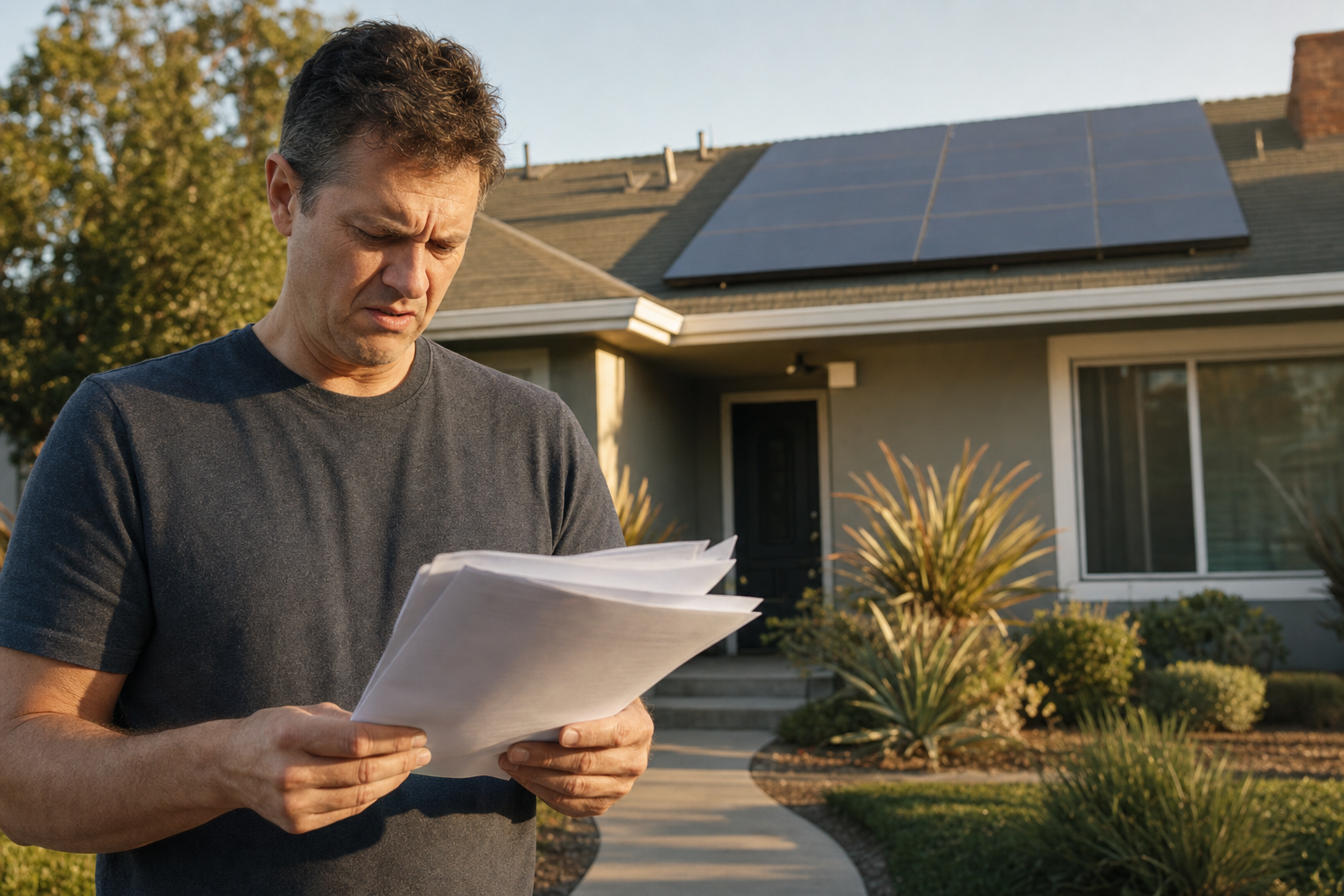
If you're planning to sell — or already in escrow — and just found out your "transferable" solar loan isn't, the first step is pulling your original loan agreement and any marketing material, texts, or emails where transferability was promised. Don't stop making payments without talking to someone first; that can create separate credit problems on top of the financing dispute. A contract review can tell you whether your loan's actual terms line up with what you were told, and what options exist for cancellation or dispute before your sale falls through.
California Solar Exit offers a free, no-obligation review of your solar loan, lease, or PPA. If your contract's transferability promises don't match its fine print, we'll walk you through your options under California and federal consumer protection law. Call (213) 579-5156 or visit our contract review page to get started.
Frequently Asked Questions About Non-Transferable Solar Loans
What is a non-transferable solar loan?
A non-transferable solar loan is one where, despite marketing language calling it "transferable," a home buyer cannot simply assume the seller's existing loan and rate. Instead, the buyer must qualify independently for new financing, often at a substantially higher interest rate, which can effectively block the transfer.
What is the Beatty v. Sungage Financial lawsuit about?
It's a federal class action in the U.S. District Court for the Eastern District of California alleging Sungage Financial, NBT Bank, Sunmade Energy, and PG&E marketed 0% solar loans as easily transferable while hiding over $20,000 in undisclosed finance charges and requiring buyers to requalify at a higher rate.
Does the Truth in Lending Act apply to solar loans?
Yes. The Truth in Lending Act requires lenders to clearly disclose finance charges and the true annual percentage rate on consumer credit, including solar financing. Undisclosed dealer fees folded into a loan's principal, rather than itemized as a finance charge, can violate this federal disclosure requirement.
How is a UCC-1 lien different from a mortgage on solar panels?
A UCC-1 financing statement gives a lender a security interest in the solar equipment itself, similar to how a car loan lien works, rather than a mortgage against the real property. It still must be resolved before many home sales or refinances can close.
Can I still sell my home if my solar loan won't transfer?
Yes, but you'll likely need to pay off the loan balance at closing, negotiate with the buyer to cover it, or resolve the dispute with the lender first. A contract review can identify whether misrepresentation at signing gives you grounds to challenge the loan before you list.
What should I do if I think my solar loan misrepresented transferability?
Gather your loan agreement, any sales materials, and communications where transferability was promised, and avoid stopping payments on your own. Contact a solar contract review team to evaluate whether the loan's actual terms violated the Truth in Lending Act or California consumer protection law.
Other insights
More from California Solar Exit