Latest insights
California's Solar Property Tax Exclusion Sunsets January 1, 2027: What Revenue and Taxation Code Section 73 Means for New Systems and Lease Buyouts
California's Solar Property Tax Exclusion Sunsets January 1, 2027: What Revenue and Taxation Code Section 73 Means for New Systems and Lease Buyouts
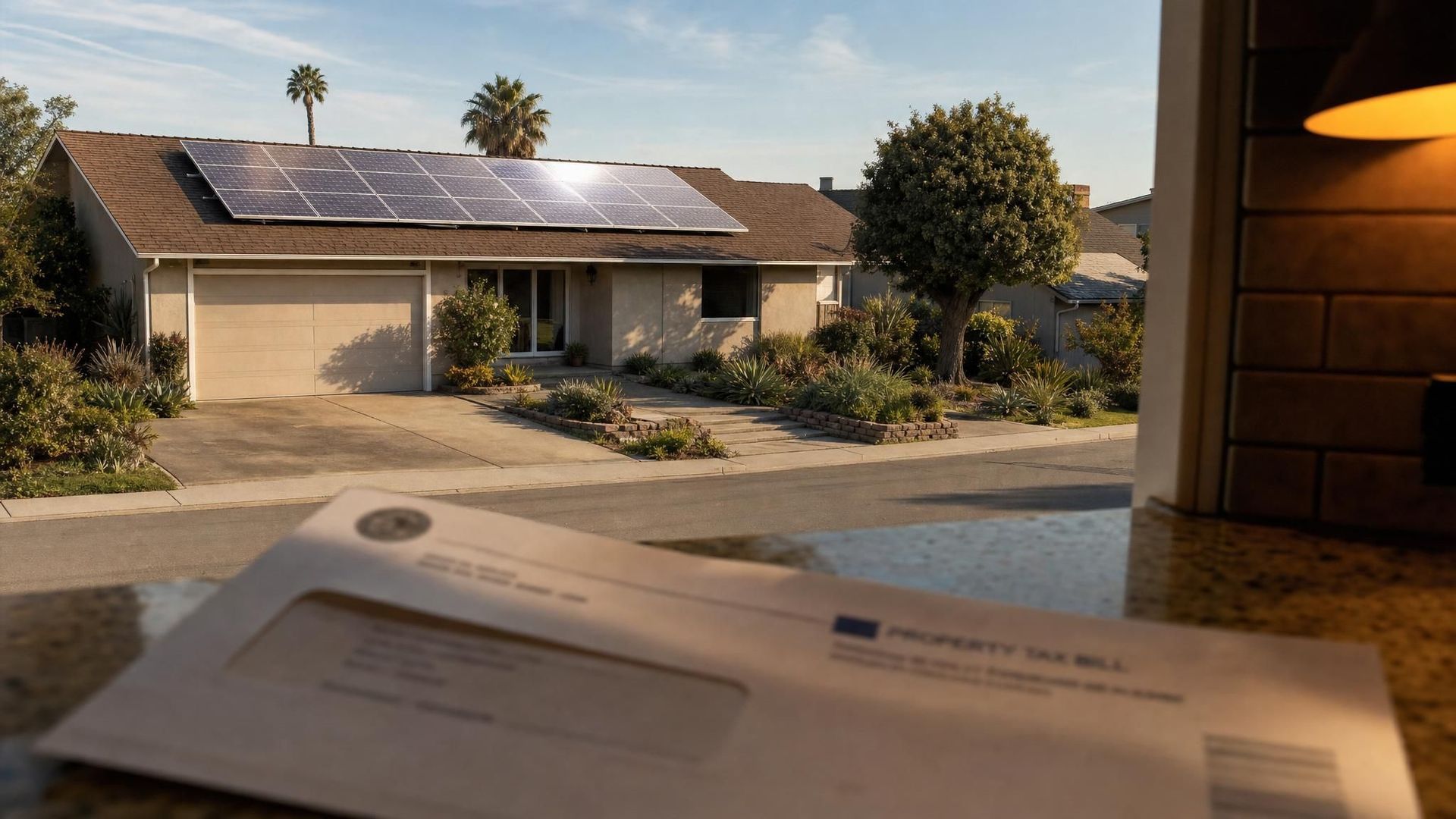
There's a real deadline buried in California property tax law that has nothing to do with the federal tax credit, NEM 3.0, or any of the other 2026 deadlines you may have already heard about. It comes from Proposition 13 itself, and it determines whether installing solar adds to your property tax bill or not.
What Is California's Solar Property Tax Exclusion Under Revenue and Taxation Code Section 73?
Under normal Prop 13 rules, adding a major improvement to your home — a room addition, a pool, a garage — triggers a reassessment, and your property taxes go up to reflect the added value. Revenue and Taxation Code Section 73 carves out an exception for active solar energy systems: installing solar doesn't count as "newly constructed" for property tax purposes, so it doesn't trigger a reassessment. It's been in place, with periodic legislative renewals, since 1980.
When Does California's Solar Property Tax Exclusion Actually Sunset?
The exclusion sunsets for new construction on January 1, 2027. That means any active solar energy system that isn't completed and placed in service before that date won't get the exclusion — new installations after the cutoff would be assessed and added to your property's taxable value like any other home improvement. This isn't a rumor or a marketing talking point; it's confirmed directly in State Senator Catherine Blakespear's own press release announcing that Governor Newsom signed SB 710 in October 2025, and in the California State Board of Equalization's legislative analysis of the bill.
Does the 2027 Deadline Affect Homeowners Who Already Have Solar Installed?
No. If your system was completed and interconnected before January 1, 2027, SB 710 locks in the exclusion for as long as you own the home — you don't lose it, and you don't need to do anything to keep it. The bill specifically addressed a gap in the old law: previously, it wasn't fully clear whether an already-qualifying system would keep its exclusion once the sunset date passed. SB 710 confirmed that it does, until there's a change in ownership.
How Does the Property Tax Deadline Differ From the July 2026 Federal Tax Credit Deadline?
These are two unrelated deadlines in the same year, and it's easy to see how a sales pitch could blur them together.
Federal construction-start deadline
- Governing law: One Big Beautiful Bill Act, IRC Section 48E
- Deadline: Construction must begin by July 4, 2026
- Who it affects: Third-party-owned leases/PPAs seeking commercial tax credit eligibility
- What's lost if missed: Installer's ability to claim the Section 48E credit on that project
State property tax exclusion deadline
- Governing law: California Revenue & Taxation Code § 73, via SB 710
- Deadline: System must be completed/placed in service before January 1, 2027
- Who it affects: Any new solar installation — owned, financed, or leased
- What's lost if missed: Property tax exclusion — new system gets added to your assessed value
If you've already read our piece on the July 4 federal construction deadline, this is the second, separate deadline — worth knowing about specifically so you can tell which one (if either) actually applies to your situation.
Does Buying Out a Solar Lease or PPA in 2026 Trigger This Deadline?
Generally, no. The exclusion applies to new construction of a solar system — the system on your roof was already "newly constructed" whenever it was originally installed, whether that was 2019 or 2024, and it either qualified for the exclusion at that time or it didn't. Converting from a lease to ownership via buyout doesn't re-trigger a new-construction assessment event under Section 73. Where this deadline actually matters is if you're planning to have an entirely new system installed — for example, replacing an old, underperforming system after exiting a bad lease, or going solar for the first time. In those cases, whether the new system is interconnected before January 1, 2027 is a real financial variable worth asking about. County assessment rules can vary in application, so this is a good detail to confirm directly with your county assessor's office or a tax professional before treating it as settled for your specific situation.
Are Sales Reps Using the 2027 Deadline as a Pressure Tactic?
It's reasonable to expect so, the same way the July 4 federal deadline has already fueled pressure sales this year. A few things worth checking if a rep brings up this deadline:
- Are they citing the property tax exclusion (Section 73) or the federal tax credit (Section 25D/48E)? These get conflated constantly, and they're governed by entirely different laws with different consequences.
- Is the urgency tied to your actual project timeline, or just to their sales quarter?
- Does your quote separate the cost of the system from any projected property tax savings, so you can evaluate the deal without that variable?
- If you're being told to sign now specifically because of this deadline, ask what happens to your price if the system isn't interconnected until after January 1, 2027 — permitting and utility interconnection can take months, and that timeline isn't fully in your control or the installer's.
None of this means the deadline is fake — it's real and it's documented in state law. It just means it deserves the same scrutiny as any other deadline used to create urgency at the kitchen table.
What Should You Do With This Information?
If you already have solar, this deadline doesn't affect you — your exclusion is protected under SB 710 regardless of what happens after January 1, 2027. If you're weighing whether to exit a bad lease or PPA and replace the system entirely, the completion timeline is a legitimate factor to build into your planning, not just a sales script. Either way, it's worth having your actual contract and timeline reviewed rather than taking a verbal deadline at face value. You can start with our guide to exiting a California solar contract, or call (213) 579-5156 for a free review of where you stand.
FAQ
Does California still exclude solar panels from property tax reassessment?
Yes, under Revenue and Taxation Code Section 73. Systems completed and placed in service before January 1, 2027 qualify and keep that exclusion for as long as the current owner holds the property, per SB 710, signed into law in October 2025.
What happens to my property taxes if I install solar after January 1, 2027?
Under current law, a new solar installation completed on or after that date would not qualify for the Section 73 exclusion and could be added to your home's assessed value, increasing your property tax bill. The legislature could extend the exclusion again before then.
Does buying out my existing solar lease affect my property taxes?
Generally no. The exclusion concerns new construction of a solar system, which already occurred when the system was first installed. Confirm specifics with your county assessor if you're uncertain.
Is the property tax deadline the same as the solar tax credit deadline?
No. The property tax exclusion sunset (January 1, 2027, state law) is separate from the federal construction-start deadline for the Section 48E commercial tax credit (July 4, 2026). They're governed by different laws and affect different things.
Other insights
More from California Solar Exit