Latest insights
Renting Out Your California Home With an Active Solar Lease? Here's What Gets Missed
Renting Out Your California Home With an Active Solar Lease? Here's What Gets Missed
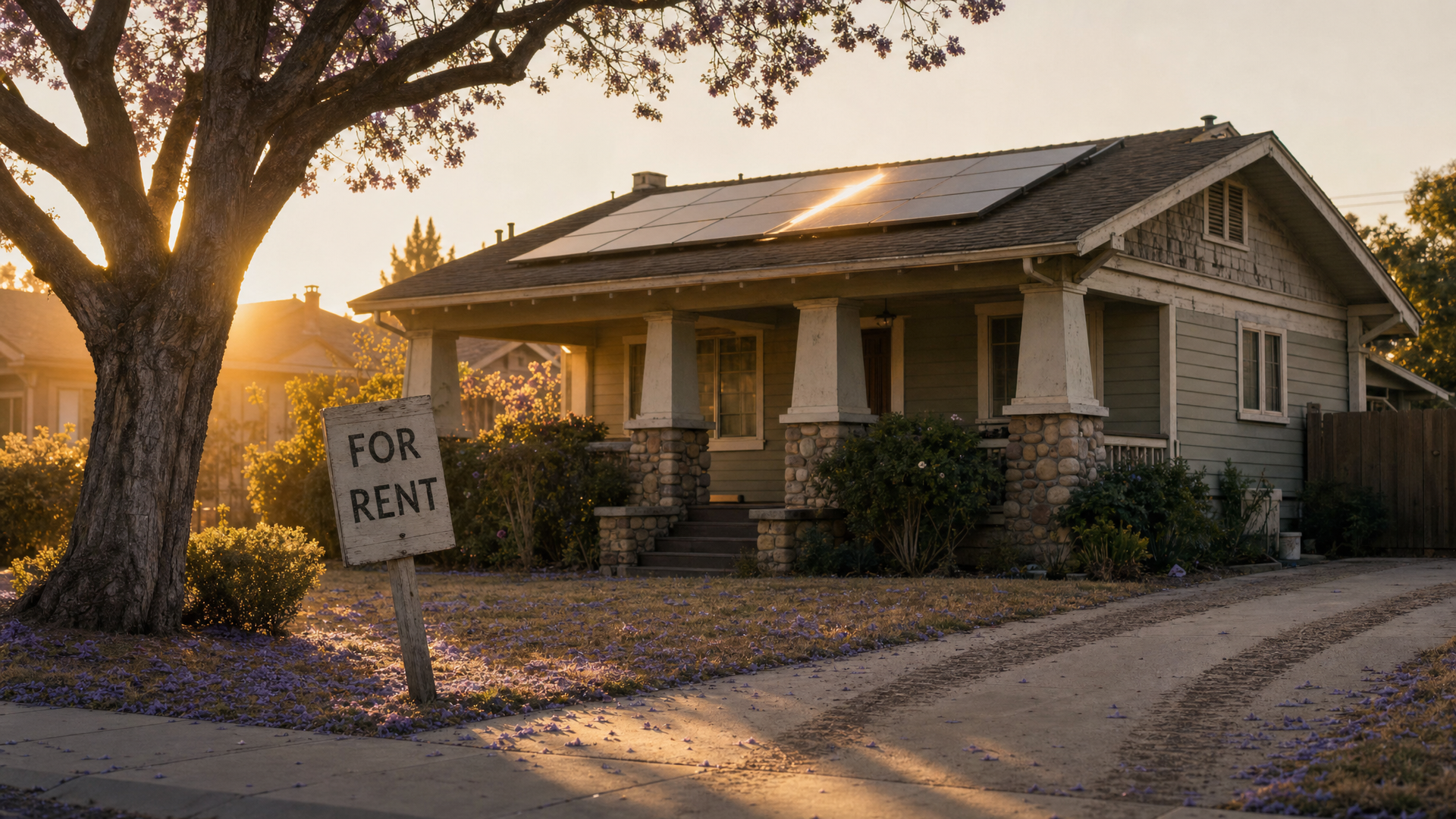
Job relocations, inherited property, house-hacking to afford a second mortgage — there are a lot of reasons a California homeowner ends up renting out a house they used to live in. It happens constantly in commuter markets like the Inland Empire, the outer suburbs of Sacramento, and pockets of Orange County where owners move for work but keep the property. What frequently doesn't come up until it's a problem: that house may still be carrying a 20- to 25-year solar lease, power purchase agreement (PPA), or loan, and almost nothing about that contract was written with a landlord in mind.
Check the Occupancy Clause Before You List It
Most solar leases and PPAs are written around the person who signed them living in the home. Many contracts define the "customer" in terms that assume owner-occupancy, and some require written notice if the property's use changes — including converting it to a rental. Skipping that notice isn't automatically a dealbreaker, but it can technically put you in default of a clause you never read closely, which matters if you ever need the solar company's cooperation later — for a buyout, a transfer, or a dispute.
Pull your contract and look specifically for language about occupancy, use of the property, and notice requirements before you sign a lease with a tenant. If you can't find it, ask the solar company directly and get the answer in writing. If your contract also involves a UCC-1 financing statement on the property, see our guide to solar liens on California homes for how that affects a title down the line, rental or not.
Who Keeps the Utility Account — and the NEM Credits
This is the detail that trips up the most landlords. Net Energy Metering (NEM) credits are tied to the utility account at the service address, not to a person. If you keep the utility account in your name after renting the house out, you keep the NEM credits — but you're now paying the utility bill for a property you don't live in, on top of the solar payment, unless you've built that into the rent. If you transfer the utility account to your tenant's name — with Pacific Gas and Electric, Southern California Edison, or San Diego Gas & Electric — the NEM credits transfer with it, which means the tenant captures the benefit your solar system was supposed to be providing you.
There's no way around picking one of these. Decide which one before you sign a lease with a tenant, not after your first utility bill arrives.
Can You Legally Bill Your Tenant for the Solar Payment?
This is where landlords get into real trouble. California does allow a landlord to pass solar costs through to a tenant under a submetering arrangement — Assembly Bill 2863 (2008) created California Public Utilities Commission rules under Public Utilities Code Sections 2868 and 2869 specifically to let third-party solar providers sell power to sub-metered tenants. But it comes with real conditions: the rate charged to the tenant can't exceed the lower of the standard utility rate or the PPA rate, and specific disclosures are required.
What a lot of landlords do instead is fold an undefined "solar fee" into the rent or bill it separately without going through proper submetering, disclosure, or rate-cap compliance. That's not automatically illegal, but it creates exactly the kind of undocumented utility dispute California's landlord–tenant law is built to catch — and it's a bad position to be in if a tenant stops paying and you end up in front of a judge trying to explain what the charge was for. The California Department of Consumer Affairs' California Tenants guide is a useful baseline for what's billable to a tenant and what isn't.
If the Solar Company Finds Out — and What It Doesn't Fix
Nothing about renting out the house pauses your payment obligation to the solar company or lender. If a system on a rental property needs a repair and the solar company treats the property as non-owner-occupied in a way your contract didn't account for, that can slow down service. And if you're dealing with a lapse in your own homeowners insurance because the property's use changed to a rental, that's a separate, serious issue — we cover the insurance side of a solar contract in detail in our guide to insurance gaps in California solar contracts. If your original financing was a loan rather than a lease, the ownership and payment mechanics are different again — see our breakdown of solar loans vs. leases for how that changes your options as a landlord.
Red Flags to Watch For
- You haven't reviewed your solar contract's occupancy or use-of-property clause since deciding to rent
- You're billing a tenant a flat "solar fee" without a submetering setup or rate-cap compliance
- The utility account and NEM credits haven't been explicitly decided between you and your tenant
- Your homeowners insurance policy was written for owner-occupancy and hasn't been updated for rental use
- You inherited a property — anywhere from the Bay Area to San Diego County — with an existing solar lease and are renting it out without ever having reviewed the original contract yourself
What to Do
- Pull your solar contract and read the occupancy and notice provisions before listing the property.
- Decide who keeps the utility account and the NEM credits, and reflect that decision in the rent.
- If you want to pass solar costs to a tenant, structure it as a compliant submetering arrangement, not an informal fee.
- Notify the solar company in writing if your contract requires it, and keep a copy.
- Update your homeowners insurance for rental use separately from the solar question — they're two different problems that both need solving.
- If the underlying contract was never disclosed to you clearly at signing, or you inherited it without a chance to review it, that may be worth a professional review of your exit options regardless of the rental question.
Frequently Asked Questions
Does renting out my home void my solar lease or PPA?
Not automatically, but many contracts require notice when the property's use changes, and skipping that can technically put you in default of a clause worth knowing about before it matters.
Can I just add a flat "solar fee" to my tenant's rent?
You can build solar costs into the rent generally, but billing it as a separate utility-style charge without following California's submetering rate-cap and disclosure requirements under
PU Code §§ 2868–2869 creates legal exposure most landlords don't realize they're taking on.
Who gets the NEM credits if I rent out my house?
Whoever holds the utility account at the service address. That's a decision you make when you rent the property out, not something that resolves itself.
What if I inherited a house with a solar lease and want to rent it rather than sell it?
Review the original contract before doing anything else. Inherited solar contracts often carry terms the new owner never negotiated or saw explained, and that's worth a professional review independent of the rental decision.
Renting out a California property with an active solar lease, PPA, or loan attached — or inherited one you never reviewed? California Solar Exit reviews solar contracts for homeowners across Los Angeles, Orange County, San Diego, the Inland Empire, Sacramento, and the Bay Area.
Call (213) 579-5156 for a free review, or book a consultation online.
Daniel Merritt, Senior Solar Contract Analyst
California Solar Exit — this content is for general informational purposes only and does not constitute legal advice or create an attorney-client relationship.
Other insights
More from California Solar Exit